True crime rarely ends when the credits roll.
With Monster: The Ed Gein Story, the questions get louder: what really happened, what was shaped for television, and why does this case still haunt horror? This guide separates the Monster: The Ed Gein Story true story from dramatization. We cover the verified murders of Mary Hogan and Bernice Worden, the farmhouse evidence, and the legal outcome, then flag the inventions like the Bundy assist, the imagined contacts, and the composite figure Adeline. Light spoilers ahead.
Monster: The Ed Gein Story true story: the confirmed crimes and timeline
The bedrock facts are straightforward. Ed Gein confessed to killing tavern owner Mary Hogan in 1954 and hardware store owner Bernice Worden on November 16, 1957. Worden’s disappearance led deputies to Gein’s farm, where they found her body and a house filled with objects fashioned from human remains. These details track closely with historical accounts and inventories made public in the case record.
The series’s depiction of the farmhouse artifacts, bowls made from skulls, masks cut from faces, chairs upholstered with skin, aligns with what officers cataloged after the search. Those items are not embellishment. They are documented.

Gein’s mental state and verdict in the true story
On the legal outcome, the season is largely accurate. Gein was initially found unfit to stand trial, later ruled competent, and in 1968 a judge found him guilty of Worden’s murder but legally insane, which meant lifelong confinement in a state hospital. He died at Mendota Mental Health Institute in 1984, with sources citing cancer-related complications. The show’s language about schizophrenia reflects how many mainstream accounts describe his diagnosis after arrest.
A careful note: one expert outlet has questioned whether the schizophrenia label appears clearly in early medical paperwork, but multiple widely cited references today report that diagnosis. The institutionalization and 1984 death are not in dispute.
The true story of Henry’s death and Augusta’s grip
The series leans into suspicion around Henry Gein’s 1944 death. Historically, he died during a marsh fire and the coroner listed asphyxiation; no homicide case moved forward. Writers later raised doubts because of reported bruising, but the official record stayed as an accident. The show’s darker read is a dramatic choice over settled fact. Gein’s fixation on his mother Augusta and the grave-robbing that followed her death are well documented, though the exact staging of a “preserved mother” at home is the series’ visual device.
Necrophilia in the true story: what we can and can’t prove
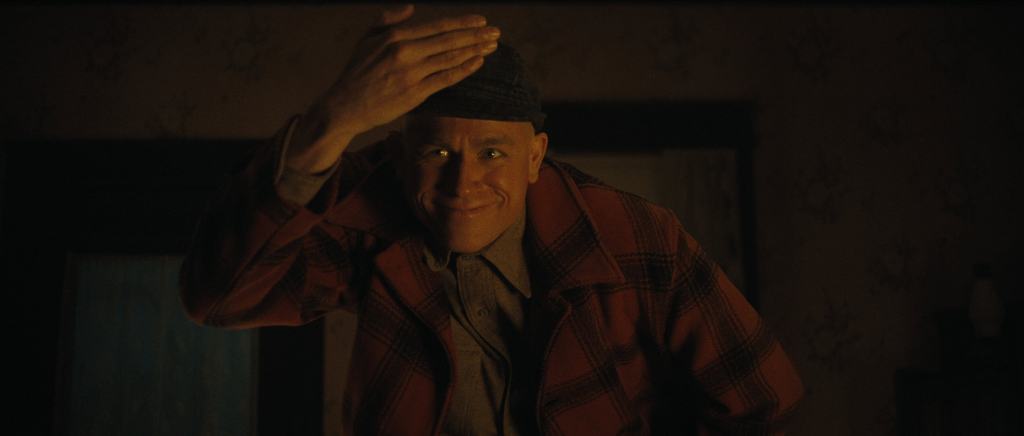
The season implies sexualized contact with corpses. Some accounts label Gein a necrophile; others emphasize his own denial and the lack of direct proof. Gein denied intercourse with bodies. Treat this as contested, not conclusively proven.
Monster: The Ed Gein Story true story vs Hollywood influences
The show connects Gein to three pillars of American horror. That link is sound.
- Psycho: Robert Bloch’s 1959 novel and Hitchcock’s 1960 film drew on the Gein case’s broad outlines, especially the mother fixation and the macabre home.
- The Texas Chain Saw Massacre: Leatherface’s masks and the bone-strewn house borrow from Gein’s case, even if the plot is fiction.
- The Silence of the Lambs: Buffalo Bill is a composite; Gein is one thread among others, not a direct one-to-one.
Recent roundups from mainstream outlets underline the same throughline: Gein’s crimes helped shape Norman Bates, Leatherface, and Buffalo Bill.
What the series invents vs the true story
Here’s where Monster: The Ed Gein Story real history vs series diverges.
- Gein helping catch Ted Bundy: There is no historical record of Gein assisting in the Bundy investigation. Bundy’s identification and arrests are well documented through traffic stops, witness tips, and forensic evidence such as bite-mark analysis, without any Gein involvement. The finale’s advisory scenes are narrative devices.
- Direct contact with Christine Jorgensen: Christine Jorgensen was a major public figure, but reputable biographies and archival pieces contain no evidence she spoke with Gein. The show ultimately frames those “calls” as hallucinations, which fits its portrait of psychosis, not the public record.
- Ilse Koch on the line: Gein’s morbid interest in press about Ilse Koch is part of the lore, but there was no contact between them. Koch died by suicide in 1967 in a Bavarian prison.
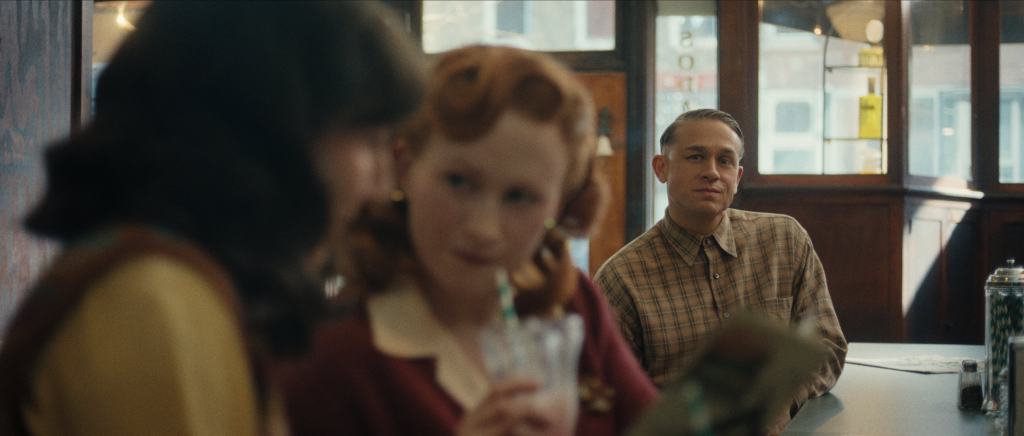
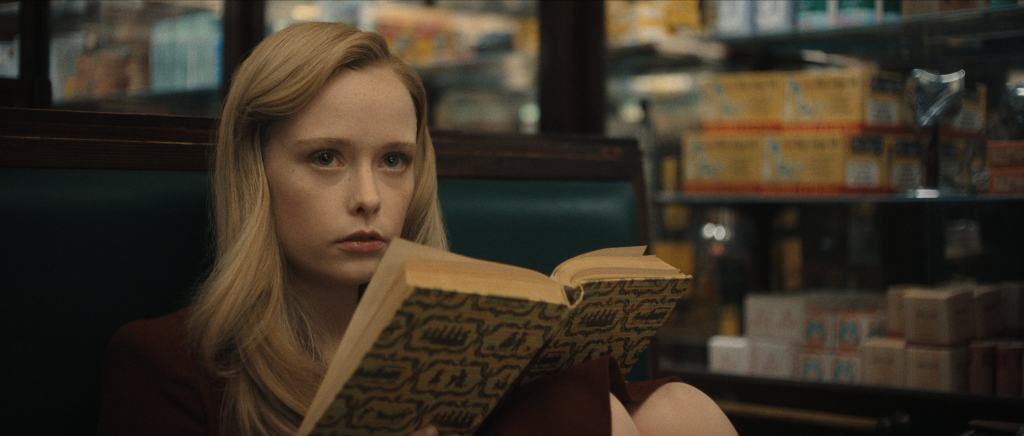
- Adeline as a central partner: Adeline serves as a composite representation of the script’s themes, including complicity, voyeurism, and morbid curiosity, rather than a single documented person in Gein’s life.
What the series gets right about legacy
The closing image suggests horror icons stepping out of Gein’s shadow. That idea holds. The case fed Psycho, The Texas Chain Saw Massacre, and parts of The Silence of the Lambs, and it changed how American horror looks and feels. The season also captures a poignant idea about mythmaking: how headlines and movies can transform real victims into cultural symbols, and how that distortion of reality keeps the story alive long after the person is gone.
Bottom line
Monster: The Ed Gein Story real history vs series lands close to the record on the two murders, the farmhouse evidence, the Plainfield exhumations, and the institutional outcome in 1968 that kept Gein confined until his 1984 death. It stretches facts when it has Gein advising the Bundy case, dramatizes imagined conversations with Christine Jorgensen and Ilse Koch, and centers a composite love interest. The liberties serve a broader theme that reputable sources support: a damaged, isolated man, deeply attached to a domineering mother and suffering from serious mental illness, whose crimes later fed the machinery of modern horror.
Key Details
Focus: Monster: The Ed Gein Story real history vs series
What’s true: two victims confirmed (Mary Hogan in 1954; Bernice Worden in 1957); grave-robbing in Plainfield; farmhouse artifacts; found guilty but legally insane and confined for life; death at Mendota in 1984.
What’s stretched or invented: Gein aiding the Bundy investigation; any real contact with Christine Jorgensen or Ilse Koch; the composite character Adeline.
Horror legacy: clear ties to Psycho, The Texas Chain Saw Massacre, and elements of The Silence of the Lambs.