

Netflix’s Monster anthology has reshaped how true crime is dramatized.
After Dahmer – Monster: The Jeffrey Dahmer Story shocked global audiences in 2022 and Monsters: The Lyle and Erik Menendez Story followed in 2024, creator Ryan Murphy returns with a third chapter: Monster: The Ed Gein Story.
This season charts the life of Ed Gein, a shy Wisconsin handyman whose isolated upbringing under his fanatically religious mother, Augusta, fed both deep shame and a fascination with death. His real crimes, grave robbing, body mutilation, and murder, inspired some of cinema’s most enduring boogeymen, from Norman Bates to Leatherface.
The series moves chronologically, weaving Ed’s personal spiral with Hollywood’s reaction to his crimes. As a young man, Ed kills his brother Henry after a fight about leaving their oppressive home. When Augusta dies soon after, his loneliness curdles into obsession. He begins exhuming corpses, crafting masks and furniture from skin, and preserving bodies as twisted company. His connection with neighbor Adeline, a morbidly curious aspiring photographer, blurs lines between intimacy and horror. She tolerates his grave robbing, even provokes it, but fails to escape her own self-destruction when a failed move to New York leads her to violence.
Parallel to Ed’s killings, the show tracks Alfred Hitchcock’s creation of Psycho, using Ed’s story to shape Norman Bates, and later Tobe Hooper’s decision to make The Texas Chain Saw Massacre. This meta layer shows how true crime feeds pop culture.
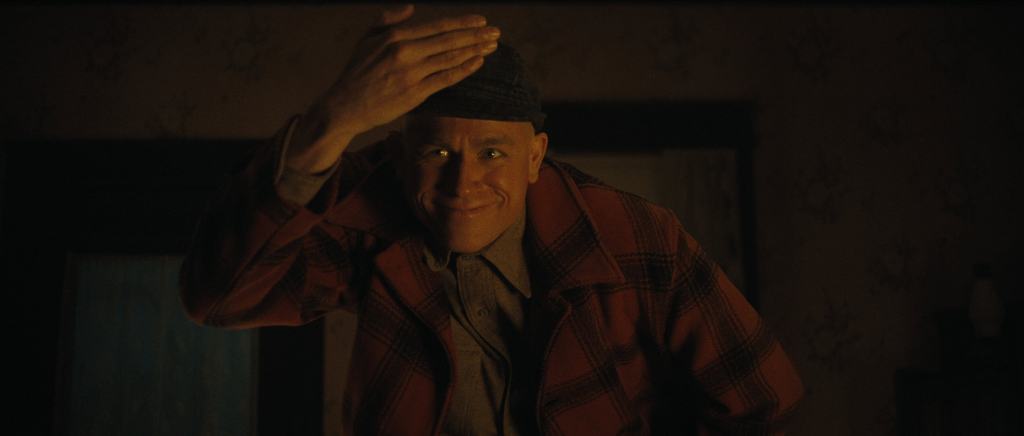

Ed’s final known murder, hardware store owner Bernice Worden, triggers his downfall. Sheriff Art Schley and Bernice’s son Frank uncover a nightmare farmhouse filled with human remains. Deemed legally insane, Ed is committed rather than imprisoned.
Inside the mental hospital, the show reframes him. Ed lives quietly, medicated late in life, haunted by hallucinations once mistaken for real voices (including Nazi war criminal Ilse Koch and entertainer Christine Jorgensen). He helps the FBI profile other killers like Ted Bundy, even forwarding a tip that leads to Bundy’s arrest. Yet his clarity comes too late. Diagnosed with schizophrenia, Ed dies of cancer behind hospital walls.
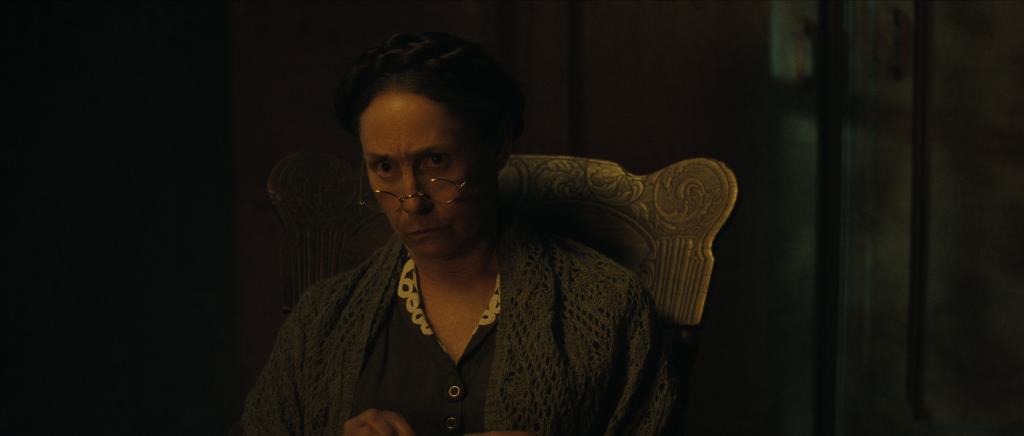
The finale adds a surreal postscript: teens steal his gravestone and are “met” by fictional killers, Norman Bates, Buffalo Bill, Leatherface, a reminder of how his real victims became horror myth. In a final imagined moment, Ed sits on a porch with Augusta, who tells him, “Only a mother could love you,” tying the story back to the warped love that shaped his life.

Ending Explained
The last act reframes Ed not as an unstoppable monster but as a damaged, untreated man whose psychosis went unchecked until it was too late. Medication finally silences the voices that pushed him toward grave robbing and murder, but only after years of destruction. His work with the FBI on the Bundy case shows a bitter irony: a killer helping catch another killer, once his own mind is quiet.
The visit from Adeline underscores the season’s central tragedy, trauma replicates itself. She is mentally ill, violent, and unmedicated, hovering near the same abyss that swallowed Ed. His plea for her to take help is the closest the series comes to remorse.
The graveyard coda with horror icons is a commentary on legacy: Ed’s crimes became raw material for movies that terrified millions but also flattened real human suffering into myth. The porch scene with Augusta isn’t redemption; it’s the show’s final thesis. Ed’s violence grew from love warped into control, and even in death he’s still the boy who only wanted his mother’s approval.

Key Details
- Series: Monster: The Ed Gein Story
- Creator: Ryan Murphy
- Episodes: 8 (all streaming now on Netflix)
- Genre: True crime / psychological drama
- Ending: Ed helps the FBI identify Ted Bundy but dies of lung cancer in a mental hospital; his crimes inspire Norman Bates, Buffalo Bill, and Leatherface.
- Themes: generational trauma, untreated mental illness, the transformation of real tragedy into horror culture.
The Poster
