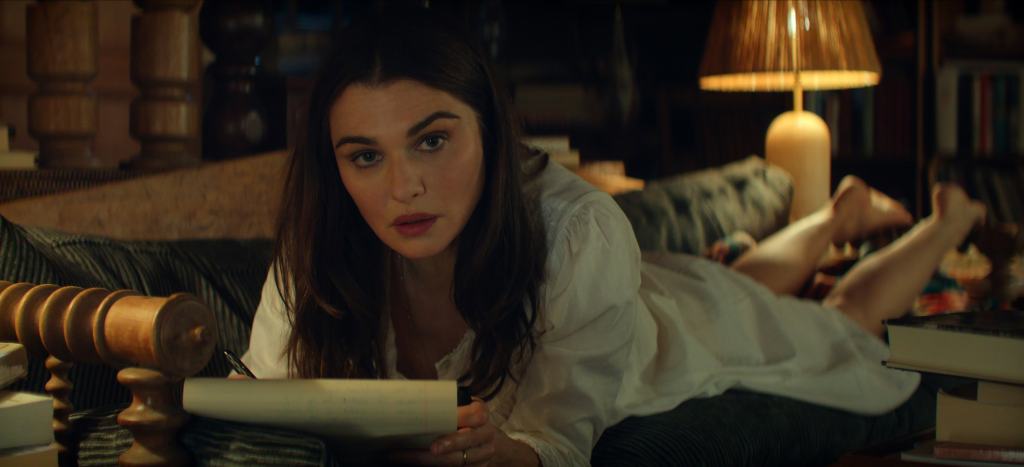
The transition from the page to the 4K stream is rarely a clean one, but with Vladimir, creator Julia May Jonas has performed a fascinating act of self-cannibalization. The 8-episode Netflix limited series, starring a razor-sharp Rachel Weisz, takes the bones of the 2022 debut novel and rearranges them into something significantly more cynical, and arguably more honest about its protagonist’s rot.
While the “Dark Academia” aesthetic remains intact, the diversion in the final act isn’t just a plot tweak; it’s a fundamental shift in the soul of the story.
The Protagonist: From Observer to Predator
In the novel, the unnamed narrator (M) is a woman of internal contradictions, stuck in the domestic mundanity of making frittatas for a husband she should loathe. The book leans into her sensory experience of aging and desire.
Netflix’s M is a different beast. Weisz plays her with a predatory stillness that the book only hinted at. In the series, the kidnapping of Vladimir (Leo Woodall) is far more calculated. The book presents the “chaining to the chair” almost as an absurd, heat-of-the-moment extension of a drunken night. The series treats it as a tactical move in a larger game of narrative chess.
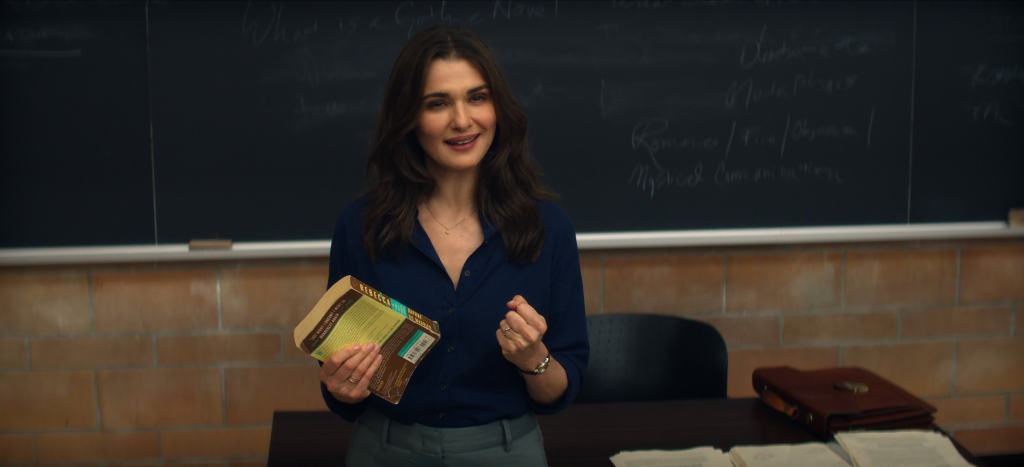
The Fire: Moral Fate vs. Creative Agency
The most jarring departure is the fire at the lakeside cabin. This is where the two versions of the story fundamentally split.
The Book Ending: The Morality Tale
In Jonas’s novel, the fire is an accident born of the narrator’s physical frailty. She turns on space heaters because she is shivering, a physiological response to stress. She falls asleep, the cabin burns, and she and John suffer horrific, life-altering injuries.
- The Result: M is saved by Vladimir. She spends months in a burn unit.
- The Subtext: It’s a conservative ending. M is punished for her transgression and ends up exactly where she started: tethered to John in a Washington Heights apartment, their marriage “stabilized” by shared trauma.
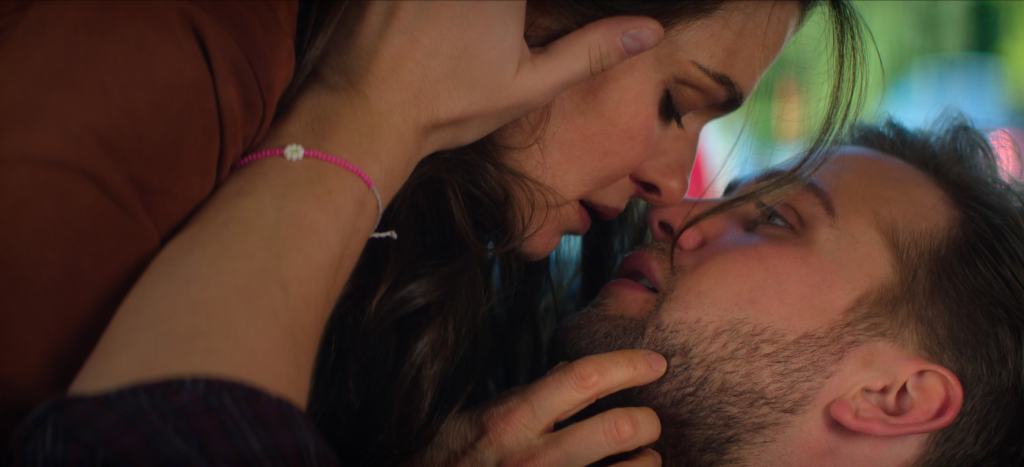
The Netflix Ending: The Arson of the Soul
The series turns the accident into an ambiguous choice. When the space heaters ignite, M doesn’t wake up to be rescued; she wakes up and realizes she has a decision to make.
- The Choice: Instead of dragging her husband or her lover to safety, M grabs her manuscript.
- The Result: She flees the building alone. John and Vladimir are left struggling with a jammed door while she cradles her legal pads on the lawn.
“I call 911, everybody gets out.” — M (Netflix Series)
This line, delivered directly to the camera, is the ultimate “unreliable narrator” flex. In the book, the men’s survival is a fact. In the show, it’s a claim made by a woman who just watched her house burn with her husband inside, so she could save her career.

The Verdict: Which Version Wins?
The novel’s ending is a sobering “slap in the face” that reminds us that M, for all her intellectual posturing, is a creature of habit. She returns to the safety of her marriage because, ultimately, she is a traditionalist.
The Netflix series is far more “bleak” (to use Vlad’s own word). By having M prioritize her writing over the lives of the men she claimed to desire, the show suggests that the “obsession” was never really about Vladimir or John. It was about the book. Vladimir was just a prompt. John was just a footnote.
If the book is about the cost of an affair, the show is about the cost of being an artist. The series argues that to find true “agency,” M had to let her old life burn, literally.