Since its Sundance premiere in January 2025, Train Dreams has drawn consistent praise for its restrained storytelling and striking cinematography.
The Netflix movie has joined Frankenstein and Jay Kelly as one of the platform’s key awards-season contenders.
While the Golden Globes do not feature a cinematography category, the film has shown a strong presence at other award shows. Before this interview, Train Dreams had already received nominations from the Astra Awards, the Seattle Film Critics Society, and the Film Independent Spirit Awards. Shortly after our conversation, it earned an additional nomination from the Critics’ Choice Awards.
We had the pleasure of speaking with cinematographer Adolpho Veloso about the personal ties he saw in the material, his approach to natural light, the relationship between silence and landscape, and the visual logic that shapes Robert Grainier’s life onscreen.
Below is our full conversation, edited for clarity.
E: First of all, congratulations. Train Dreams has been recognized at the Film Independent Spirit Awards, the Astra Awards, and now several more. When you first read Train Dreams, what stayed with you on a personal level? What made you think, “I need to work on this project”?
A: Thank you. The first thing was Clint. We shot Jockey together in 2019, and it was an amazing experience. I love him as a person and as a director, so I was hoping we’d work together again. When he sent me the script, I connected with it in a way I didn’t expect.
It’s the story of a man who leaves home for months at a time, works with people he’s never met, and then struggles to reconnect when he comes back. That’s my life. I spend months away from home, usually in places where I don’t know anyone. Coming back is always hard. I’m from Brazil, I live in Portugal now, and I still don’t feel completely rooted anywhere.
There’s also the immigrant aspect in the film. I haven’t lived everything the characters go through, but being an immigrant is never simple. And grief is something everyone understands. So there were many layers I felt close to. It made perfect sense to do it.

E: The film is sparse and often quiet. How did you approach translating that silence into the visual language?
A: Because the character doesn’t talk much, we relied a lot on images. Joe (Edgerton) was incredible. He can communicate so much through his expressions and his whole body. So it wasn’t about rushing into close-ups every time he didn’t speak. Sometimes the emotion is in how he stands or how he moves through a space.
We also treated memory as part of the language. We wanted it to feel like you’re watching someone’s memories unfold. And nature is a significant character in the film. Showing the environment around Robert, and how it affects him, helped translate those silences into something readable.

“Robert and nature are speaking to each other, even when nothing is said.”
E: Joe’s performance as Robert Grainier sits between the landscape and the character’s interior world. How did you decide when to stay on him and when to let the landscape take over?
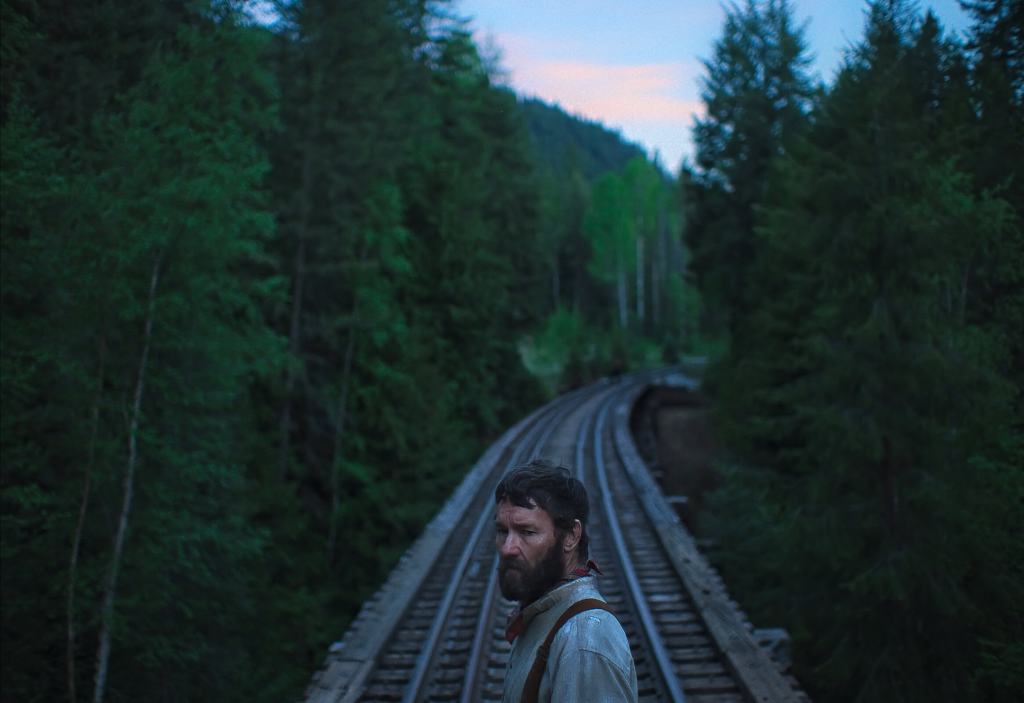
A: We thought of it as a conversation. Robert and nature are speaking to each other, even when nothing is said. So when we shot nature, we treated it exactly like another character. Sometimes it’s a reverse shot. Sometimes it’s over his shoulder.
Clint and Parker, our editor, shaped those rhythms beautifully. I trusted that anything I captured, especially those spontaneous shots between takes, could find its place later. I shot them for that reason.
E: You’ve spoken before about working primarily with natural light. What limits did that create, and did any challenges push you toward creative solutions you wouldn’t have found otherwise?
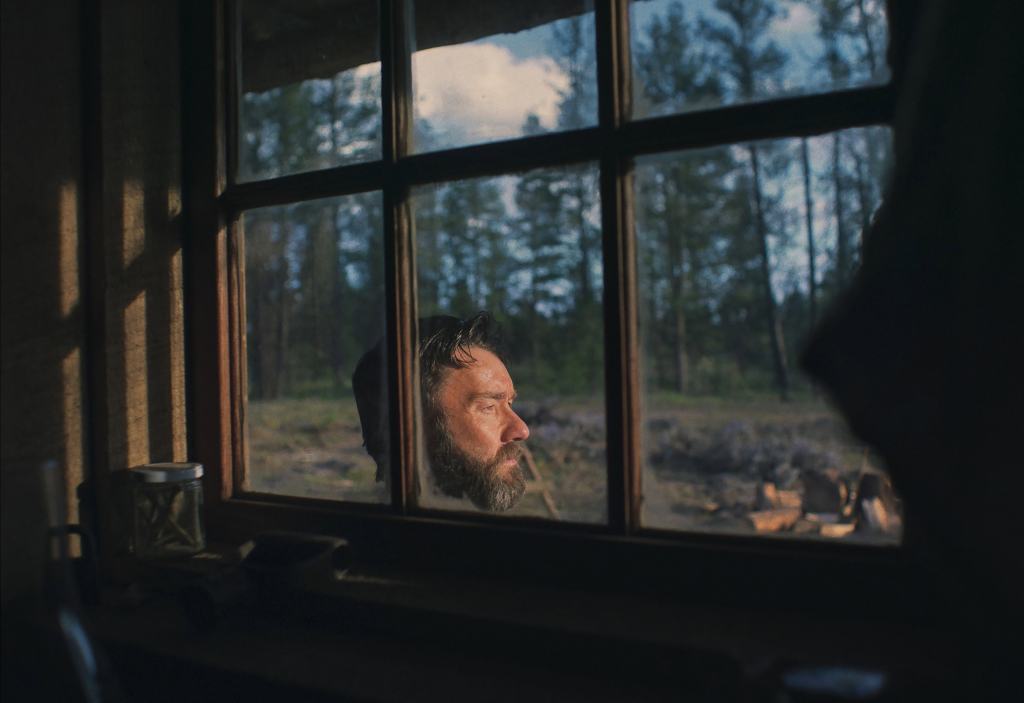
A: I don’t see it as limiting. It’s demanding during prep because you need to be in the right place at the right time. Everyone has to work around the light. But when you’re shooting, it’s freeing. The cast has more space. The director has more space. And I can move the camera however I want, without avoiding stands or rigs.
It also goes back to how I learned to work, small projects with one lamp or daylight. Later, even when I had big budgets with all the lights I could ask for, I sometimes felt the images looked worse. So I returned to natural light because the story needed it, and because it felt right.
“Natural light gives the actors and the camera more freedom than anything else.”

E: You chose Kowa Cine Prominars and Zeiss Super Speeds. What spoke to you about those lenses, especially with the mix of daylight and firelight?
A: We wanted lenses with texture and character. Older lenses work beautifully with digital. The Kowas have flares I love, golden, soft, and they capture trees and landscapes in a very unique way. Since we were outdoors a lot, they made sense.
But they’re slow, and we wanted to shoot night scenes using only fire. So we used Super Speeds for the night work. They matched the Kowa Cine Prominars well in texture but allowed us to use only real fire, candles, and lanterns. Clint already knew those lenses from Jockey, and they gave us everything we needed.
E: The landscapes are breathtaking, but they can also feel harsh. What was the most challenging environment you had to adapt to, and how did it end up serving the scene?
A: Light continuity outdoors is the real challenge. A half-cloudy, half-sunny day is a nightmare. You need consistency, so you decide: do we wait for the sun or wait for the clouds? If it keeps changing, that’s tough.
Shooting with less coverage saved us. When you do a scene in one take or one setup, whatever nature gives you becomes part of the moment. If it starts raining, you go with it.
E: The fire sequences feel very real. How did you balance realism and safety without losing the emotional weight?
A: Everything you see, candles, campfire, oil lamps, is real. Fire has a color and movement you can’t fake. It also changes how actors feel in the space.
The only exception was the large forest fire. We couldn’t do that practically. That was the sequence I worried about most because viewers watch real fire for almost an hour, and then suddenly an artificial element appears. We tested a lot of lighting approaches and what VFX needed from us to make sure it blended in.
E: Clint Bentley seems open to improvisation. How does that influence your work?
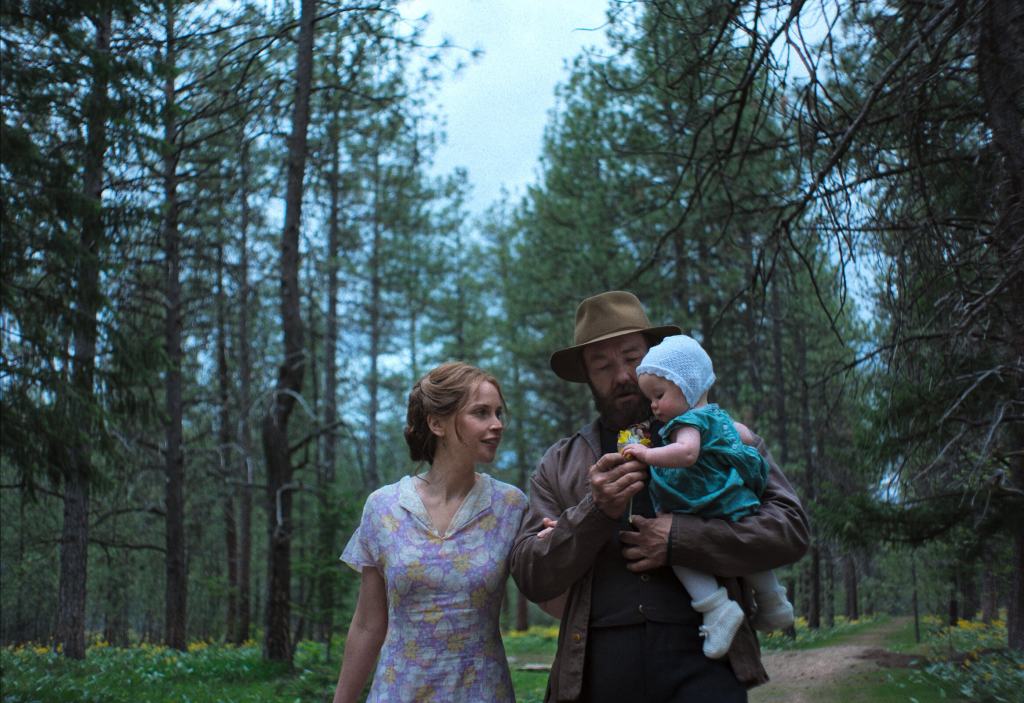
A: I love it. Some of my favorite moments in the film came from improvisation, especially between Joe and Felicity. My job is to make that possible.
It’s like jazz. You need to know what everyone is doing and have a solid plan, but then you can break the plan when the moment comes. Natural light helps, too, because there’s less machinery to work around.
“Each stage of Robert’s life has its own camera rule. The differences are subtle but intentional.”
E: The film moves in and out of memory without clear transitions. How did you shape those shifts?
A: We didn’t want noticeable differences, no black-and-white, nothing that separates the periods too strongly. Instead, each stage of Robert’s life has a camera rule.
As a child or teenager, the camera never moves, like a photograph you’re not sure you truly remember. In adulthood, the language is fluid: handheld, static shots, crane, dolly. Later in life, we grounded the camera more, used a steadicam, and shot fixed shots, because he had a steadier understanding of himself. The differences are subtle but intentional.
E: If you had more time, is there a scene you would have built out further?
A: If I had more time, I’d probably redo everything. There’s always something. That’s part of the job.
E: The pacing has this quiet, steady rhythm, almost like breath. How much of that comes from the way you shoot, and how much is defined later in the edit?
A: Both, and the score too. We had a very clear sense of pacing while shooting, which evolved in the edit and again with the music. I trusted it completely because I had worked with Parker and Bryce before. Knowing the team lets you trust what happens after the shoot.
E: To wrap up: what did you take from making Train Dreams? And what do you hope viewers take from it?
A: Personally, a lot. The story resonated with where I am in life. Watching Robert’s journey and the clarity he reaches made me think about my own. I’m still searching, but I recognize the feeling.
As for viewers, the reactions I’ve seen are very different, and that’s the great thing. People connect to different parts of the film, sometimes things I didn’t even think about while shooting. That variety is beautiful.
As of now, Train Dreams is available to stream on Netflix, where it has remained in the Global Top 10 for two weeks in a row.