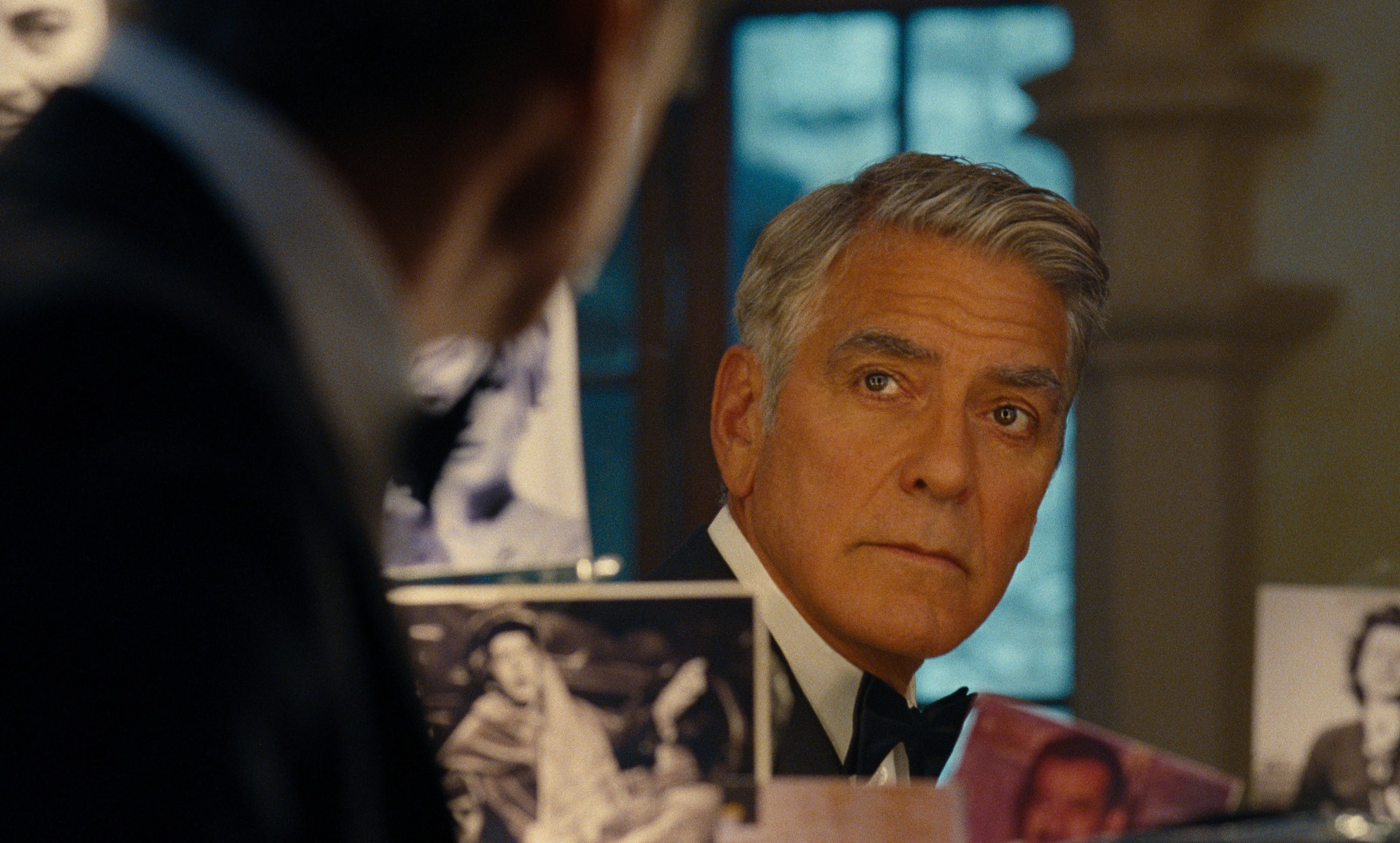
Jay Kelly arrives at a key moment for Netflix. The film is positioned as one of three major awards-season plays for the streamer, alongside Train Dreams and Guillermo del Toro’s Frankenstein, and it comes with a serious pedigree.
Directed by Noah Baumbach and co-written with Emily Mortimer, the comedy-drama stars George Clooney as an aging movie icon whose glossy career reel hides a much harsher truth.
For most of its runtime, the film follows Jay as he bounces between sets, agents, premieres, and family obligations he barely shows up for. By the time the final act of Jay Kelly unfolds, we’re watching a man who has everything he ever chased in his career and almost nothing solid left in his personal life.
The final act brings together his guilt over a dead mentor, a lifelong rivalry with a former friend, a crumbling bond with his daughters, and the one relationship he has never quite named: the partnership with his manager, Ron Sukenick (Adam Sandler).
This recap walks through the story in order, then breaks down the ending, including that last line to the camera and what it means for Jay’s legacy.
Before the recap, watch the trailer

From funeral to complete collapse
At the start of the movie, Jay Kelly is deep in the machine. Jay is shooting another big film; his days are stitched together by calls from his manager, Ron, and publicist, Liz, and his schedule is packed so tightly that one project starts as soon as the previous one wraps. The first cracks appear at home, where his daughter Daisy talks excitedly about an upcoming trip to France while he half-listens, knowing he has not really been present for any of her milestones.
The turning point comes when Jay learns that Peter Schneider, the director who gave him his first major role and became a father figure, has died. At the funeral, Peter’s son speaks about a man who was away from home for work. The speech lands in a way Jay refuses to show, but it plants the seed for the movie arc: the realization that his own life is following the same pattern.
Outside the service, Jay runs into Timothy, an old acting-class friend who never broke through. Their reunion starts with shared memories and slides into accusation. Timothy lays out the history Jay has avoided acknowledging: the audition where Jay jumped in after Timothy froze, took the part, and launched a career; the girlfriend who left Timothy for Jay; the feeling that one man’s success was built on another’s missed chance. The argument escalates into a clumsy fight, and Jay walks away bruised but shaken.
This is where the film pivots. Jay pulls out of an upcoming movie, against Ron’s advice, and decides to follow Daisy to Europe instead. Officially, the trip is packaged as a Dior commitment and an honorary tribute in Tuscany. In reality, it is an attempt to rewrite years of distance with a single gesture.
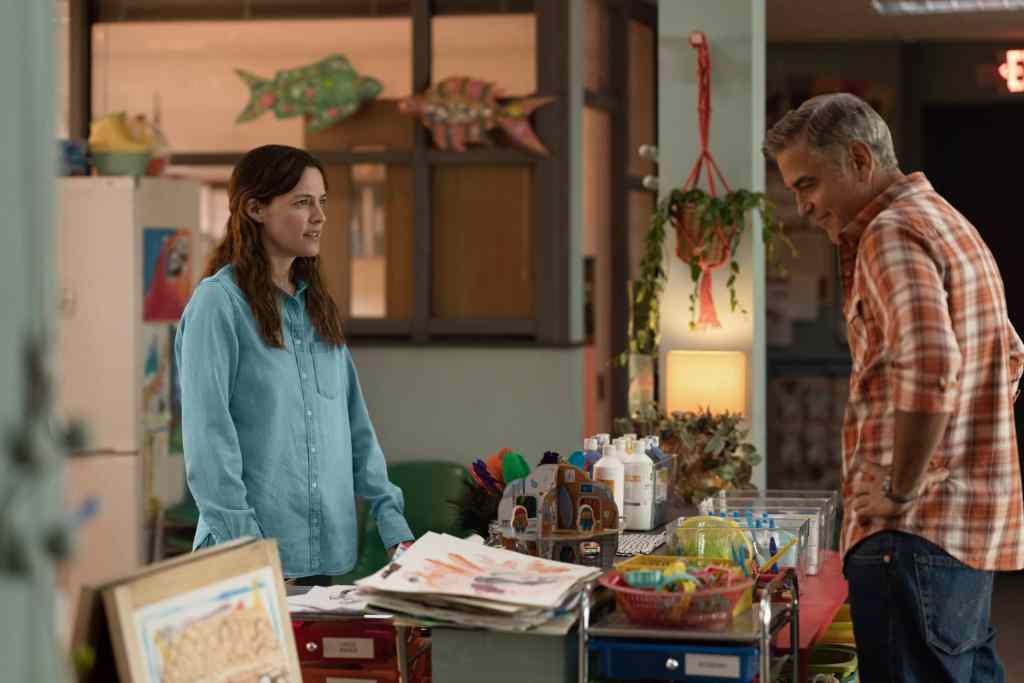
Jay, Jessica, and Daisy
The European stretch is crucial to the movie because it shows how little ground Jay actually has with his daughters.
In France, he chases Daisy via train, using her friend’s card trail to track her movements. When he finally reaches her, the reunion is brief and bruising. Daisy is polite but guarded, treating him more like a famous stranger than a parent. She calls out the way he found her and makes it clear she is not interested in becoming a quick emotional fix for his guilt. Jay keeps slipping into performance mode, joking, planning, filling the silence instead of listening, and she walks away with a simple goodbye.
A parallel thread runs through his relationship with his older daughter, Jessica. Years earlier, she brought him into a therapy session where a counselor read a letter about all the times he was absent. He walked out before the letter was finished. On the phone near the end of the film, when he begs her to attend his tribute and “be part of it,” she reminds him of that day and tells him that the ten-year-old version of herself wants nothing to do with him. She wishes him well and hangs up.
These scenes matter more than any viral triumph or industry honor. They underline the central cost of his life: he believed he could postpone real parenting, only to discover that later never came. By the time he is ready to show up, his daughters have already adjusted to a life without him.
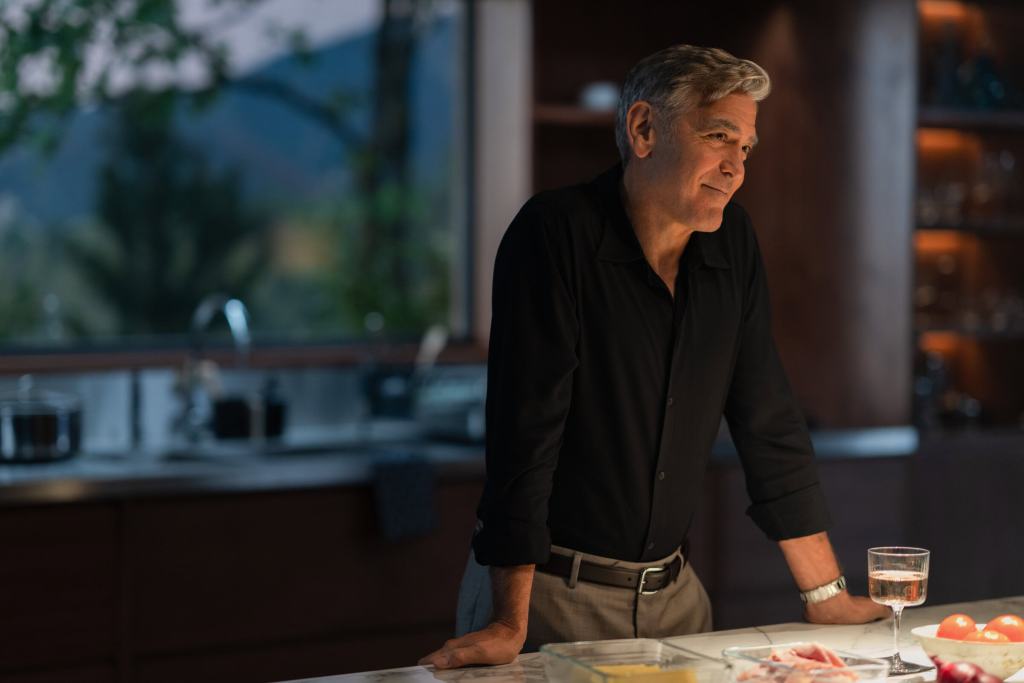
Timothy, Peter, and the weight of regret
The film never presents Jay as an outright villain, but it is unsparing about the way he moves through other people’s lives. Timothy’s resentment is rooted in real events: Jay did take the risk at the audition that Timothy could not, then built his career on that break. Years later, when Peter was struggling financially and asked Jay to help finance a new project, Jay turned him down. At the memorial, that choice sits on him like a second loss.
As the story moves toward the ending, Timothy even files a lawsuit over their bar fight. Lawyers eventually dig up a damaging detail from Timothy’s past, and he withdraws the claim. On paper, Jay has “won” again. Emotionally, it only deepens the sense that every conflict in his life gets resolved through power, not reconciliation.
Peter’s death and Timothy’s fury combine into one lesson: each significant step in Jay’s career seems to have left someone else on the ground. The fact that he understands this only after it is too late to repair those relationships feeds directly into the final scene.

Ron, the tribute, and “another shot”
Ron Sukenick is the quiet center of Jay Kelly. He has been there since the beginning, managing deals, smoothing crises, and sacrificing time with his own family to keep Jay’s career upright. In Tuscany, as preparations for the tribute ramp up, Ron meets with another client, Ben Alcock, who promptly fires him. Ron returns to Jay carrying that loss and the slow realization that his entire professional life has been chained to one man’s whims.
When Jay abruptly walks away from the next shoot and hands the role to Ben, it threatens Ron’s last remaining steady job. Their argument spills out in a raw conversation where Ron asks, in different words, whether he is actually Jay’s friend or just the one who cleans up. Jay never really answers, and Ron decides to leave.
On the morning of the tribute, Jay stops him and apologizes, asking Ron to attend the event not as a manager but as the person who has been by his side from the beginning. Ron agrees to sit in the audience, but their working relationship is over.
Inside the theater, clips from Jay’s filmography play on the screen, including some drawn from Clooney’s real career. The crowd applauds and admires. For the viewers, it is a celebration. For Jay, it lands like an autopsy. The montage moves from early breakout roles to later hits, intercut with a home recording of his daughters performing a small play when they were children, right before he rushed off to work.
This is the emotional core of the movie. The tribute forces him to watch his life as a sequence of professional peaks with tiny, fragile personal moments buried between them. Every accolade is paired, in his mind, with a missed dinner, a broken promise, a phone call he did not return.
After the screening, the lights come up, and he slips into autopilot: the practiced smile, the adjusted jacket, the easy charm. Then he falters. Looking straight down the lens, he lets the persona drop for a second and quietly asks, “Another shot.”
Jay does not explain. He is not asking for a second try at the answer. He is, in effect, asking for another take of his entire life: another chance to respond to Peter, to show up for Jessica’s letter, to sit at the table with Daisy instead of chasing another opening weekend.
The tragedy is that he already knows the answer. Movies allow new takes; real life does not. The film leaves him there, caught between the ovation in the room and the private knowledge that no amount of applause can rewrite the years he chose to spend elsewhere.

Where the film leaves Jay
The very end of Jay Kelly does not offer a full redemption arc. There is no neat reunion with Jessica and only the faintest opening toward a different way of being with Daisy. What the film gives him instead is clarity. He finally understands that his work, which built the legend of “Jay Kelly,” hollowed out the man beneath it.
The film closes on a man who has achieved almost everything he set out to do in his career and has to live with the realization that he cannot “go again” on the parts that matter most.
That last look into the camera is not a wink. It is a confession that there are no retakes on missed childhoods, abandoned friendships, or parents you never visit until it is almost too late. The crowd sees a legend; Jay finally sees the gap between the life he projected and the life he actually lived.

The Poster