
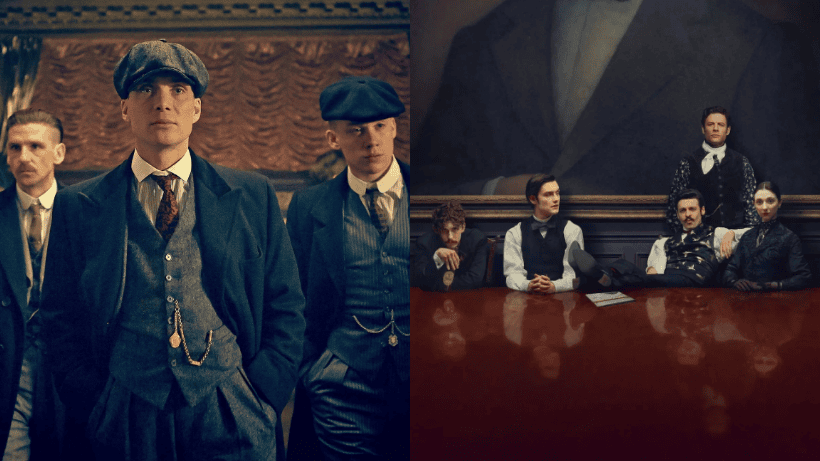
If you loved the rise-and-reckoning arc of Peaky Blinders, House of Guinness scratches the same itch while standing on its own. Both shows trace a family’s climb through a hostile landscape that is political as much as it is criminal. In Birmingham, Peaky Blinders followed the Shelby gang after World War I, led by Tommy Shelby, across six series and 36 episodes, created by Steven Knight for the BBC, with Netflix distributing internationally.
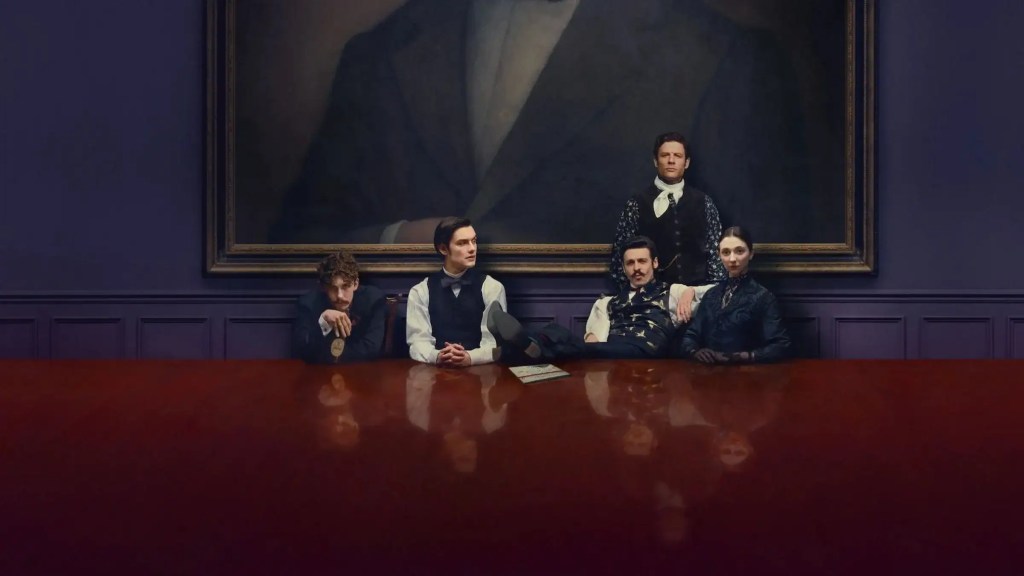
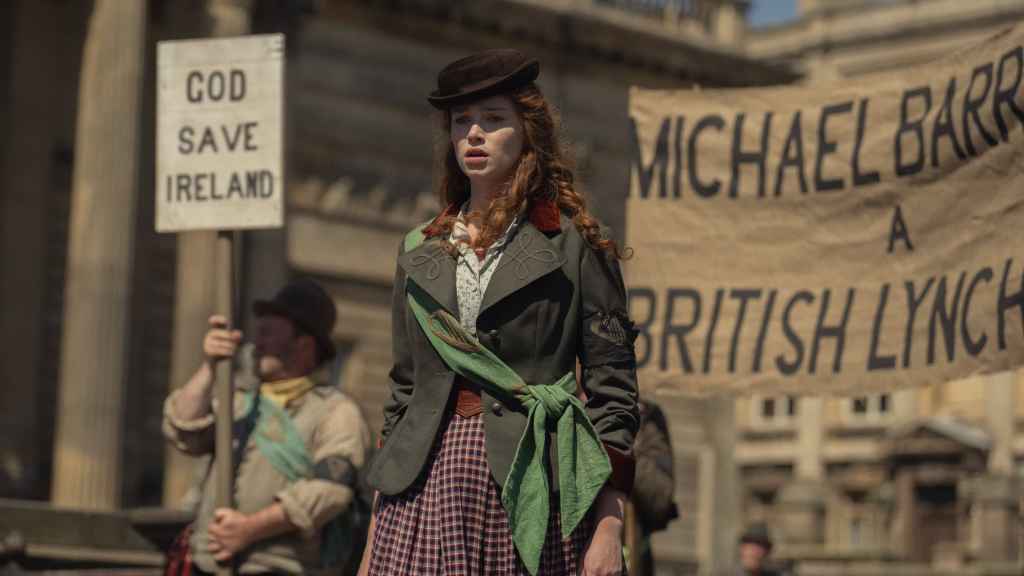
House of Guinness moves the lens to Dublin in 1868. The Guinness siblings inherit a brewing empire while Ireland simmers with Fenian unrest. The tension is not just street-level. It is also boardroom, ballot box, and pulpit. If you want the moral pressure and political stakes that powered Peaky Blinders, you will find them here in a different register that fits Ireland’s moment.
Story and writing
Like Peaky Blinders, the new series builds its arcs around a magnetic, compromised family. The Guinness heirs fight on several fronts: against rivals in the city, against internal weakness, and against a public that sees them as both benefactors and targets. Where the Shelbys expanded their rackets, the Guinness strategy is influence: parliament, philanthropy, and labor. That shift keeps the narrative taut without copying plot mechanics.
Peaky’s writing earned its reputation for clipped dialogue and clean escalation. The Guinness scripts share that economy. Scenes get in, land a turn, and leave you with a sharp line or a problem that cannot be ignored. The effect is similar: momentum without noise.

Costumes that tell the story
One reason Peaky Blinders became a style phenomenon was the precision of its wardrobe, right down to the cut of the suits and the caps. Season 6’s costume design, for example, was led by Alison McCosh, who discussed shaping the final season’s look and honoring Helen McCrory’s Polly Gray.
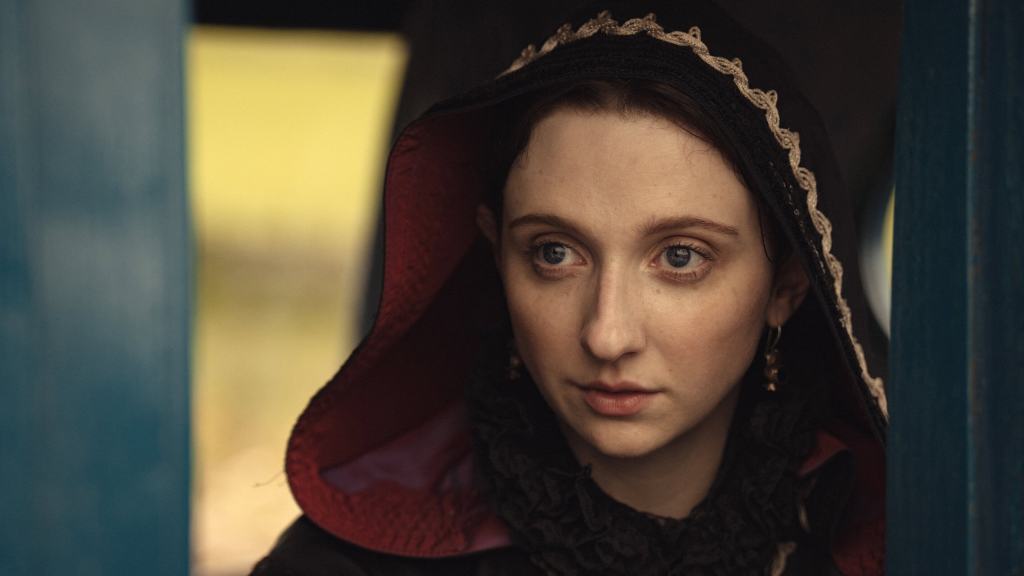
House of Guinness makes the same case through different clothes. Black frock coats and crisp cravats for the boardroom, soot and linen on the brewery floor, and textured gowns that read wealth without gaudiness. Olivia’s polished silhouettes signal negotiation more than seduction. Anne’s practical cuts evolve as her philanthropy hardens into policy. Wardrobe becomes character work, not just period dressing.
Music with teeth
Peaky Blinders made “Red Right Hand” a calling card and rotated covers by artists like PJ Harvey, Arctic Monkeys, Iggy Pop, and Snoop Dogg, creating a modern-meets-period sonic brand.
House of Guinness takes a parallel road. Contemporary Irish artists sit beside folk standards and orchestral cues. The result is a sound that bridges centuries. You hear politics in the rhythm and grief in the melody. It is not pastiche. It is memory set to music.
Cinematography and mood
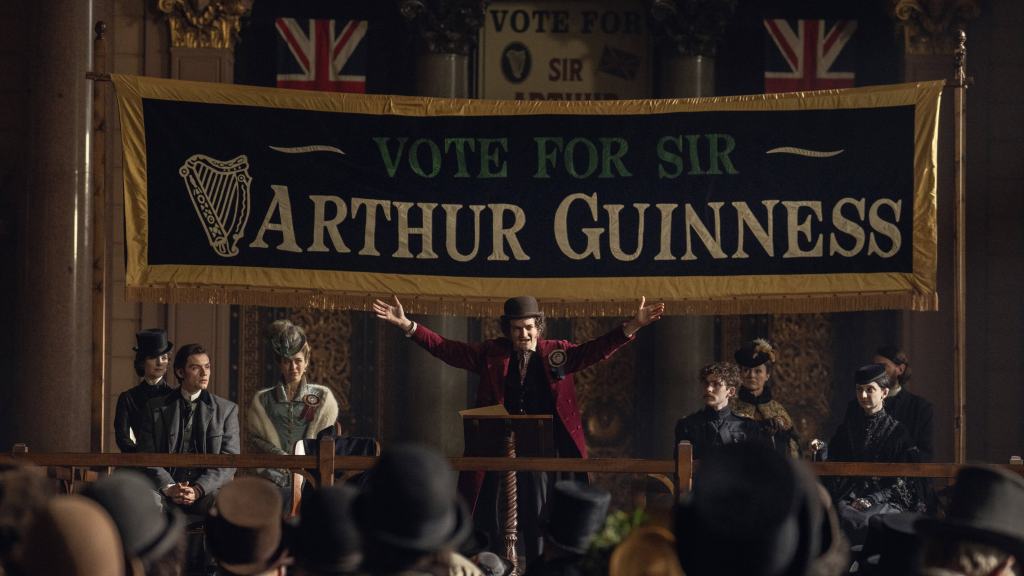
Peaky’s look favored controlled frames, low light, and slow push-ins that let nicotine and threat cloud the air. House of Guinness answers with a cooler palette for power rooms, warmer tones in working quarters, and harsh daylight on the streets. The camera earns its movement. When it glides, it does so with purpose, usually at decision points when money and faith collide. The visual logic is consistent, which keeps the big scenes clear even when the politics knot up.

Character parallels for Peaky fans
- If you followed Tommy Shelby’s tightrope between office and underworld, Arthur Guinness’s parliamentary ambitions will feel familiar, though his arena is respectability rather than rackets.
- If you tracked Arthur Shelby’s volatility, Benjamin Guinness’s slide between resolve and ruin hits a related nerve, with addiction and debt pulling at him from both sides.
- If Polly Gray’s moral clarity anchored you, Anne Guinness fills that role in a different key, turning private grief into public work.
- If Ada Shelby’s independence stood out, Olivia’s choices map the personal cost of alliances that look neat on paper and brutal in practice.
The history link that Peaky fans will appreciate
Peaky Blinders pulled from a real urban gang and the post-1918 social fallout, set first on BBC Two and later BBC One, with Netflix streaming outside the UK. The new series draws from Ireland’s 1868 crossroads and the Guinness family’s rise, using rebellion and religion as constant pressure. If you liked how Peaky mixed real events with fiction, you will recognize the method here, just tuned to Dublin’s politics and industry.
Final notes for House of Guinness if you loved Peaky Blinders
This recommendation is simple. If Peaky Blinders hooked you with layered family power plays, signature music, and image-forward storytelling, House of Guinness offers that same level of craft. The costumes do character work, the music carries history, and the cinematography stays disciplined. The story is not a copy. It is a new city, a new century, and a family that can make or break itself in public.
Key Details
House of Guinness premiered in September 2025. Season 1 is set in Ireland in 1868 and follows the Guinness heirs after the death of Sir Benjamin Guinness. The cast includes Anthony Boyle (Arthur Guinness), Fionn O’Shea (Benjamin Guinness), Emily Fairn (Anne Guinness), Michael McElhatton (John Potter), Danielle Galligan (Lady Olivia Hedges-White), James Norton (Sean Rafferty), Niamh McCormack (Ellen Cochrane), and Seamus O’Hara (Patrick Cochrane). The series blends fact and fiction to explore power, family, rebellion, and identity.