
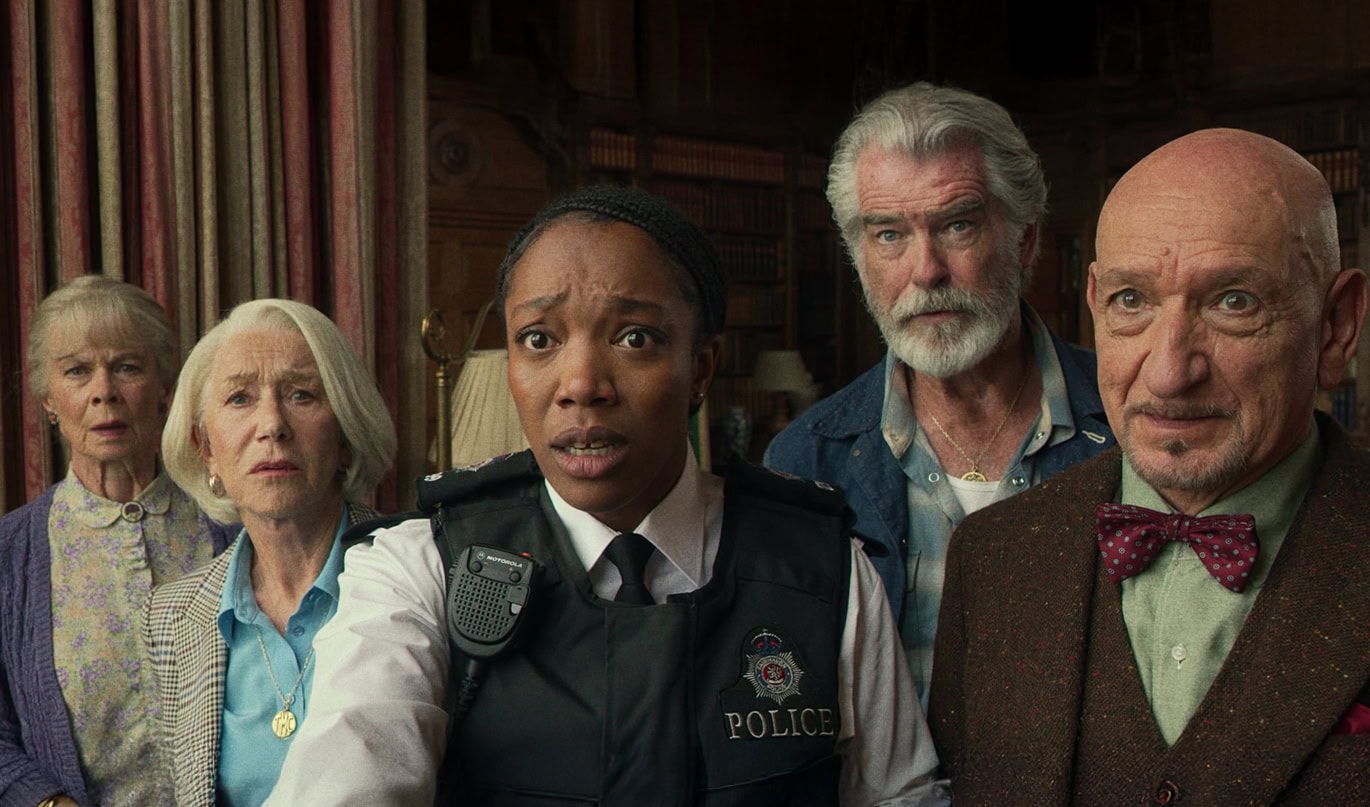
The Thursday Murder Club book vs movie is a fascinating study in how a bestselling cozy crime novel makes the leap to screen.
Richard Osman’s 2020 debut became an instant publishing phenomenon, introducing readers to Elizabeth, Ron, Ibrahim, and Joyce, four retirees who spend their Thursdays digging into cold cases. Now, the Netflix film, directed by Chris Columbus, brings their story to life with Helen Mirren, Pierce Brosnan, Ben Kingsley, and Celia Imrie leading the cast.
Both versions share the same heart, friendship, wit, and the thrill of detection, but the film streamlines characters, heightens the drama, and reshapes some reveals for cinematic effect.
Book Setting and Setup
In the novel, Coopers Chase is a retirement village built on the grounds of a convent. The Thursday Murder Club meets in the Jigsaw Room to review old files, originally supplied by Penny, a retired police officer who now lies unconscious in the hospice wing. Her husband, John, remains faithfully by her side.
The group, Elizabeth Best (ex-MI6), Ron Ritchie (ex-trade unionist), Ibrahim Arif (psychiatrist), and newcomer Joyce (a widowed nurse), balances humor, grief, and intellect while piecing together unsolved mysteries.
The film preserves this core but shifts emphasis. Penny appears only as Elizabeth’s old friend, and Joyce’s entry into the group is accelerated, giving Celia Imrie’s character an earlier spotlight.
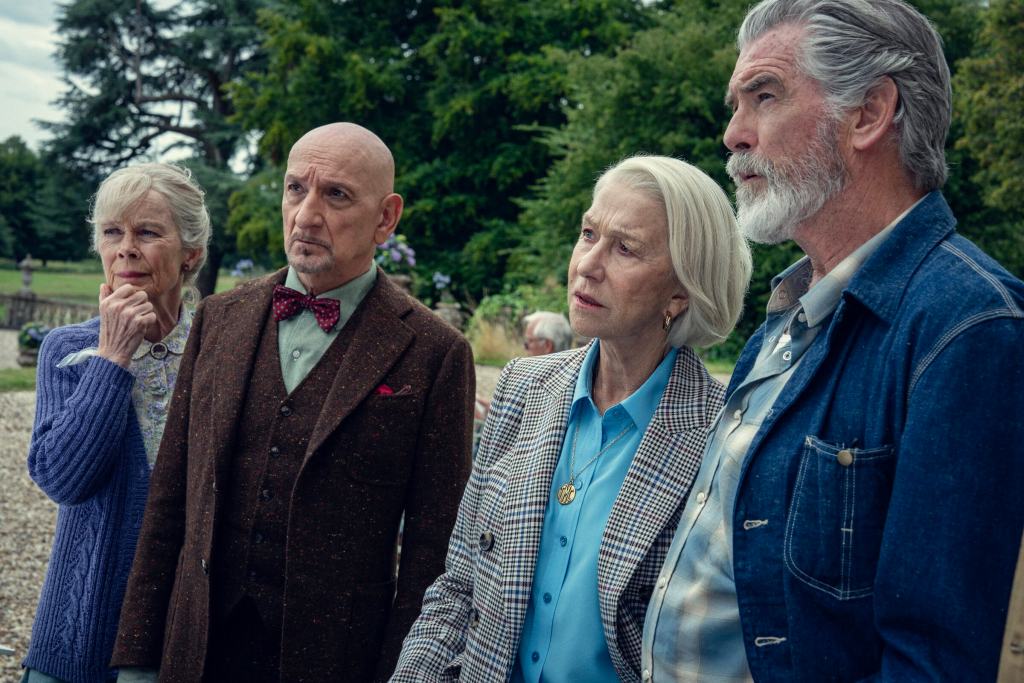
The Cold Case vs. the Film’s Mystery
In Osman’s book, the club revisits the 1970s killing of Annie Madeley. Penny had always suspected Annie’s boyfriend, Peter Mercer, but he escaped justice. His buried remains resurface during the Coopers Chase cemetery dispute, confirming Penny was right.
The film simplifies the cold case into Angela Hughes, tied to Peter Mercer as the key witness. It folds Mercer’s disappearance into the modern storyline, connecting it directly to the cemetery excavation.
The Developers and the Community
Both versions highlight the development battle at Coopers Chase. Ian Ventham wants to bulldoze the cemetery and convent church to build luxury flats and turn the village into an events venue.
The book dwells more on the residents’ protest, complete with Father Mackie and a united front at the graveyard gates. The film condenses this conflict, focusing instead on the power struggle between Ian and his late partner Tony Curran.

The Murders: Book vs. Movie
- Tony Curran
- Book: Murdered by Bogdan in an act of personal revenge. His confession comes in a private moment with Stephen, Elizabeth’s husband.
- Film: Tony is killed after his ties to crime boss Bobby Turner are revealed, with Bogdan’s role reframed as a more desperate accident.
- Ian Ventham
- Book: Killed by John, Penny’s husband, with a fentanyl syringe during the cemetery protest. His motive: protecting Penny’s secret.
- Film: Ian’s death unfolds the same way but with added emphasis on Elizabeth’s cat-and-mouse with the police and her growing alliance with PC Donna.

What Penny Did
The novel reveals Penny killed Peter Mercer herself, frustrated by the justice system’s failures. John helped bury the body in the cemetery.
The film echoes this but frames Penny’s choice more as a tragic necessity, with John’s later actions driven entirely by devotion to her.
The Ending Compared
- Book: John chooses to end both his and Penny’s lives with a syringe, Elizabeth allowing him that private farewell. Joyce’s daughter Joanna buys Coopers Chase, ensuring its survival.
- Film: John’s final act is similar, but the emphasis shifts to Elizabeth’s deal with Bobby Turner, securing Coopers Chase through negotiation rather than inheritance. Joyce is formally welcomed into the club.
Both endings underline the same theme: justice comes in unexpected ways, and the Thursday Murder Club endures.
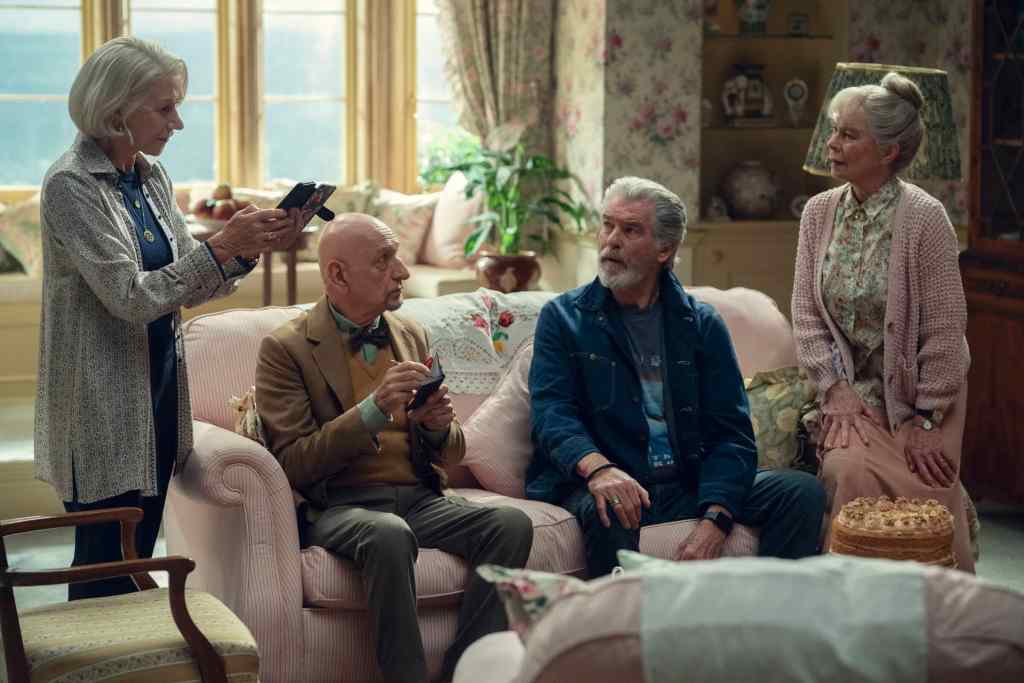
Why the Changes Work on Screen
The book’s layered plots, multiple murders, cold cases, and community politics are trimmed for clarity. The film leans on its star power, letting Mirren, Brosnan, Kingsley, and Imrie shine in character-driven moments.
Fans of Osman’s text will notice missing side plots (like Father Mackie’s role or extended protests), but the trade-off is a brisker pace and more time for the ensemble’s chemistry.
Final Word
The Thursday Murder Club book vs movie shows how the same story can thrive in two forms: one as a cozy, layered puzzle on the page, the other as a character-driven whodunit on screen. The essentials remain, Elizabeth’s cunning, Joyce’s warmth, Ron’s bluster, and Ibrahim’s care.
With four books already published and a fifth on the way, and with a cast this strong, it feels inevitable that Netflix will return to Coopers Chase.


I was so looking forward to this but the changes were not a streamline but, i stead, a retelling. I don’t think they’ve left a path to later novels. Netflix is cheap so I’m guessing that’s why it’s a single movie instead of a series but it didn’t work.