

If you, like me, just powered through Sirens, Tyler Perry’s She the People is the perfect palate cleanser.
It’s lighter in tone, yes, but not in substance.
This political comedy, which premiered part 1 on Netflix on May 22, 2025, follows Antoinette Dunkerson (Terri J. Vaughn), a sharp but underestimated woman who becomes Mississippi’s first Black lieutenant governor. What follows is a mix of family chaos, backroom politics, and some pointed truth-telling.
At its heart, the series is a comedy, but Perry doesn’t pull punches when it comes to systemic racism, gender bias, or power dynamics in the South.
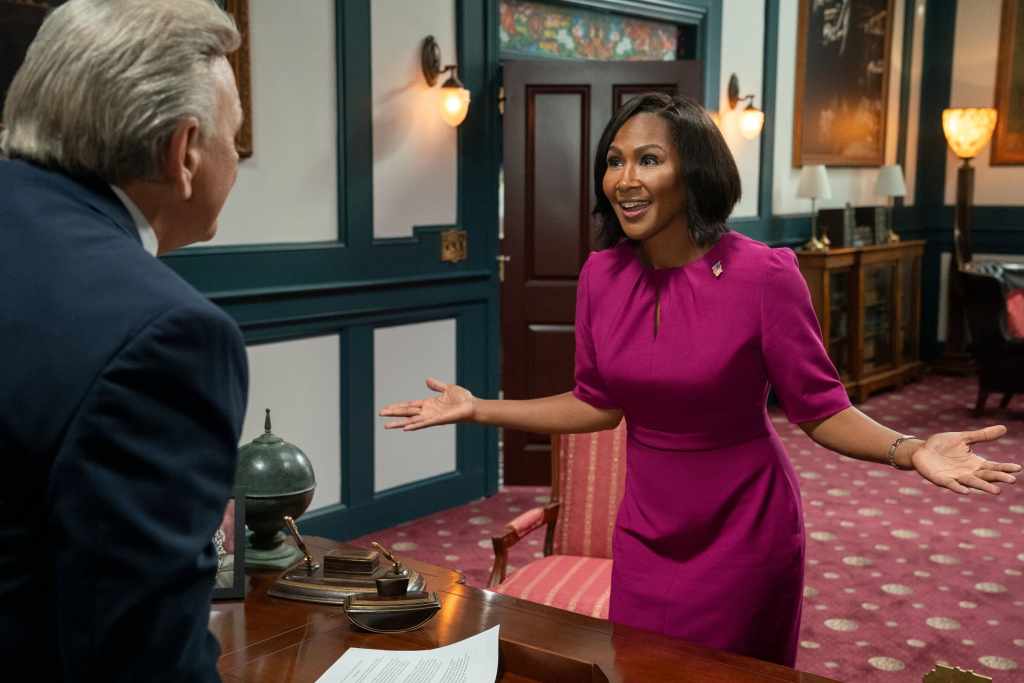
Antoinette quickly realizes her new role isn’t about leadership, it’s about obedience.
The governor, Harper, not only handpicks her staff but bars her from making even the smallest changes to her office. Her lieutenant governor’s mansion is a former plantation still decorated with Confederate flags and memorabilia. Her presence is symbolic, not strategic. And while she’s a brilliant lawyer, Antoinette’s lack of political experience is seen as something to exploit, not support.
Still, the series builds her arc with care. We watch her stumble, second-guess, and slowly stand her ground. Her mother, Cleo (Jo Marie Payton), steals scenes as an unfiltered voice of reason, while Shamika (Jade Novah), her cousin and campaign manager, keeps the gears turning behind the scenes.
The first half of the season ends with Antoinette defying Harper on a controversial pipeline project, an act of political and personal defiance that shifts the tone of the show and leaves the power structure hanging by a thread after a dramatic twist.
Tyler Perry’s She the People Debuts Trailer and Key Art Ahead of Netflix Premiere
Tyler Perry, as writer, director, and co-creator (alongside Niya Palmer), shows once again that he knows how to shape characters across genres. From heavy dramas like A Jazzman’s Blues to the Madea comedies, Perry doesn’t box himself in, and She the People is an excellent example of how his dual sensibilities can work together. The show balances humor with urgency, emotion with satire. The jokes land, but so do the moments of silence, frustration, and quiet strength.

Perhaps the most impressive part?
The pacing.
In just eight episodes, we watch Antoinette go from campaign trail to political pawn to someone finally claiming her voice. Many writers and showrunners could take notes. That kind of growth is rare, especially in an era where character arcs often get lost in meandering plots or overlong seasons. Perry and his team give Antoinette a full, clear journey and somehow manage to make it both hilarious and honest.