We finally know who tried to kill George Russell, and the answer takes us all the way back to Season 1. In The Gilded Age season 4 episode 2, George confronts the son of a man whose life he helped destroy, while Bertha returns from England to find her marriage still in trouble. Meanwhile, Marian struggles with what happened between her and Larry and begins to see a different future for herself.
George Russell Finds the Man Who Tried to Kill Him
The episode opens with George Russell barging into Mrs. Morris’s home with his men and taking her son, Will, into custody.
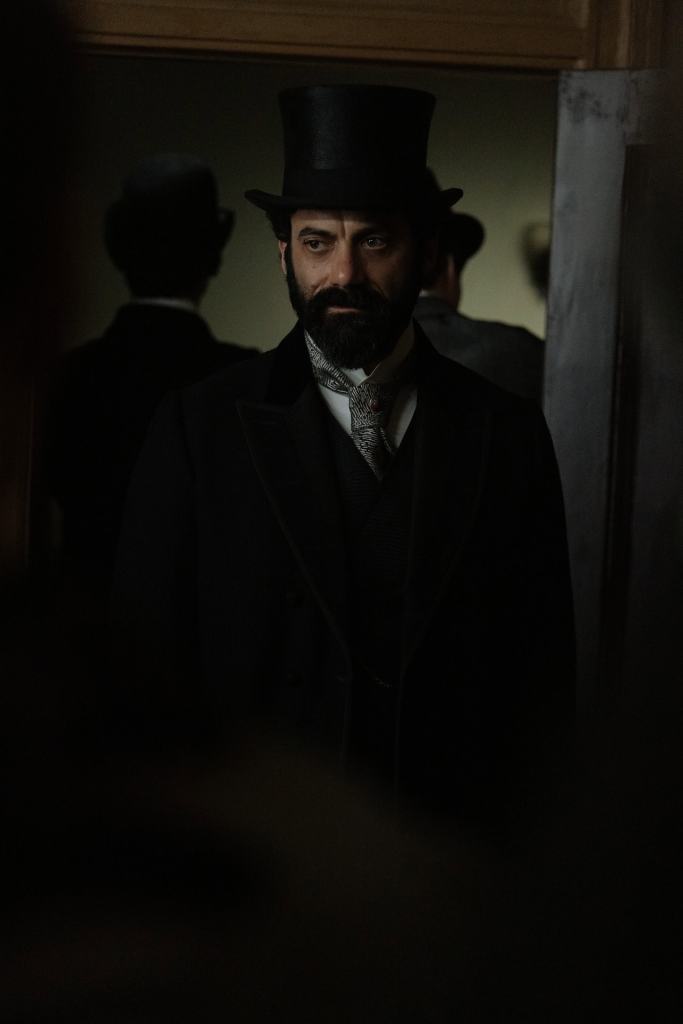
Will is the person who attempted to kill George, and his motive goes back to Season 1. His father, Patrick Morris, was a New York alderman who took his own life after being financially ruined by George Russell.
George understands that Mrs. Morris knows nothing about her son’s actions. Nevertheless, he takes Will away while his mother begs him to show mercy. Will, meanwhile, shows no sign of remorse for what he has done.
Back at the Russell household, Bertha returns from England, only to discover that George still refuses to sleep at home. Whatever happened between them before her departure remains unresolved, and she is clearly hoping they can find a way back to each other.
When Bertha later approaches George and begs him to come home, he refuses to discuss it. Before leaving, however, he kisses her. It is a small gesture, but at least he is no longer keeping her entirely at a distance.

Marian Refuses to Marry Larry Out of Guilt
Larry tries to speak with Marian about the night they spent together, reassuring her that they were caught up in the moment and that neither of them has anything to be ashamed of.
Marian sees things very differently. As far as she is concerned, she has disgraced herself, and Larry’s reassurances do little to change how she feels.
When Larry suggests they could get married, Marian takes his proposal in the worst possible way. Rather than hearing it as a declaration of love, she believes he is offering marriage because he feels responsible for what happened.
And that is precisely what she does not want.
Marian has no intention of marrying Larry out of pity or guilt. She wants him to choose her because he loves her, not because he believes marriage is the proper way to make up for their night together.
For now, she would rather forget it ever happened. Seeing Larry only makes things more painful, and she asks him to leave her alone.
Marian Finds Purpose at the Settlement House
Ada accompanies Marian to the settlement house to see where she has been working, and we get a much better understanding of why this place has become so important to her.
The settlement house provides food, medical care, education, childcare assistance, and legal services to people who need them. Some volunteers even live there to better understand the circumstances of the families they are helping.
It is easy to see how much Marian loves her work and how rewarding she finds it.
Virginia Saville, played by Elizabeth Marvel, also teaches Marian an important lesson about not judging the people who come through their doors. It is advice that could prove valuable as Marian becomes more involved in the settlement house’s activities.
And considering that Virginia is played by Elizabeth Marvel, I have a feeling she will have a much more influential role in Marian’s story this season. You don’t cast an actress like Marvel just to have her standing in the background.
Marian is already thinking beyond her current responsibilities. She hopes to help establish the next settlement house and even agrees to take evening shifts.
One night, after finishing work late, she passes Larry’s house and sees him outside, laughing and talking with his friends.
The contrast between their evenings reinforces her belief that she is moving in the right direction.
Marian is finding something meaningful outside the world she has always known, and perhaps that is exactly what she needs right now.

Agnes Faces a Changing New York Society
Meanwhile, Agnes is asked to participate in a series of interviews meant to highlight the Heritage Society’s importance to New Yorkers.
The idea is that a few newspaper articles will bring more attention to the society and its upcoming event. Agnes is hardly enthusiastic about the prospect, but she eventually agrees.
Unfortunately for her, the journalist also wants to witness New York society in action, which means Agnes must attend an evening at the Metropolitan Opera.
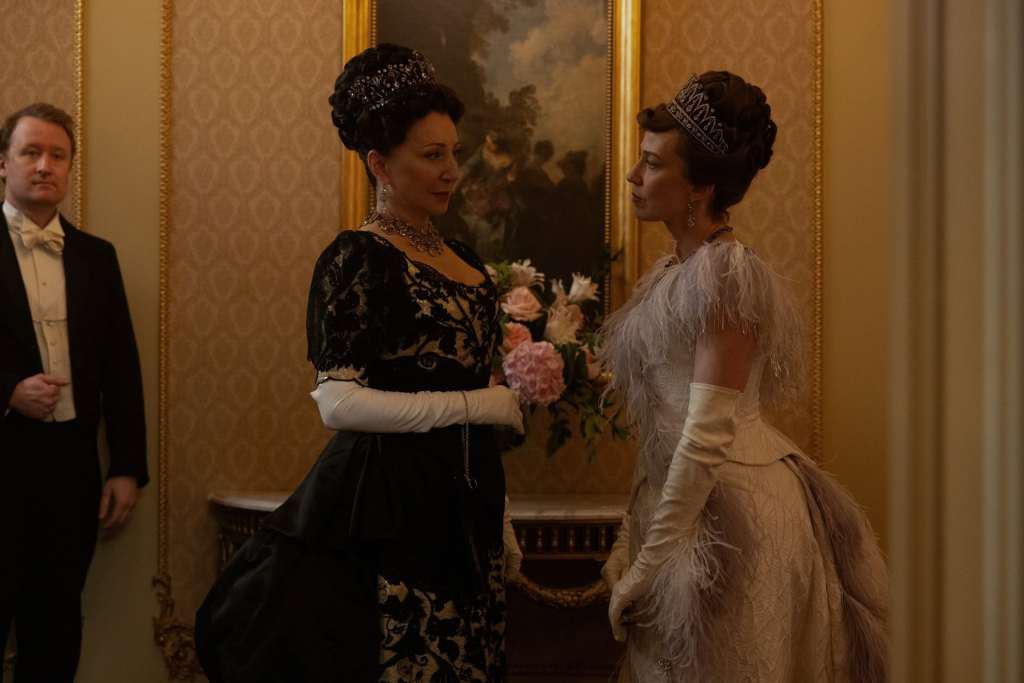
If you have forgotten, Agnes was a firm supporter of the Academy of Music and opposed the Met during the earlier battle between New York’s old and new money. Attending the very institution she once resisted is certainly not her idea of a pleasant evening. Mrs. Astor accompanies her, and the two women make their first visit to the Met.
While there, Mrs. Astor also attempts to encourage a possible match between her daughter and Larry Russell.
Bertha, meanwhile, is surprised to learn that Agnes van Rhijn is hosting President Cleveland at her home.

Ada’s Household Changes Are Not Helping Agnes
Back at home, Ada is making changes of her own. She starts with new curtains, which Agnes finds irritating, and hires a new footman who is clearly unprepared for his responsibilities. Ada even has a telephone installed.
Agnes is already bothered by the fact that Ada seems to have money for all these improvements while refusing to give her more funds to entertain the president. Things worsen when the journalist visits Agnes at home.
The new footman makes another mistake by serving tea with the milk already added, creating an embarrassing moment in front of their guest.
But I am more concerned about the journalist herself.
Her remarks about tradition, modern ideas, and Agnes’s old-fashioned home do not sound particularly flattering. Although the interviews are supposed to promote the Heritage Society, I cannot help suspecting that the finished article will be much less complimentary than Agnes expects.
The journalist seems far more interested in contrasting Agnes’s traditional world with contemporary New York than in celebrating everything she represents.
George and Larry Clash Over Business
George’s professional problems are not getting any easier either.
His negotiations with Rockefeller over the transportation of oil become increasingly difficult when Rockefeller pushes for a lower price per barrel, even below what is currently being paid. George insists that no other railroad company can offer what Russell Industries provides.
As the discussion heats up, Larry tries to mediate, hoping to keep the disagreement from escalating. His intervention only infuriates his father.
George believes Larry has no understanding of what it takes to run a business, particularly one he built from nothing and without the advantages his son has enjoyed. The confrontation reveals just how little patience George currently has for Larry’s attempts to involve himself in the company.
Larry Considers a Different Investment
Larry also receives an investment opportunity involving comic operas.
A friend explains how successful the works of British dramatist W. S. Gilbert and composer Arthur Sullivan have become in the United Kingdom.
Because there are no international copyright agreements protecting those productions in the United States, American companies can stage them without paying royalties to their original creators. His friend believes there is considerable money to be made. Larry, however, has reservations about the opportunity. For now, he has not committed to the investment, but it is another possible business venture outside his father’s direct control.
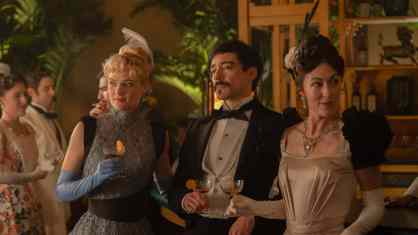
Elsewhere, Oscar and Enid Winterton continue planning their soirées.
Peggy’s Newport Visit Becomes Uncomfortable
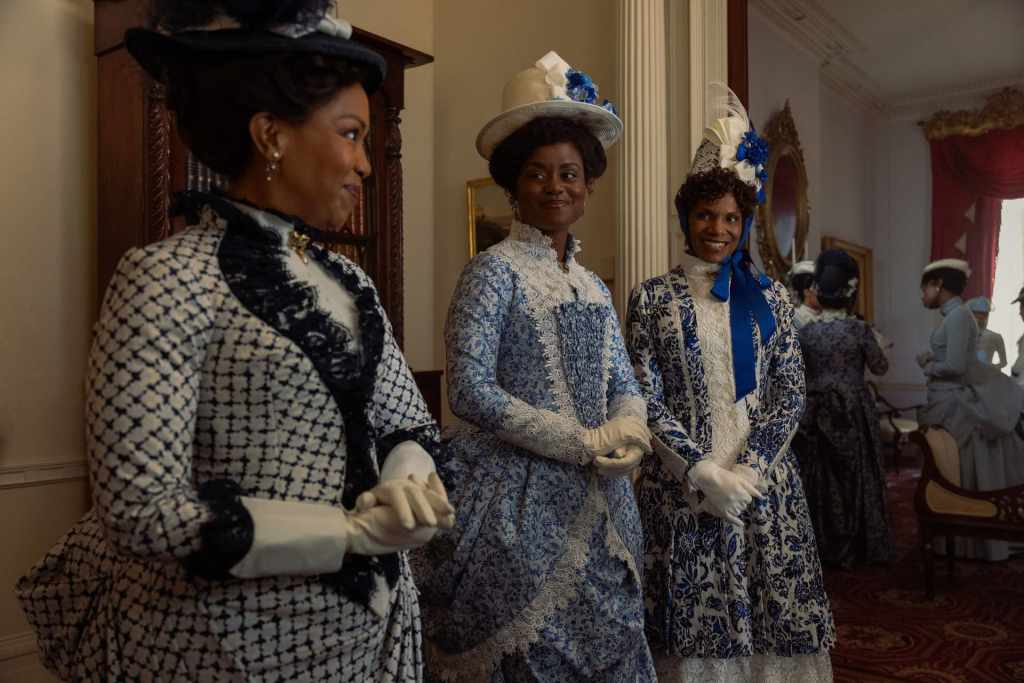
Things are different in Newport, where Peggy and her mother, Dorothy, are trying to find their place among the Daughters of Friendship after Peggy’s mother-in-law invites them to join.
The visit gives Peggy an opportunity to discuss the novel she is writing.
Her story follows two inseparable friends growing up in the South. One follows the life everyone expects her to lead, while the other takes risks and gives up the expectations placed upon her to pursue her dreams. Unfortunately, the women do not seem particularly impressed by the premise. Even Dorothy appears less enthusiastic about the book than Peggy might have hoped.
But the most uncomfortable moment comes when Peggy’s mother-in-law introduces her as a widow.
She apparently believes this is an easier way to explain Peggy’s marital history, but it is also completely inaccurate.
Peggy previously eloped with Elias Finn, only for her father, Arthur Scott, to have the marriage annulled. Since the marriage was legally annulled, Peggy is an unmarried woman, not a widow, who also gave birth.
Neither Peggy nor Dorothy appreciates the attempt to rewrite her past. Peggy is not ashamed of what happened, and her mother has no intention of treating her daughter’s history as something that needs to be hidden.
William Kirkland Faces Discrimination at Bellevue Hospital
After returning from Newport, Peggy hears about a particularly upsetting experience from Dr. William Kirkland.
One of his patients, who had tuberculosis, has died. William explains that he was unable to help the patient at Bellevue Hospital because Black doctors are not considered qualified to practice there. Despite his medical training, he was denied the opportunity to assist.
His frustration is understandable, especially because the restriction prevented him from caring for someone who needed his help.
Mrs. Morris Begs Bertha to Save Her Son
The attempt on George’s life finally reaches Bertha when Mrs. Morris arrives at her home.
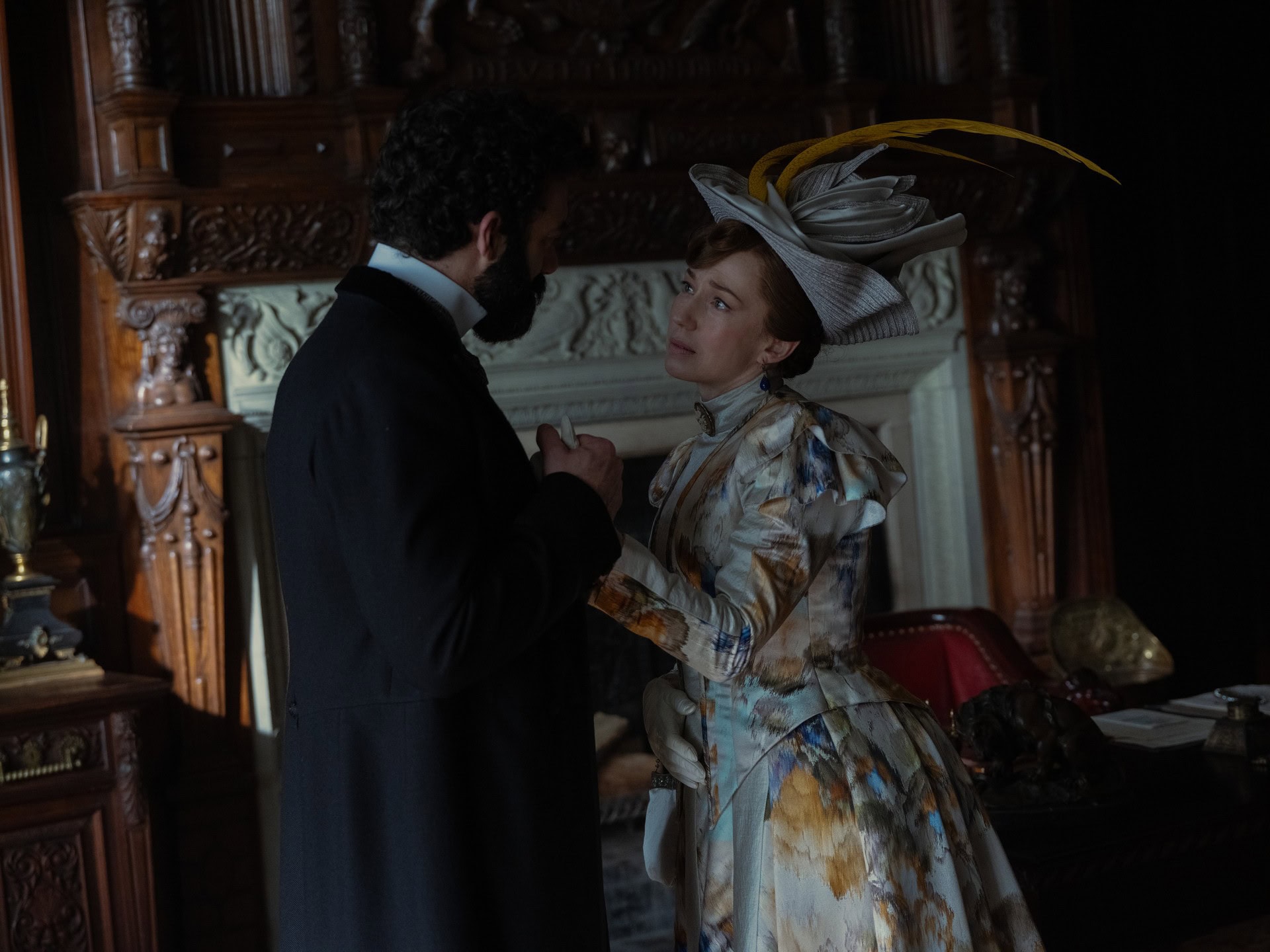
Desperate to save Will, she begs Bertha to intervene with her husband. Until this moment, Bertha has no idea that George has identified the person responsible for trying to kill him. She confronts George and asks why he kept such important information from her. His response is that there was nothing to tell.
George knows that if he turns Will over to the authorities, the young man will be hanged. Bertha asks him to consider what Mrs. Morris has already suffered. She lost her husband after George ruined him financially, and now she is facing the possibility of losing her son as well.
Whatever Will has done, Bertha wants George to find some mercy for his mother.
It is a difficult request, especially considering that Will attempted to murder him and has shown no remorse. But George eventually agrees to meet with the young man again.
The Gilded Age Season 4 Episode 2 Ending Explained: Does George Kill Will Morris?
The episode ends with George confronting Will Morris while his mother watches helplessly. George points a gun at Will, and Mrs. Morris desperately begs him to spare her son’s life.
Even now, Will refuses to ask for forgiveness. Instead, as he kneels and waits to be shot, he begins to pray.
George raises his gun and fires, but deliberately misses. He cannot bring himself to kill Will.
Instead, George orders Mrs. Morris to take her son away and never return to New York. He makes the consequences unmistakably clear, instructing his men to kill Will if they ever see him in the city again.
Will survives, but only on the condition that he stays away.
Do George and Bertha Reconcile?
After sparing Will, George finally returns home to Bertha and decides to sleep in their bed. He tells her that he let the Morrises go.
But their conversation soon turns to something more personal. Bertha asks what is happening to him. George has barely been behaving like her husband, and she wants to understand why.
For once, George admits that he does not know. He has lost his sense of direction. He no longer seems certain what he is doing or where he is going.
This is an unusually vulnerable admission from a man who has always seemed determined to control his own future. Bertha asks him to be husband and wife again, and George seems willing to try.
Their problems are not necessarily resolved, but after spending so much time apart, they are finally sharing a bed again and talking about what has been happening between them. For now, that is a significant change.