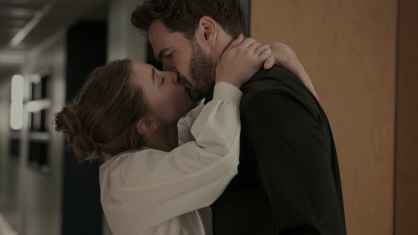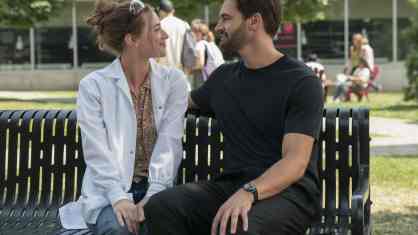
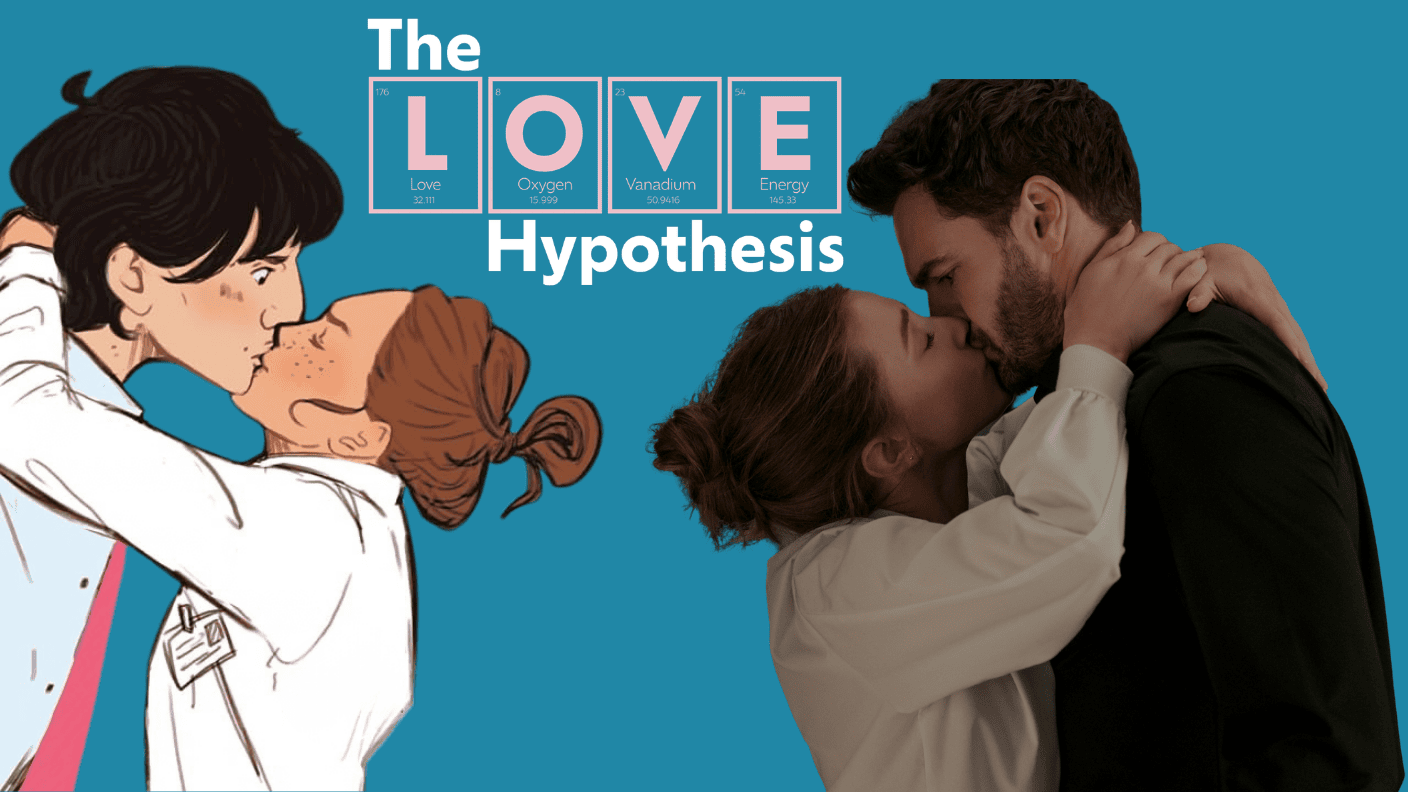
I have learned something about watching book adaptations over the years: unless I’m already a huge fan of the author, I would rather read the book about a year before watching the movie than immediately before or after.
Reading them too close together makes it incredibly easy to fixate on every missing scene, changed line, or small detail. But not every detail that works on the page is fundamental to making the same story work on screen. With a little distance, I find it much easier to ask the question that actually matters to me: did the adaptation keep the characters, relationships, humor, and heart that made the book work in the first place?
The Love Hypothesis is a pretty perfect example of why I feel that way.
Ali Hazelwood’s novel and its movie adaptation are far from identical. Once you put them side by side, the movie actually makes some significant changes. Characters disappear, the fake-dating arrangement is compressed, Adam’s Harvard storyline changes, Tom Benton’s downfall is almost completely rewritten, and even the ending chooses a different full-circle moment for Olive.
And yet, watching the movie, I never felt like I was watching a version of The Love Hypothesis that had lost what made me love the book.
That is where runtime has to become part of the conversation. A roughly 140-minute movie simply cannot reproduce everything contained in a novel that takes many more hours to experience as an audiobook. Something has to go. Scenes have to be combined, characters sometimes have to disappear, and relationships that have hundreds of pages to develop suddenly have a little over two hours.
For me, the better way to look at The Love Hypothesis book vs. movie comparison is not to count everything that was cut. It’s to look at what the filmmakers chose to change, what they deliberately kept, and whether Olive and Adam still feel like Olive and Adam when all is said and done, and they do.
1. Tom Benton’s Story Is One of the Movie’s Biggest Changes
The basic threat Tom Benton poses to Olive remains the same, but almost everything surrounding it changes.
In the book, Tom makes his move after Olive’s successful conference presentation and before she and Adam sleep together. He grabs her, tries to kiss her, and, after she rejects him, uses the power he holds over her research against her. Tom threatens to replicate her work using the detailed protocols she sent him and makes Olive question whether Adam would believe her over his longtime friend and collaborator.
When Adam later finds Olive crying, she doesn’t tell him what really happened. Instead, she says people criticized her presentation and suggested she only received the opportunity because she was dating him.
The movie makes that part real. Olive actually overhears women dismissing her work and suggesting her relationship with Adam helped her professionally.
More importantly, the movie moves Tom’s harassment to the morning after Olive and Adam sleep together.
That changes the emotional order of the entire conference sequence. Book Olive is already carrying what Tom did when she spends the night with Adam. Movie Olive and Adam get their romantic breakthrough first, only for Tom to destroy the happiness of the following morning.
The way Tom is eventually exposed changes even more.
Olive accidentally records the original confrontation in the novel because she had been recording her presentation for Dr. Aslan and forgot to stop her phone. She discovers the recording while still in Boston, with Anh and Malcolm there to hear it too. Eventually, Olive goes to a Harvard faculty dinner and plays it in front of Adam and Tom.
There is no equivalent recording in the movie. Instead, Olive tells Anh and Dr. Aslan what happened. Anh then tells Adam, and he goes straight to Tom’s classroom to confront him. The students are the ones who pull out their phones and record Adam confronting Tom, not Tom harassing Olive.
And I actually prefer the movie’s confrontation.
Adam doesn’t need to hear Tom’s voice on a recording before he believes what happened. Anh tells him, and that’s enough for him to act. He knows Anh is family to Olive. There is no hesitation and no demand for proof before he gets to that classroom.
For me, that says something very simple about how completely Adam loves and trusts Olive by this point in the story.
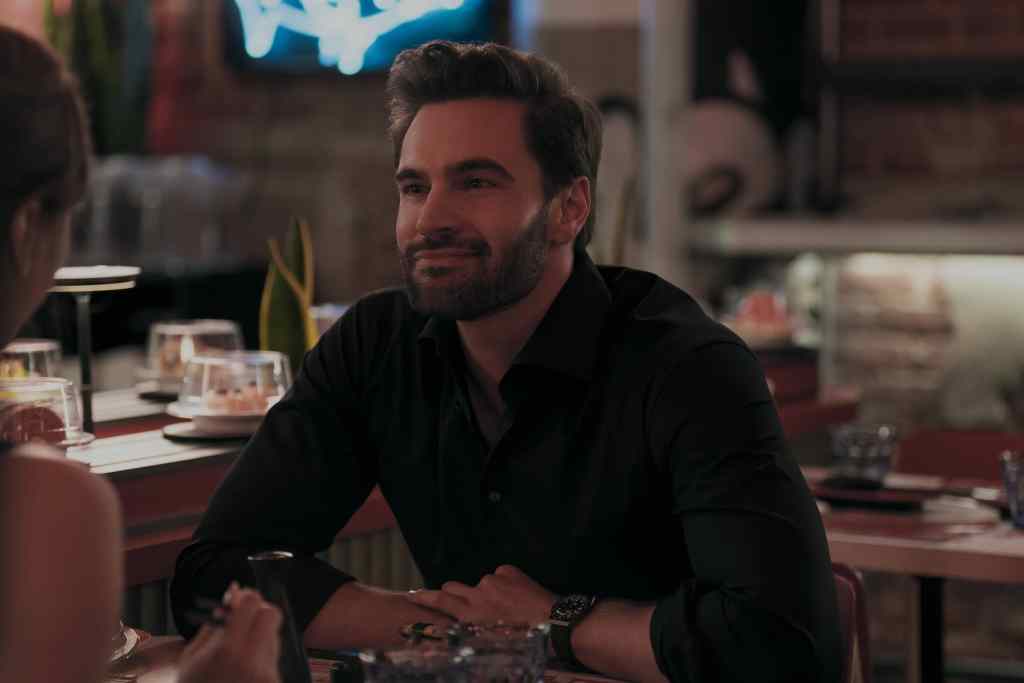
2. Adam’s Harvard Story Means Something Very Different
Harvard exists in both versions, but it serves a different purpose.
In the movie, the possibility of Adam leaving Stanford helps create the fake-dating arrangement in the first place. Stanford is concerned that he could accept Harvard’s offer and hold up his research funding. Adam has no intention of leaving, but he needs to convince the university that he plans to stay. A stable relationship with Olive can help do that.
The book eventually makes Harvard much more romantic.
Adam genuinely agrees to interview there, even though there is no final decision when Olive learns about it. She worries about what his move could mean and initially connects Harvard to Adam’s friendship and professional relationship with Tom.
Then Holden gives her the missing piece. Other universities, including Harvard, had tried to recruit Adam before. According to Holden, this is the first time Adam actually agreed to interview, and he did it after Olive decided she might be moving to Boston to work in Tom’s lab.
Suddenly, Harvard isn’t simply somewhere Adam might go. It becomes another clue that Olive has repeatedly misunderstood how he feels about her.
The movie doesn’t need that revelation because it takes a different route toward Adam’s confession. But it is one of those changes that becomes much more obvious once you compare the two versions closely.
3. Holden Is Gone, and Malcolm Gets a Different Story Instead
One of the most obvious character omissions is Holden.
Holden is essentially to Adam what Anh is to Olive: someone who knew him before this relationship and can see things Olive can’t.
He has known Adam for years, becomes romantically involved with Malcolm, has his own suspicions about Tom, and gives Olive important information about Adam. He is also the person who explains the significance of Adam finally agreeing to interview at Harvard and later lets something slip that helps Olive understand just how long Adam has been thinking about her.
None of that exists in the movie because Holden doesn’t exist in the movie.
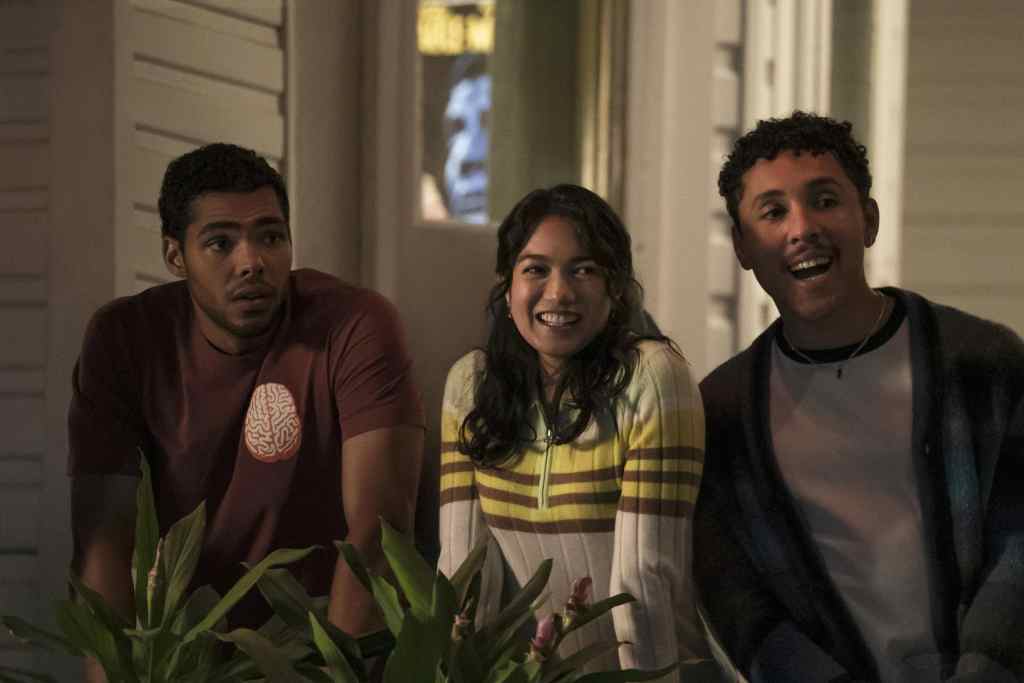
Malcolm is still gay, but there is no Holden relationship and no other steady romance developed for him. Instead, the movie gives Malcolm a new conflict when Adam removes him from his research team. Malcolm initially blames Olive for siding with Adam before eventually apologizing.
I didn’t miss Holden while watching the movie.
Properly introducing him would mean establishing his history with Adam, giving enough time to his relationship with Malcolm and allowing him to become important enough that his knowledge of Adam doesn’t simply feel like exposition. That’s something I could easily see working in a series.
In a movie, it would also mean taking more time away from Olive and Adam.
The same applies to Malcolm and Holden’s romance. Give The Love Hypothesis eight episodes, and I would happily take that additional relationship. With one movie, keeping the focus tighter worked for me.

4. Olive and Adam Don’t Need Their Wednesday Dates on Screen
The fake-dating agreement is more structured in the novel.
Olive and Adam arrange recurring public meetings on Wednesdays, often over coffee, giving the book a regular rhythm as their supposedly fake relationship gradually stops feeling fake.
The movie drops the recurring Wednesday structure. This is one of those changes that could easily sound like a loss when written down, but I didn’t feel it while watching.
We still see Olive and Adam spending time together in different situations. Their relationship keeps moving, and the movie doesn’t need to stop and establish that another Wednesday has arrived before putting them together again.
I actually think the Wednesday setup would work better in a television adaptation, where those recurring dates could become part of the rhythm of each episode. In a movie, repeatedly returning to scheduled meetings could start to feel static when there is so little time available.
It helps enormously that Lili Reinhart and Tom Bateman have the chemistry to make the faster progression believable.
And while the structure changes, so many of the smaller moments that build their relationship survive. That becomes much more important than whether a particular interaction happened on a Wednesday.
5. Anh Knows About the Fake Relationship Much Earlier
Anh’s role changes in a surprisingly important way.
In the book, she genuinely believes Olive and Adam are together. She only learns the truth at the Boston conference after Olive discovers the recording of Tom and Malcolm explains the fake-dating arrangement.
There is even something funny about Anh looking back at everything she saw, including Olive and Adam kissing and Olive putting sunscreen on him, and realizing what was supposedly fake.
Movie Anh is already ahead of everyone.
When Olive finally admits that the relationship was fake, Anh reveals that she already knew. More than that, she had been hoping Olive and Adam would eventually realize there was something real between them.
The movie then expands her importance by making her the person who tells Adam what Tom did. That fits the version of Anh we have already seen. Olive grew up in foster care and considers Anh and her family her own family. So when Anh goes to Adam, he knows exactly how important she is to Olive.
Jeremy is simplified too. In the book, Olive and Jeremy actually went out a couple of times before stopping, while the movie presents him more straightforwardly as Olive’s crush. The important part remains the same: Olive believes Anh is holding back because of her, and kissing Adam is her ridiculous solution to the problem.
6. The Movie Gives Olive a Bigger Scientific Victory
Olive’s research is central to both versions, especially because her work is tied to something deeply personal: losing her mother to pancreatic cancer.
The book leaves her professional future somewhat more open. After Tom threatens her access to the lab she needs, Olive begins looking for other options and takes steps to protect her research.
The movie gives that story a much more visible payoff.
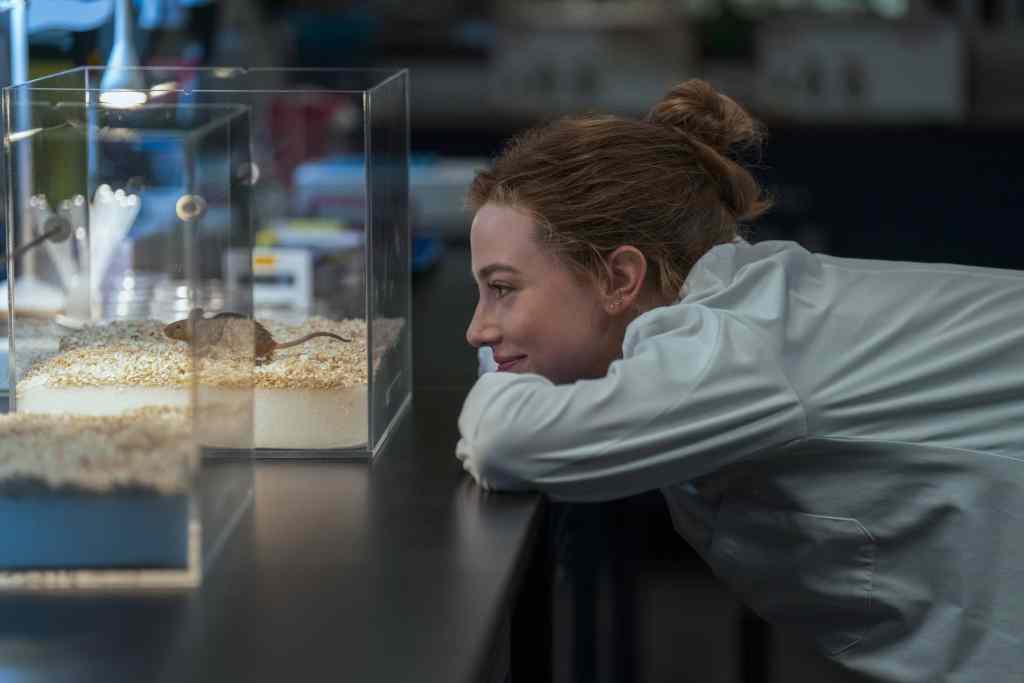
Dr. Aslan helps Olive find another way forward, her experiment with the mice succeeds, and she eventually receives the grant and lab space she needs to continue her work.
I like that the movie gives Olive this victory separately from everything happening with Adam.
Her romantic ending isn’t her only happy ending. The research that has mattered to her for years moves forward too, and the movie makes sure we actually get to see that happen. It also makes the final time jump make considerably more sense.
7. The Book Has the More Romantic Ending
This may be the one change where the romantic in me wins.
The movie jumps forward two years. Olive and Anh are now doctors, and Olive has apparently developed quite the reputation herself. New students are intimidated by her in much the same way everyone once talked about Adam.
I like the full-circle element of Olive finding her place at Stanford and becoming an established scientist.
But I would have loved the book’s ending.
The novel’s epilogue takes place ten months after Olive and Adam confess their feelings, exactly one year after their first kiss. Olive brings Adam back to the biology building and works out the location and timing so they can deliberately recreate the kiss that started everything. Except this time, of course, nothing about it is fake or accidental.
There is something wonderfully romantic about ending exactly where the story began. I’m a sucker for a full-circle ending, and seeing that first ridiculous kiss recreated after everything Olive and Adam went through would have been the perfect final moment for me.
The movie’s ending works. I just wish I could steal the book’s final kiss and put it at the end.
Why The Love Hypothesis Still Feels So Faithful to the Book
This is where The Love Hypothesis adaptation impressed me most.
Because after going through all these differences, the movie has actually changed quite a lot.
It changes the structure of Tom’s storyline. It removes Holden completely. It rewrites Malcolm’s role, gives Anh more to do, changes the purpose of Harvard, removes the Wednesday-date structure, gives Olive a more definitive professional victory, and replaces the novel’s epilogue.
Yet so many of the moments that make Olive and Adam Olive and Adam are still there.
Olive still meets a stranger while struggling with expired contacts before her Stanford interview, only to later discover that the stranger was Adam Carlsen. She still impulsively kisses him because of Anh.
Adam still has the terrifying academic reputation that makes everyone wonder what Olive could possibly be doing with him.
The flu-shot scene survives, with Adam insisting that he doesn’t get sick until Olive realizes the terrifying Dr. Carlsen is actually afraid of needles and holds his hand. Olive still puts sunscreen on him at the picnic. He still has opinions about her ridiculously sweet drinks.
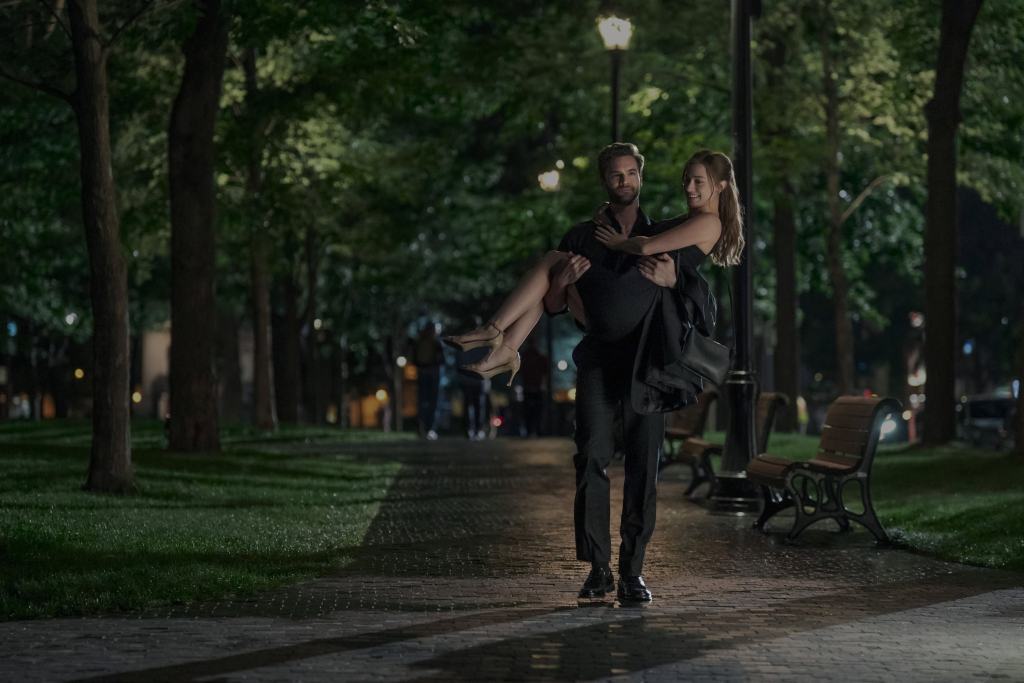
The conference still gives us two beds instead of playing the obvious one-bed trope straight. Olive’s heels hurt, Adam carries her, and the movie retains the conversation about the abusive adviser who helped shape the professor Adam became.
And then there is the love scene.
This is something I think book adaptations sometimes underestimate, particularly when adapting romance. The Love Hypothesis isn’t a B.R.A.D. (full credit to Beach Reads & Bubbly for that one; we’re just borrowing their very useful vocabulary) itself, but the conversation around these adaptations gets at something I think matters here.
A love scene isn’t important simply because readers want to see two attractive people take their clothes off. When a romance novel has spent hundreds of pages building attraction, tension, and intimacy between two characters, that scene can be part of the emotional payoff readers have been waiting for.
That is certainly true of The Love Hypothesis. Olive and Adam’s hotel-room scene is one of the novel’s major romantic moments, and the movie doesn’t shy away from the fact that their relationship is passionate as well as sweet. It doesn’t reproduce the scene page for page, nor does it need to, but it lets it remain a genuine love scene rather than cutting away just as the relationship reaches that point.
We’ve seen book adaptations soften, shorten, or completely change intimate scenes that were memorable parts of the books they came from. Sometimes that may be the right choice for a particular adaptation, but it can also remove part of what readers responded to in the first place. Romance readers aren’t reading these scenes in isolation. They work because of everything that has been building between the characters before them. Here, there is a payoff for the reader.
Even within that scene, the movie preserves something more important than how explicit it is. Olive initiates the intimacy, while Adam hesitates because he believes her feelings are elsewhere and needs to know she is genuinely choosing him. That emotional beat is central to what makes their relationship work in the novel.
Even the Type I and Type II errors make it all the way to the confession. Those are the details I care about in an adaptation.
Keeping every Wednesday coffee wouldn’t automatically make the movie more faithful if Olive and Adam stopped feeling like the characters Ali Hazelwood wrote. Adding Holden wouldn’t improve the adaptation simply because he exists in the novel if there wasn’t enough time to make his friendship with Adam and relationship with Malcolm matter.
A movie has to make choices. The Love Hypothesis makes plenty of them, including some much bigger changes than I realized while initially watching it. But it seems to understand which pieces of the book can be reshaped and which ones are part of Olive and Adam’s identity.
Maybe that’s why I came away from the movie with nothing but praise for it as an adaptation.
It didn’t make me think about everything that was missing. It made me recognize everything I loved.