

First, a confession. I’m a Carley Fortune fan.
Second confession: Every Summer After is not actually my favorite Barry’s Bay book. One Golden Summer is.
That probably means I come into this adaptation with a slightly different perspective than readers who have spent years considering Percy and Sam’s story their favorite romance novel.
I also think timing matters.
Sometimes the worst moment to watch an adaptation is immediately after reading the book. You’re still carrying every scene, every line, every version of the characters in your head. You aren’t watching the show. You’re comparing it.
And let’s be honest. “The book was better” should probably be stitched onto a decorative pillow somewhere.
So when I say I genuinely enjoyed the first season of Every Year After, I’m not saying the criticism isn’t valid. Some of it absolutely is.
I’ve been there myself. I was frustrated by People We Meet on Vacation because I thought that story needed a limited series, not a movie. When a romance relies on years of history and flashbacks, sometimes two hours just isn’t enough.
But after seeing the reaction online, I think there are a few things worth discussing.
Not to defend the show. Just to explain why some of these changes may have happened.

The Biggest Thing Fans Need to Remember
The moment I learned showrunner Amy B. Harris wasn’t approaching this as a one-season story, a lot of the changes suddenly made more sense.
Because Every Year After was never intended to be a limited series.
“I see five seasons,” Harris told Entertainment Weekly.
That changes everything. If this were a faithful one-season adaptation of Every Summer After, I would probably understand the frustration more. The book tells a complete story. Percy and Sam get their ending.
Television works differently.
A five-season plan cannot survive on three main characters and one secret. It needs supporting characters. It needs future storylines. It needs relationships that can continue evolving after the first season.
Which brings us to Delilah, Jordie and Chantal.
Many readers see them as unnecessary additions. From a television perspective, they are foundations. The writers aren’t just adapting one book. They’re building a world.
The One Golden Summer Problem
I’ve seen some fans complain that the series is already setting up One Golden Summer.
But here’s the thing. Amazon didn’t only buy the rights to Every Summer After. The rights to both books were acquired.
This wasn’t a surprise twist added halfway through production, it was always part of the plan.
Honestly, the clue is sitting right there in the title. The series isn’t called Every Summer After, It’s called Every Year After.
That’s a small change, but it signals something much bigger. The show is thinking beyond one summer and one book.
Are they creating a cliffhanger that could help secure a second season? Absolutely. But that’s not the same thing as suddenly hijacking the story.
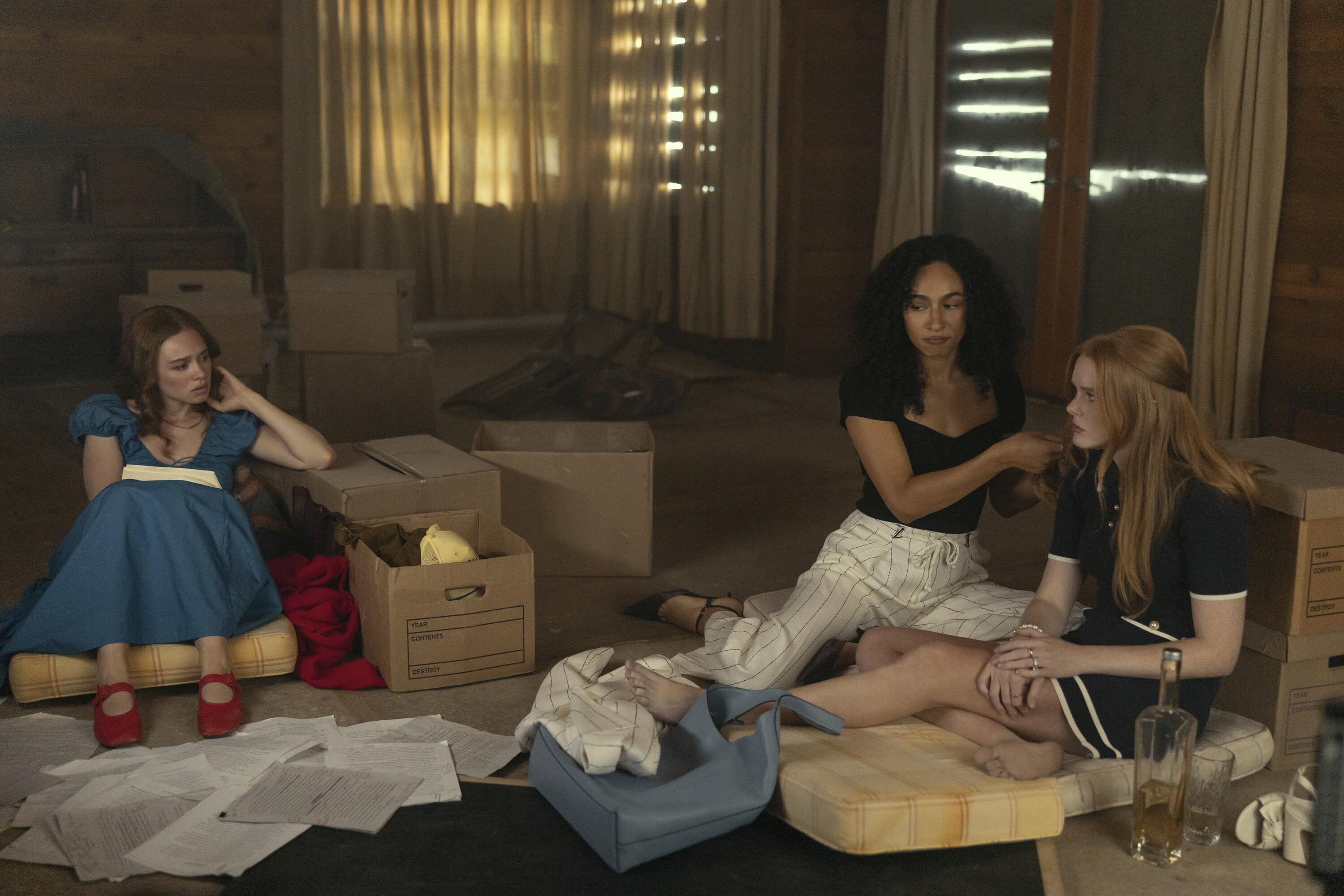
Why The Ending Changed
This is probably the complaint I understand most.
The show does not end where the book ends, but if the goal is multiple seasons, it almost couldn’t.
A television drama hoping for renewal needs somewhere to go next.
The book jumps ahead significantly in One Golden Summer. By the time readers catch up with Percy and Sam again, many of the difficult parts of building their relationship are already behind them.
The series appears interested in exploring those years instead.: the awkward conversations, the trust issues, the consequences.
The reality is that getting together is not the same thing as staying together.
As Harris herself put it: “Even if you end up in a happy relationship, relationships are a lot of work.” That’s a television story.

Barry’s Bay Is In The Wrong Province
Let’s address the funniest criticism. Yes, in real life, Barry’s Bay is in Ontario.
The show was filmed primarily in British Columbia.
But considering production wasn’t able to shoot extensively in the real Barry’s Bay, I actually appreciate that the writers kept the town itself instead of relocating the story entirely moving Barry’0s bay in British Columbia. That’s a compromise I can live with.
At the same time, there’s a practical television reason behind the change. Once Barry’s Bay moves to British Columbia, Seattle suddenly makes a lot more sense geographically than Toronto.
A family making a seasonal trip from Seattle to British Columbia feels believable; a family regularly traveling from Ontario to British Columbia is a very different conversation.

Why Sam Finds Out Differently
This is the change that probably upset book readers the most.
In the novel, Sam has already known about Percy and Charlie for years.
By the time he reconnects with Percy, he’s had time to process everything. He’s angry, he’s hurt, but he’s already lived through those emotions.
The show chooses a different path: Sam learns the truth in real time.
And suddenly we get something the book never gave us: we get to watch his reaction, and we see him confront Charlie and Percy.
We see the fallout instead of hearing about it after the fact.
Carley Fortune herself acknowledged that television requires audiences to see things happen, and from a dramatic standpoint, Harris clearly wanted viewers to experience that emotional explosion alongside Sam.
You may not prefer it, but it’s easy to understand why it was done.

The Percy Career Debate & The Sue And The Tavern Controversy
Another criticism I’ve seen repeatedly involves Percy herself.
In the book, she’s a successful Toronto magazine editor. In the series she’s writing obituaries in Seattle and clearly feels stuck.
I understand why some viewers see that as a downgrade.
Female characters don’t need to be stripped of professional success to become relatable.
The other piece is that the series seems to be moving Percy toward something she always wanted: writing, not editing, creating stories.
Combined with the tavern storyline, it gives her a reason to remain connected to Barry’s Bay beyond one summer.
I’ve seen strong reactions to Sue leaving the tavern to Percy. Some readers feel it changes Sue’s character; others feel it unfairly sidelines her sons.
Those criticisms are fair. But from a television perspective, the tavern instantly becomes more than a location.
It’s now a source of conflict, a source of responsibility.
A reason for Percy to stay in Barry’s Bay.
A reason for characters to keep crossing paths, again, that’s not necessarily better than the book.
It’s just more useful for a continuing television drama.

Delilah, Chantal And The New Characters
Not every addition has been universally embraced.
Some readers dislike Delilah. Others have questioned Chantal’s casting. Others simply don’t understand why new characters were needed at all.
The answer is actually pretty simple.
Television needs more people.
A novel can spend hundreds of pages inside Percy and Sam’s emotional lives, a television series needs scenes happening when Percy and Sam aren’t together.
It needs relationships, conflicts and perspectives that expand the world beyond the central romance.
That’s what these characters are there to do.

And Finally… Charlie
No. He’s not the blonde, dimpled Charlie many readers imagined. I’ve seen that complaint more times than I can count. I’ve also seen complaints that Charlie, Sam, and Percy lack chemistry.
Personally, I didn’t have a problem with the casting.
More importantly, I think the series intentionally makes Charlie harder to like than he often feels in the novel.
The same goes for Sam at certain points. The book allows readers access to everyone’s inner thoughts; television doesn’t.
So the writers push characters into conflict more aggressively; sometimes that means they come across harsher, sometimes it means they make worse decisions.
That’s usually the price of creating drama that audiences can actually watch unfold, and whether viewers loved or hated those choices, one thing is clear: people care a lot.
And for any romance adaptation, that’s probably the one thing you want fans to keep doing.

So, Was It Worth Changing The Book?
That’s probably the question sitting underneath every criticism.
And honestly? The answer depends on what you wanted from the adaptation.
If you wanted a scene-by-scene recreation of Every Summer After, this version was always going to disappoint you. Too many storylines have been expanded, too many characters added, and too many key moments reshaped.
But if you look at Every Year After as the beginning of a larger Barry’s Bay television universe rather than a direct translation of one novel, some of those decisions become easier to understand.
That doesn’t mean every change worked. Some will continue to divide fans. Others may only make sense if the show gets additional seasons.
What I do know is that after eight episodes, I still cared about Percy, Sam, Charlie, Sue’s legacy, and what happens next in Barry’s Bay.
And at the end of the day, that’s probably the strongest sign that the adaptation got something right.

FAQ
- Why did Prime Video change so much from Every Summer After? The series was developed as a potential multi-season television drama rather than a one-season adaptation of the novel. Several changes create storylines, conflicts, and character arcs that can continue beyond the events of the book.
- Why does Sam learn about Percy and Charlie differently in Every Year After? In Carley Fortune’s novel, Sam already knows about Percy and Charlie before reconnecting with Percy. The series changes that moment so viewers can witness Sam’s reaction and the fallout between all three characters on screen.
- Why is Percy living in Seattle instead of Toronto? The adaptation shifts parts of the story to the Pacific Northwest, making travel between Percy’s home and Barry’s Bay more practical within the show’s version of the story and its British Columbia filming locations.
- Why did Sue leave the tavern to Percy? The series uses the tavern as an ongoing source of conflict and responsibility for Percy. While the decision differs from the book, it creates a storyline that can continue across multiple seasons.
- Is Every Year After setting up One Golden Summer? The first season includes elements that expand the Barry’s Bay world beyond Every Summer After. Since the rights to both novels were acquired, the series appears interested in building connections between the two stories.
- Is Every Year After supposed to be a limited series? No. Showrunner Amy B. Harris has spoken about a larger vision for the series, which helps explain why several storylines remain unresolved at the end of Season 1.