

Book adaptations are always difficult. It is surprisingly easy to take a beloved novel and miss the very thing readers connected with in the first place. As someone who has read and reread every Carley Fortune book, I came into Every Year After with a healthy amount of anxiety.
Thankfully, I can say this: Prime Video got it right.
Every Year After captures the emotional heart of Carley Fortune’s novel while making the adjustments needed to turn a deeply internal story into an eight-episode television series. Not every change comes from the book, but almost all of them serve the larger story.
The Series Understands What Made The Book Work
One thing became clear very quickly: the people behind this adaptation understood what readers loved about Every Summer After.
The series keeps the feeling of those summers alive. The lake, the dock, the floating raft, the friendship bracelet, the yellow speedboat, the tradition of sharing updates. All of it is here. More importantly, it feels right.
Some books simply need more room than a two-hour movie can provide. Every Summer After is one of them. The story jumps between multiple summers and present day, and that structure benefits enormously from eight episodes. The adaptation allows relationships to develop naturally rather than rushing from one major moment to the next.
There are changes, of course. Some characters receive expanded storylines and new material is added. If you want a detailed breakdown of every difference, see our guide: Every Year After vs. Every Summer After: Every Major Difference Between the Prime Video Series and Carley Fortune’s Novel
The Cast Brings These Characters To Life
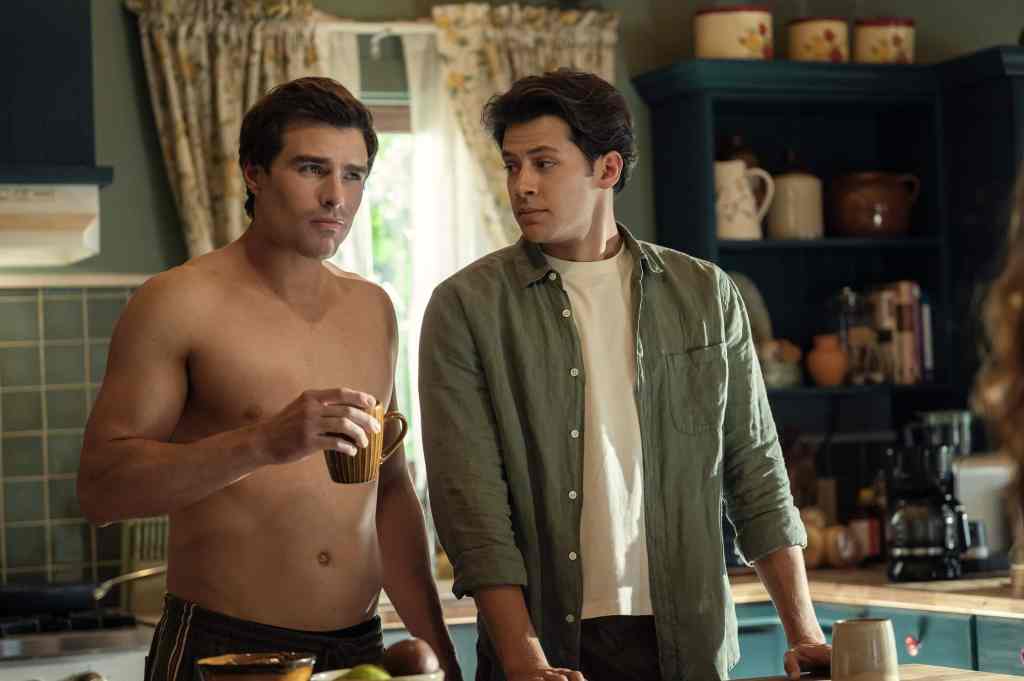
The success of this adaptation depends almost entirely on whether viewers believe Percy, Sam, and Charlie. Fortunately, the casting is excellent.
Sadie Soverall perfectly captures Percy Fraser. In the novels, Percy is someone who feels everything before she fully understands it herself. She is sharp, funny, self-deprecating, and often hides just how much pain she is carrying. Soverall brings all of those layers to the screen.
Matt Cornett faces a different challenge because Sam has never been the loudest character in the room. Sam is quiet, steady, and often communicates more through a look than a speech. Cornett understands that. He captures the dry humor, the restraint, and the warmth that made readers fall for Sam in the first place.
Michael Bradway may have the most difficult role of all. Charlie is charming, frustrating, funny, and occasionally infuriating. The series gradually reveals that much of Charlie’s easy confidence is a performance. Underneath it is someone carrying more responsibility and guilt than most people realize. Bradway handles that balance extremely well.

Not Everything Works Perfectly
My biggest criticism involves the timeline.
The series reaches the older versions of the characters relatively early, around the Summer 2013 storyline. While I understand why the production made that choice, it occasionally creates some visual confusion. The younger and older versions do not always feel close enough in age, which can make certain flashbacks harder to follow.
Readers of the book will likely have no trouble keeping track of the shifting timelines because the structure is already familiar. New viewers may need an episode or two to fully adjust.
A small visual distinction between timelines might have helped. Nothing major, but enough to make the transitions clearer.

Barry’s Bay Feels Like Home
The production deserves a tremendous amount of credit for recreating the world of the novel.
Although filming took place in British Columbia, including Vancouver and Bowen Island, the series preserves the spirit of Barry’s Bay remarkably well. The lake, the cottages, the Tavern, the floating dock, and especially the yellow speedboat all feel exactly as many readers imagined them.
This is one of those adaptations where you can immediately tell people involved cared about getting the details right.
The music is another strength. The soundtrack consistently finds the right song for the right moment without overwhelming the scene.
And honestly, the yearning works.
That may sound simple, but readers of Carley Fortune’s books know exactly what I mean. The longing, the missed timing, the years of unresolved feelings. The series understands that those emotions are the story.

The Supporting Characters Strengthen The Adaptation
One of the smartest decisions the show makes is expanding the supporting cast.
With only six major protagonists spread across eight episodes, the series has enough room to give everyone meaningful development. Jordie and Chantal receive larger storylines than they do in the novel, but the changes feel purposeful and not distracting.
The biggest success is Charlie.
The season quietly spends eight episodes building him into a far more complicated character than viewers initially expect. Considering where the story appears to be heading, that investment pays off. Too many series struggle to prepare future storylines while still telling a complete story in the present. Every Year After manages both.

Final Thoughts
As a longtime Carley Fortune reader, I finished Every Year After feeling something I rarely feel after a favorite book gets adapted: relief.
The series understands these characters. It understands why readers connected with Percy and Sam. It understands that the setting matters just as much as the romance. Most importantly, it understands that the emotional truth of the story is more important than reproducing every page exactly as written.
Season 1 stands on its own as a strong adaptation, but it also leaves me feeling confident about what comes next. For readers who know where the story eventually goes, especially those familiar with One Golden Summer, that’s a reassuring place to be.
This reader is at peace.
FAQ
- Is Every Year After faithful to the book? Yes. While the series makes several changes and expands some supporting characters, it remains faithful to the emotional core of Carley Fortune’s novel.
- Is Every Year After based on Every Summer After? Yes. Prime Video’s Every Year After is adapted from Carley Fortune’s bestselling novel Every Summer After.
- Is Every Year After worth watching if you’ve read the book? Absolutely. The series preserves the key relationships, themes, and emotional moments that made the novel popular while using the television format to expand the world around the characters.
Key Details
- Release Date: 2026
- Episodes: 8
- Streaming Service: Prime Video
- Source Material: Every Summer After by Carley Fortune
- Showrunner: Amy B. Harris
- Executive Producers: Amy B. Harris, Carley Fortune, Lindsey Liberatore, Amy Rardin, John Stephens, Grace Gilroy
- Cast: Sadie Soverall, Matt Cornett, Aurora Perrineau, Abigail Cowen, Michael Bradway, Joseph Chiu, Elisha Cuthbert
- Filming Locations: British Columbia, including Vancouver and Bowen Island