Netflix’s The Big Fake (Il Falsario) captures the paranoid energy of Rome in the 1970s, but how much of Pietro Castellitto’s performance is based on reality?
While the film is “falsely inspired” by a true story, the real Antonio “Tony” Chichiarelli was a man who didn’t just forge paintings; he forged history itself.
Here is the breakdown of what really happened in the shadows of the “Years of Lead.”
The Big Fake: Reality vs Fiction – What Really Happened?
The Real Forger: Not Just Art, But Power
In The Big Fake, Toni is often a victim of circumstances. In reality, Antonio “Tony” Chichiarelli was a master of double-playing. Born in Abruzzo in 1948, he arrived in Rome with a talent so dangerous it made him a “protected” asset for the most powerful entities in Italy.
The real Chichiarelli wasn’t just a painter; he was a strategic link between three worlds that officially hated each other:
- The Banda della Magliana: Far from being a mere supplier, Tony was a close associate of Danilo Abbruciati, the gang’s most “political” boss. Through Abbruciati, Tony gained access to a world where bank robberies funded drug trafficking and high-level corruption.
- Political Extremism: Tony was a “political chameleon.” He frequented the far-left circles of Autonomia Operaia (via dei Volsci), yet he was also linked to neo-fascist terrorists from the NAR. This allowed him to move like a ghost, providing fake IDs and safe houses to anyone, as long as the price was right.
- The “Shadow” Services: This is the most chilling part. Historical records and trials suggest Chichiarelli was an “antenna”, an informant for the Italian Secret Services (SISDE) and, according to some sources, even the Mossad. He wasn’t just a forger; he was a tool used by the State to “pollute” investigations and send coded messages to the Red Brigades.

Fact-Check: The Aldo Moro “Lake Duchessa” Fake
In the movie, the “Tailor” (Claudio Santamaria) is the shadowy figure who forces Toni to forge a Red Brigades flyer. In real life, this actually happened and remains one of the most controversial moments in Italian history.
Who was the real “Tailor”? While the film uses one character to represent the pressure on Chichiarelli, the “Tailor” is a cinematic stand-in for the Servizi Deviati (Deviated Secret Services). During the 1970s, parts of the Italian intelligence community operated with their own hidden agendas, often manipulating both the far-right and far-left to maintain a “strategy of tension.”

On April 18, 1978, while former Prime Minister Aldo Moro was still missing, a flyer, Comunicato n. 7, claimed his body had been dumped in Lago della Duchessa. Thousands of police officers searched the lake in vain while the real kidnappers (who had nothing to do with the flyer) watched in confusion.
Trials later proved that Tony Chichiarelli was the physical creator of that fake flyer. However, to this day, it has never been officially determined who hired him to do it, though many believe it was the Secret Service trying to “test” the Red Brigades’ reaction.
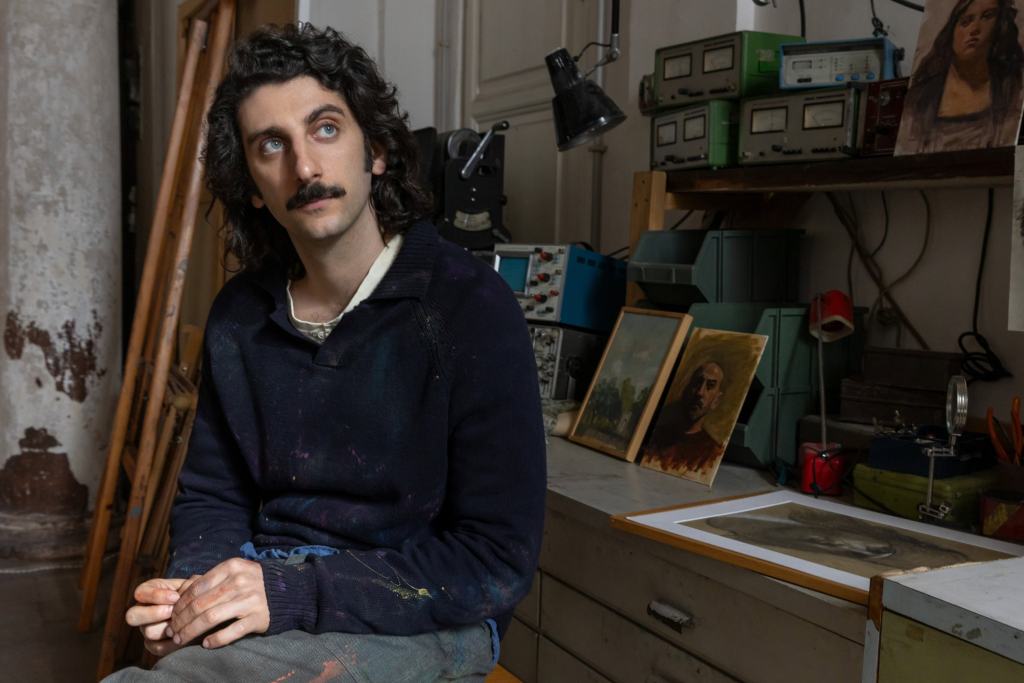
The 1984 Brink’s Securmark Heist
The movie portrays the “Robbery of the Century” as Toni’s ticket to freedom. In reality, the heist took place on March 23, 1984. Chichiarelli and his crew broke into the Brink’s Securmark vault in Rome and walked away with 35 million lire.
The “Signature” Mystery: Just like in the film, the real Chichiarelli left behind items designed to confuse investigators:
- Polaroid photos of Aldo Moro.
- Bullet casings and Red Brigades symbols.
- A sartorial tape (a reference to the “Tailor”).
These weren’t just random clues; they were “insurance” messages sent to the people in power, proving Tony knew the truth behind the state’s secrets.
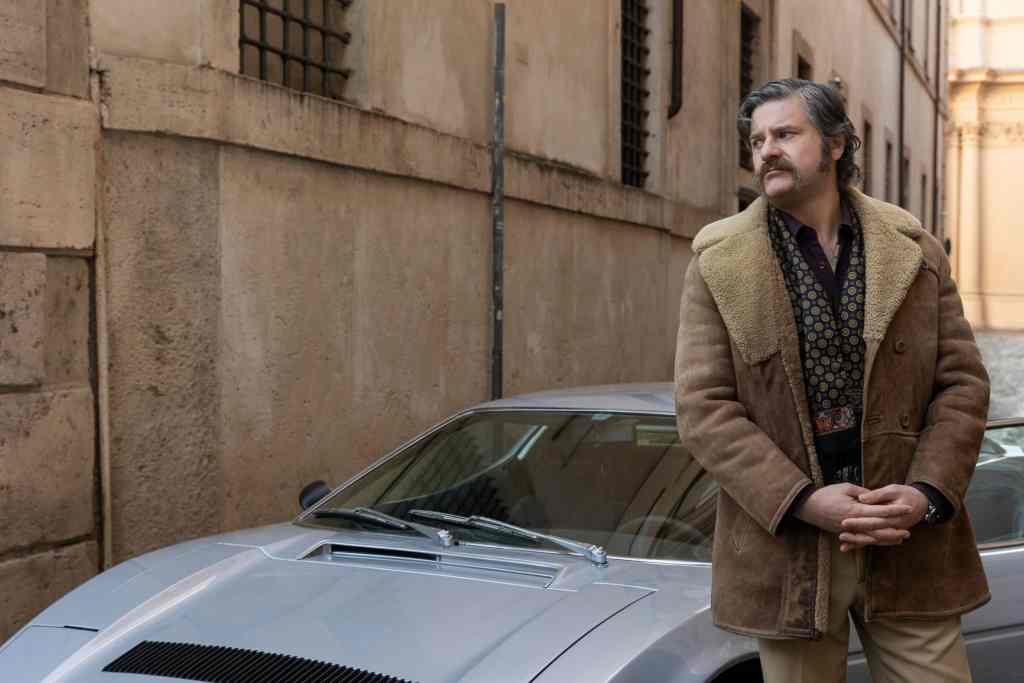
The Ending: Escape vs. Execution
The biggest difference between Netflix and reality is the ending.
- In the Movie, Toni pulls off a brilliant “identity swap,” letting his traitorous friend Vittorio die in his place while he escapes to a new life with Donata.
- In Reality, Tony Chichiarelli did not escape. On September 28, 1984, just six months after the big heist, Tony was ambushed and killed by professional assassins in Rome.
The murder was brutal: Tony was shot six times. His girlfriend, Cristina Cirilli, survived a bullet to the head, and their infant son was found unharmed in the back seat. His killer has never been identified, and the 35 million lire were never fully recovered.
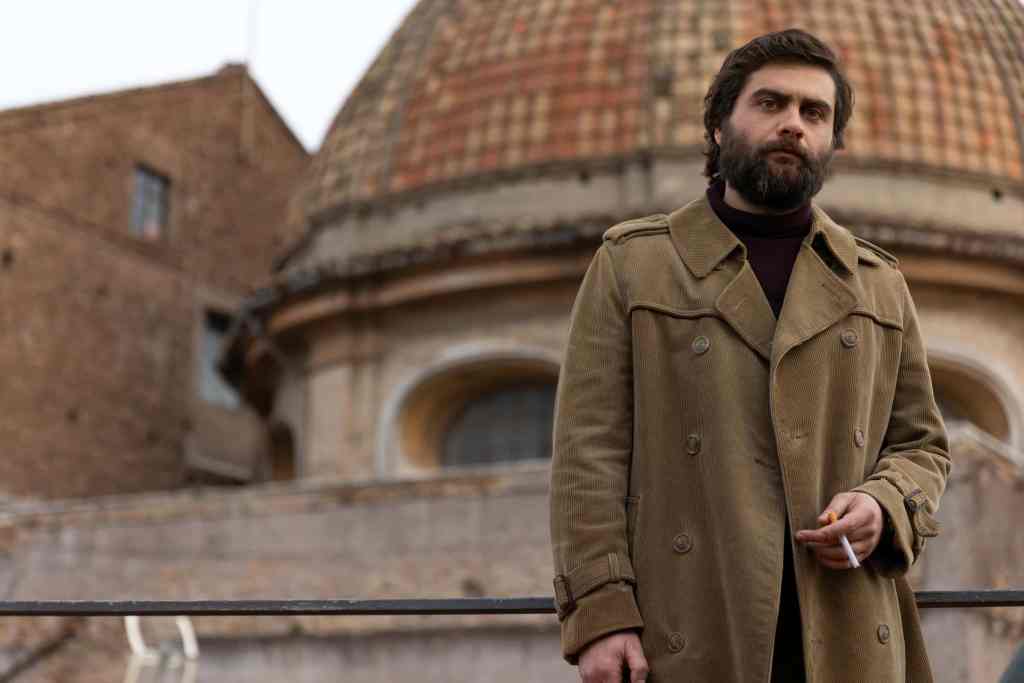
The Legacy of Italy’s Master Forger
The story of Tony Chichiarelli remains one of the darkest enigmas of the Italian “Lead Years.” While The Big Fake offers a cinematic ending of hope and escape, the reality reminds us that in the world of 1970s espionage, secrets were often paid for in blood. Whether he was a genius manipulator or a pawn of the State, Chichiarelli’s “masterpieces” changed the course of Italian history forever.