
I received the advanced screening of People We Meet on Vacation last week, which gave me the chance to watch the film more than once before sitting down to write this review. That mattered because my reaction wasn’t immediate or simple.
Emily Henry is one of my favorite authors. I’ve read all of her novels, some of them more than once. At the same time, People We Meet on Vacation and Happy Place are not my personal favorites among the six books she has published so far. Going into the film, I found myself unsure whether I liked what I was seeing or whether I was holding it against a version of the story that only exists on the page.
What helped clarify that tension was a conversation in the book club I’m part of, Beach Reads and Bubbly on Substack. I didn’t share spoilers or anything covered by Netflix confidentiality. I simply asked how others tend to approach adaptations of books they love.
The response echoed a perspective often shared by Harlan Coben when discussing his own work on screen: adaptation works best as translation rather than replication.
A good adaptation is not a replication, but a translation. What matters is preserving the emotional spine and core relationships, even if structure, pacing, and specific scenes change to fit the medium.

That shift in perspective unlocked the review for me. It also explains why I am not writing a traditional “book vs movie” breakdown this time. Emily Henry herself has said she liked the changes, signed off on them, and felt that this version of Poppy and Alex still reflects choices they would realistically make. With that in mind, the question becomes simpler: does the movie work on its own terms, and does it honor the heart of the story?
The Movie on Its Own Terms
At its core, People We Meet on Vacation is a lighthearted, emotionally driven look at two people growing up together. Poppy wants to see the world. Alex is happiest in his small town in Ohio. Despite their opposing instincts, they become best friends in college and commit to spending one week every summer together on vacation.
The film relies heavily on flashbacks. For nearly two-thirds of its runtime, we move backward through shared trips rather than staying in the present. That structure could feel frustrating at first, for some viewers, but it also gives the story space to build context. We see how chaotic their first connection was, how mismatched they seemed, and how they slowly found a rhythm that turned into something steady and meaningful.
The story is told primarily through Poppy’s perspective. We do glimpse Alex’s feelings, but the emotional lens remains hers. As a result, Poppy can sometimes come across as self-centered. She is not cruel or malicious, but her intensity and restlessness can come across as selfish at times. That imbalance is intentional, and it becomes part of the emotional tension instead of a flaw.

There is a lot of humor throughout the flashbacks, often rooted in Alex’s discomfort. He dislikes travel, crowds, and unpredictability. He prefers small towns and familiar routines. The film never mocks him for this. Instead, it uses his reluctance and awkwardness to create comedy without cruelty. The Vancouver trip puts Alex in an especially vulnerable and embarrassing situation, and the payoff works precisely because Poppy helps him through it rather than laughing at him.
Their chemistry is immediate and convincing. Poppy and Alex are the kind of pairing viewers instinctively root for while also wanting to shake them for missing obvious signals. Their dynamic is affectionate, strained, imperfect, and deeply human. The tension between them never feels manufactured, and the moments of conflict only sharpen the connection rather than undermining it.
One of the strongest sequences takes place in New Orleans, where Alex briefly becomes a different version of himself. Free from expectations and anonymity, he loosens up in a way we rarely see elsewhere. That section balances comedy and romance well, delivering one of the film’s most effective emotional beats.

Some supporting actors feel underused. Molly Shannon and Alan Ruck, as Poppy’s parents, appear briefly but steal every scene they are in. Their awkward, well-meaning chaos adds texture that the movie could have used more of, especially given how much more present they are in the novel. The fact that several of their moments feature so prominently in the trailer only underlines how effective those scenes are and how much energy they bring whenever they are on screen.
At just under two hours, the runtime is long for a romantic comedy. Still, the film avoids dragging. The constant movement between locations keeps the pace lively, and the chemistry between the leads carries slower moments. The story is predictable in broad strokes, but the misunderstandings and conflicts arise naturally from character rather than convenience.
By the end, I found myself genuinely enjoying People We Meet on Vacation. It is warm, funny, and emotionally satisfying. It is the kind of film that invites rewatching not because it surprises you, but because it makes you feel comfortable sitting inside its world again.
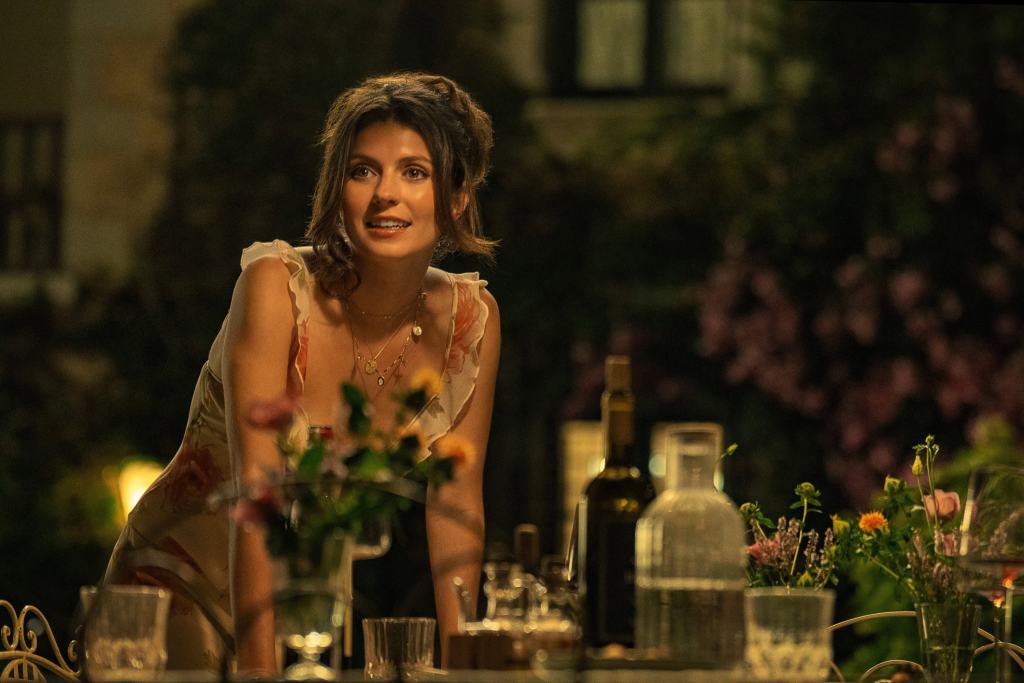
Looking at the Film as a Reader
From a book reader’s perspective, my main issue is not that the movie is different. It is that two hours are barely enough to hold the full weight of this story.
The novel is not long in page count, but it is expansive in emotional scope. Each trip functions as its own chapter of growth, and the accumulation of those moments matters. As a result, some layers inevitably get compressed on screen.
One example is Poppy’s relationship with her writing. In the book, her blog once mattered deeply to her, and part of her arc involves realizing how much she has neglected that passion in favor of a more conventional job. That internal struggle is present in the film, but it is far quieter and easier to miss.

Barcelona is another case. In the film, it effectively replaces Palm Springs from the novel. Emily Henry has said it feels like a trip Poppy and Alex could have taken, and emotionally that holds. What changes is how the location functions on screen.
In the book, Palm Springs gives the story room to breathe. Poppy and Alex arrive several days before the wedding, spend time together, and move through a series of shared moments and activities that quietly track the strain and shifts in their relationship. Each day adds context, tension, and emotional clarity.

In the movie, Barcelona works more as a setting than an experience. We are told where we are more than we are allowed to sit in it. That choice feels less like a creative statement and more like a consequence of limited runtime.
The same applies to the famously hot apartment and the constantly adjusted air conditioning. Readers know how funny and symbolically loaded that detail is. The film references it, but not enough for it to fully land unless you already know what it represents.
My biggest issue is Poppy’s growth near the end. Her realization, resignation, and decision to choose Alex happen very quickly. Without the internal monologue and extended buildup found in the book, that shift risks feeling rushed. The emotional logic is there, but the time spent earning it is thin.
This is why, ultimately, I think People We Meet on Vacation would have worked better as a limited series. Not because the movie fails, but because the story deserves more space. A format like His & Hers shows how powerful that breathing room can be. More time would have allowed each trip to stand on its own, deepened the friendship, and made the emotional evolution feel more gradual and grounded.
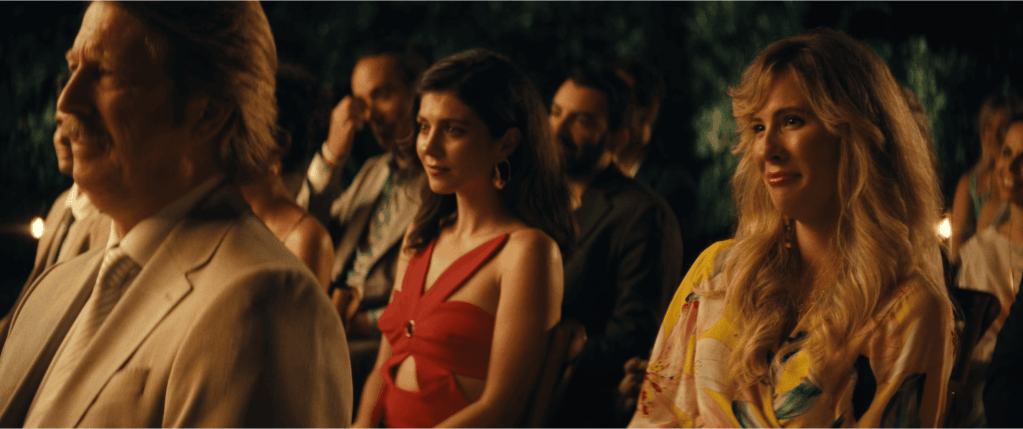
Final Thoughts
As a film, People We Meet on Vacation captures the emotional core of the book. As an adaptation, it makes peace with what it can and cannot hold.
Despite its constraints, the film never loses sight of why this story matters to readers. Poppy and Alex still feel familiar, flawed, and emotionally legible. The choices they make may arrive faster than on the page, but the feelings behind them remain recognizable. That continuity is what allows the adaptation to stand on its own, even when it cannot fully replicate the book’s depth.
I don’t see this movie as a lesser version of the book. I see it as a translation that prioritizes feeling over completeness. It may not satisfy every longtime reader in the same way, but it respects the characters, the relationship, and the emotional truth that made the novel resonate in the first place.
And for readers like me, and for the many fans who return to Emily Henry’s stories again and again, that respect extends beyond the screen. When the time comes to reread the novel or revisit it through the audiobook, the Netflix film will be there as another way back into that world.
In the end, that kind of continuity matters.