
Stranger Things Season 5 Part 1 ending is shaped by one idea: everything that happens in Volume 1 points toward the connection between Max, Holly, Vecna, and the structure of his new world.
Episode 4 pulls the threads together and provides a clear map of what those final scenes are setting up.
Part 1 opens by rewinding to November 12, 1983, and finally showing what really happened to Will in the Upside Down. After escaping the Demogorgon, he is bound by Vecna’s tentacles, which slide into his mouth as Vecna promises they will “do such beautiful things together.” From there, the season jumps to November 3, 1987, where Hawkins sits under military lockdown, the MAC-Z base controls access to the Upside Down, Robin and Steve host a morning radio show that doubles as an information hub, and Dr. Kay quietly turns the Upside Down facility into her own hunting ground for Eleven.
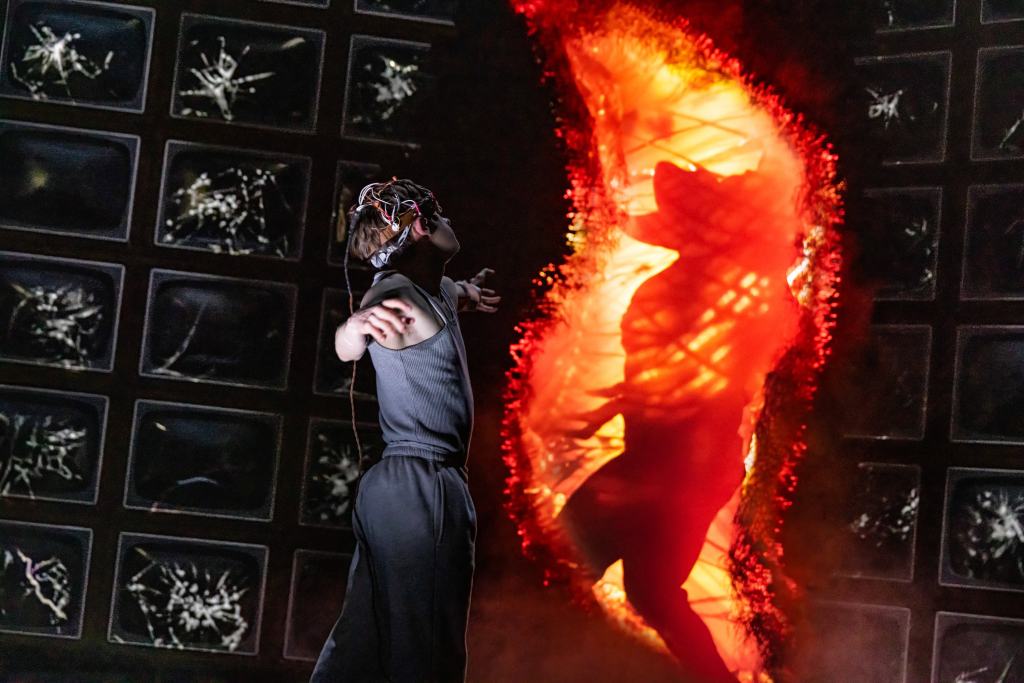
If you want a fuller picture of how the ending works, it helps to revisit the events of Stranger Things: The First Shadow, the stage prequel that lays out Henry Creel’s early history. We have a full recap on the site that connects directly to what happens in Season 5.
Max in Vecna’s Memory World
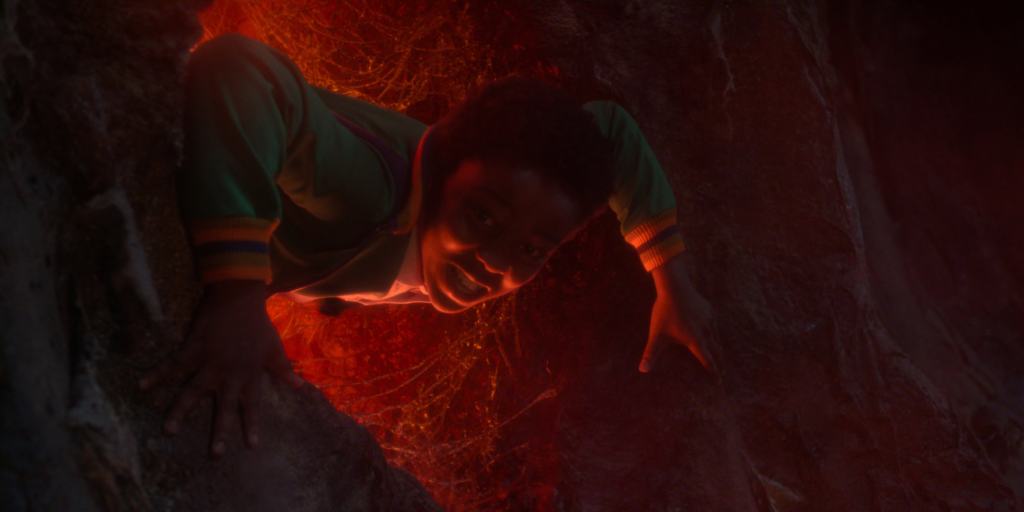
The ending hinges on Max’s storyline, which is one of the most revealing parts of Volume 1. After her death in Season 4, Max didn’t simply slip into a coma. According to Dr. Brenner’s earlier warning, when Vecna kills someone, “he consumes them.” Part of Max is with him, and that part survives inside his memories.
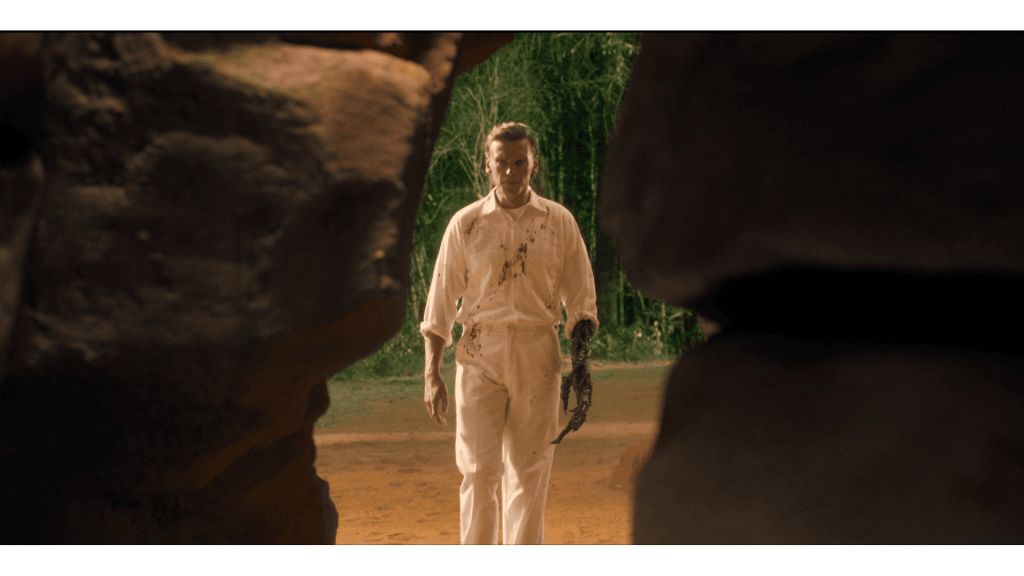
The Max we see in Volume 1 is not her physical body. It is her consciousness, trapped inside the landscape of Henry Creel’s past. The cave becomes the center of her arc: the one place Vecna fears. When Henry was a child living in Nevada, he wandered into a cave, found stolen government tech, and was transported to Dimension X. That accident infected him with the particles that later became the Mind Flayer. The cave represents the moment his life changed, and the memory still terrifies him.
Max uses that fear as shelter. She explains to Holly that she has been reliving Henry’s memories in a loop, from the Rainbow Room to Hawkins High in 1959. This recontextualizes Henry’s origin, especially with ties to Stranger Things: The First Shadow. Max survived by staying inside the one memory Henry refuses to touch.

Holly’s Dual Existence
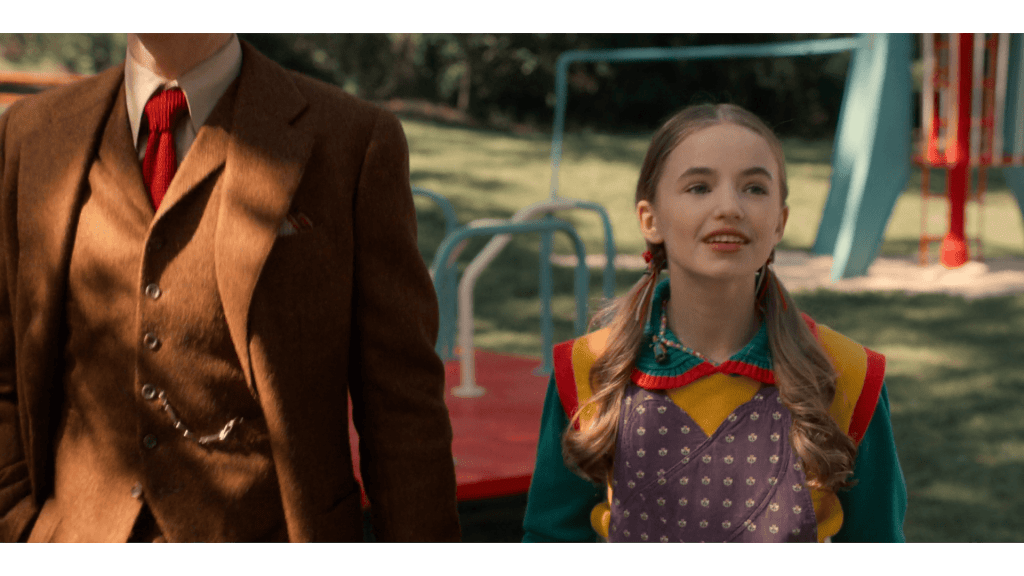
Holly asks the key question: how can Max be in a hospital bed and in this world at the same time? Max never answers directly. Holly herself is not physically in this memory world. Her body is likely tied to one of the spires seen in Will’s vision. Max, however, is different. She was consumed by Vecna, even if her body was revived.
Her story starts quietly in the premiere, with teachers and even her family dismissing Mr. Whatsit as an imaginary friend. By the end of Part 1, that ‘friend’ is revealed as Henry Creel, leading her toward Creel House while her real body hangs inside Vecna’s larger design.
The ending suggests that Holly becomes essential to the escape plan. Max gives her instructions involving Henry’s home, telling her that pretending everything is normal is the only way to help the other children. This is similar to A Wrinkle in Time; Max is treated like Mr. Murray, imprisoned but conscious, and Holly may become a kind of “cleric” figure capable of opening pathways.
The Cave, the Memories, and Why Henry Is Afraid
When Henry was a child, his accidental passage into Dimension X exposed him to the alien particles that shaped his powers. His infection mirrors what Will experienced during his long exposure to the Upside Down. The cave is the first fracture point. Max realizes it is Henry’s blind spot, which is why she survives there.
The landscape around the cave, Nevada’s desert rocks and open sky, matches the memory of his childhood environment. Volume 1 uses this memory to set up Max’s future role: she is the one person inside Henry’s world who can locate weaknesses from within.
Where Vecna Takes the Children
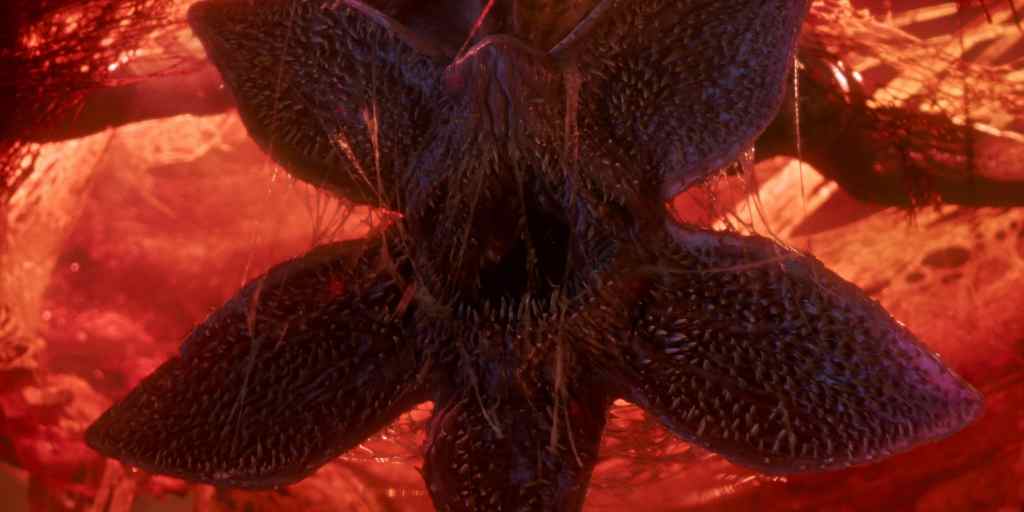
Near the end of Episode 4, Will sees Holly and three other children attached to spires in Dimension X. Vecna targets children because they’re easier to mold. Max believes she survived because she was caught between the worlds, neither fully consumed nor fully freed.
Vecna needs twelve children. Four are already taken. Eight more will follow unless the group interferes. The number twelve echoes:
- the twelve hours on the grandfather clock
- The possible number of former Hawkins Lab subjects
Volume 1 doesn’t answer why twelve, but the visual cues set the stakes.
The Meat Wall and the Center Point
The ending also shows the giant organic wall surrounding the Upside Down. Dustin’s algebra confirms that the center of the wall lines up with Hawkins Lab, the birthplace of the Mother Gate and the original link to the upside-down.
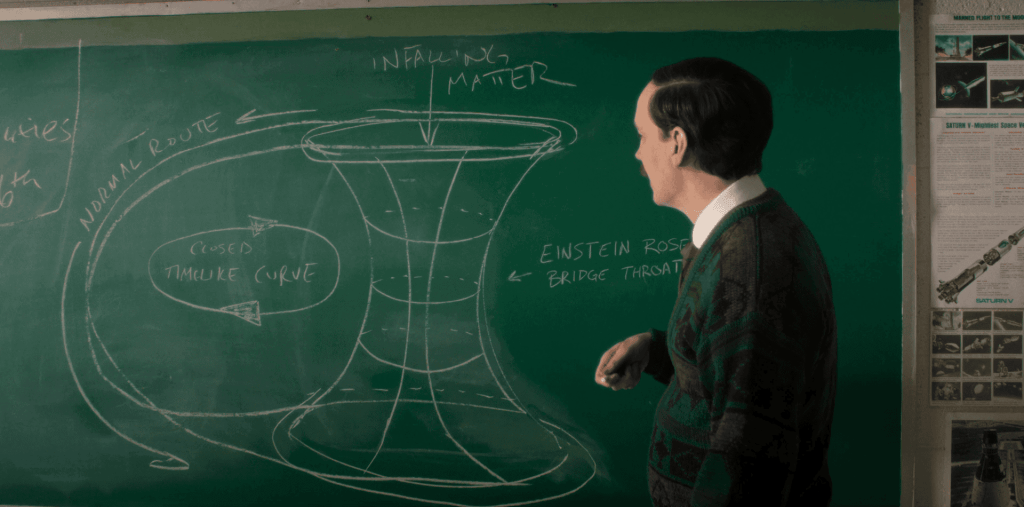
It’s a circular barrier protecting whatever Vecna is building. It suggests the wall might be part of a wormhole-like tunnel connecting Dimension X to the Upside Down and then to Hawkins. This idea is supported by Mr. Clark’s earlier wormhole explanation and the Einstein-Rosen bridge diagram shown in Season 5.
Hopper, Eleven, and the Vault at MAC-Z
While the kids fight Demogorgons and chase signals, Hopper and Eleven dig into the government side of the story. Dr. Kay, the sonic weapons, and the sealed vault at the Upside Down lab look at first like another attempt to contain creatures.
Sergeant Akers’ memories confirm that Kay has been hiding a powerful prisoner behind that door. Eleven assumes it’s Vecna. Hopper isn’t convinced, but he still straps explosives to his chest and walks toward what he believes will be a one-way mission. This is his attempt to trade his life for Eleven’s future, the same instinct that drove him under the Russian prison.
Except this time, the story doesn’t let him die.
The sonic devices fail just as he reaches the vault, the door opens, and instead of Vecna inside, we see Eight: alive, unconscious, and wired into the machinery. Kay has been running her own experiment, using another child of the lab as a living power source.
The final image of Hopper walking Eleven to Eight’s body flips the expected sacrifice on its head. He went in planning to blow himself up with Vecna. Instead, he becomes the person who opens a door to another ally.

The Ending and Will’s Awakening
The Stranger Things 5 Part 1 ending hits harder once you remember how the season begins. In the 1983 flashback, Will is not just lost in the Upside Down. Vecna binds him, pushes tentacles down his throat, and promises they will “do such beautiful things together.” That moment reframes everything that happens later at the MAC-Z gate. Will wasn’t simply a victim. He was the first experiment, the template for what Vecna is now doing to twelve children at once.
Will’s link to Vecna has always been different, but Part 1 finally spells it out. He is a hybrid shaped by Dimension X particles, caught between the hive mind and the real world. He can sense who Vecna controls and receives signals like radio waves. That sensitivity intensifies when Robin nudges him toward accepting who he is, and that emotional shift becomes the opening Vecna never expected.
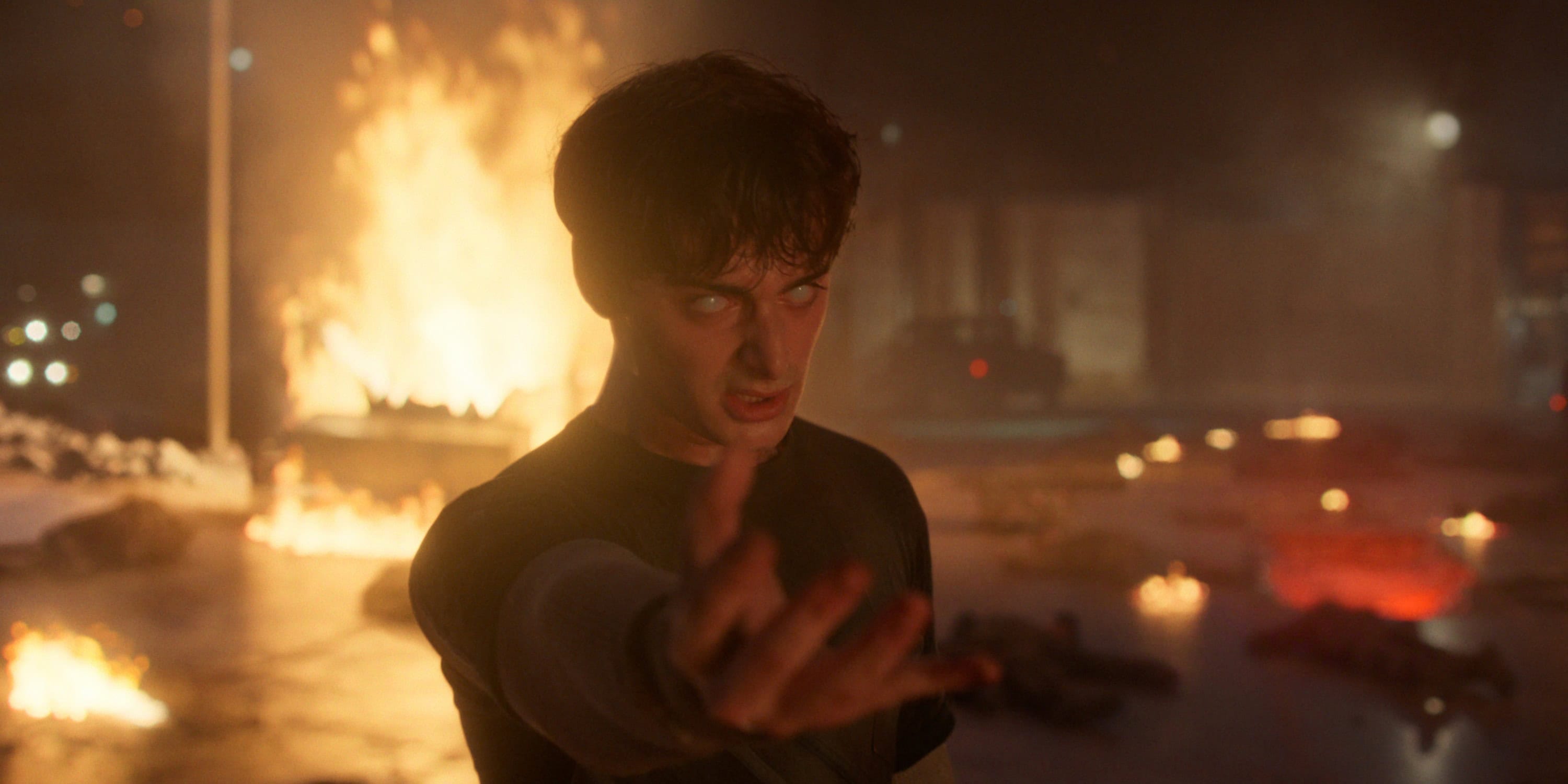
The finale turns that inner shift into something physical. Will’s eyes turn white, his hand lifts, and three Demogorgons freeze mid-air before snapping apart. It echoes Vecna’s signature kill, and marks the first time anyone outside the Rainbow Room displays power on that scale.
When Will brings the creatures down, it isn’t random. It’s the direct payoff to that possession in 1983. Vecna reshaped him, but the power meant for the hive mind now moves in the opposite direction.

What the Ending Sets Up for Volume 2
By the final scene, multiple threads converge:
- Max understands the structure of Vecna’s world
- Holly becomes the only bridge between the memory world and the trapped children
- Vecna needs twelve children to complete his plan
- The meat wall points toward Hawkins Lab as the center of the conflict
- Will’s power is no longer dormant
The transcript frames Volume 1 as a setup for a three-part story where Max’s memories, Will’s awakening, and Vecna’s long-term design collide in Volume 2.