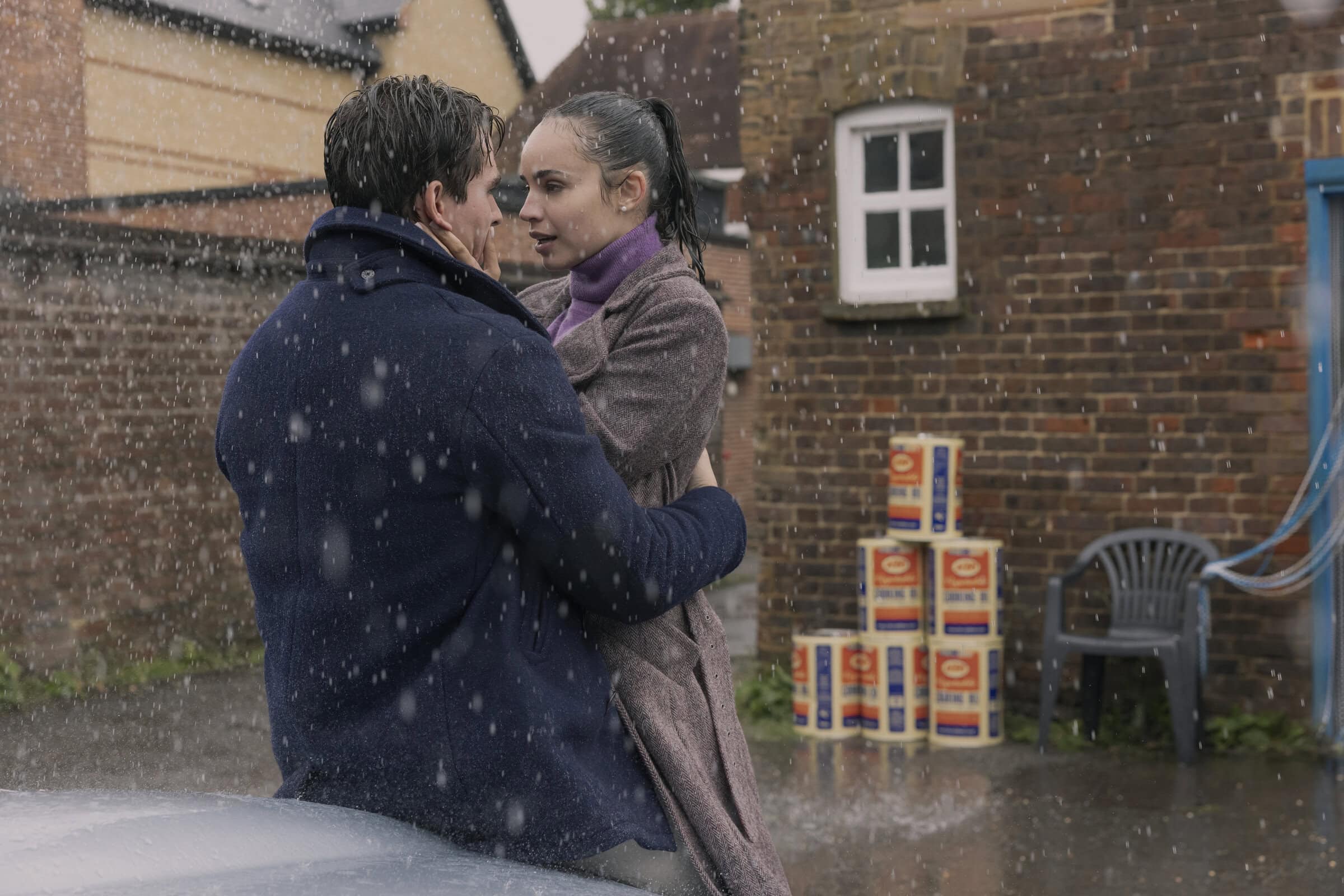
Netflix’s My Oxford Year is a tearjerker; there’s no denying that.
But if you’ve read the novel by Julia Whelan, you might be left wondering how a story with so much emotional depth became something that feels, at times, just surface-level. And if you haven’t read the book? You might be missing what made the original version so moving in the first place.
It’s completely normal for a film or series to adapt and even rewrite parts of the book it’s based on. In fact, it’s often necessary. Just look at Virgin River or Sweet Magnolias, both shows veered away from their source material, adding characters and rewriting storylines to suit the pacing of television. When it works, viewers barely notice. But when the changes cut into the heart of what the story is about, it becomes harder to overlook.
I read My Oxford Year before watching the movie, and while I liked the book for its writing and emotional layering, it’s not one I consider sacred or untouchable. That said, the Netflix adaptation doesn’t just update or reshape; it strips out key story elements that explain who these characters really are and what their choices mean. And in doing so, it loses much of the emotional gravity that gave the book its impact.
Names, Backgrounds, and Missing Depth
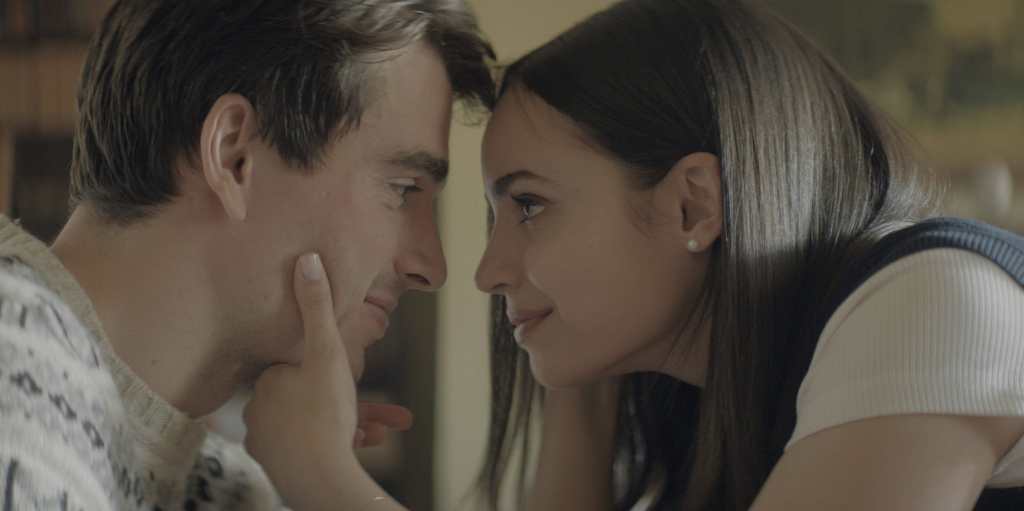
One of the first noticeable changes is the lead character’s name. In the book, she’s Eleanor (Ella) Durran, but in the film, she’s Anna De La Vega, an obvious shift to fit Sofia Carson in the role. Ella is a Rhodes Scholar studying 19th-century English literature at Oxford, while Anna is portrayed as someone who already has a Goldman Sachs job lined up and simply wants to study poetry for a year.
Ella also arrives at Oxford with a very different purpose. Just as she’s entering the country, she accepts a role as an education consultant for a U.S. presidential campaign, working remotely while she studies. Her academic focus is serious, her goals are long-term, and she’s balancing her dream with real political ambition. That ambition was born young: at thirteen, Ella read a magazine article about a girl who studied abroad at Oxford, and from that moment on, she believed it would be the key to unlocking her future.
Even her roots are different. Ella is from Ohio and comes from a fractured family marked by the trauma of her father’s death and her mother’s emotional dependence. These are defining elements of her character. Anna, meanwhile, is from Queens, and her backstory is barely touched. That missing emotional foundation makes a difference. Ella’s need for control, her drive, her loneliness, all of it stems from her past. Anna feels more like a stand-in.
From Kebab Shops to Character Arcs
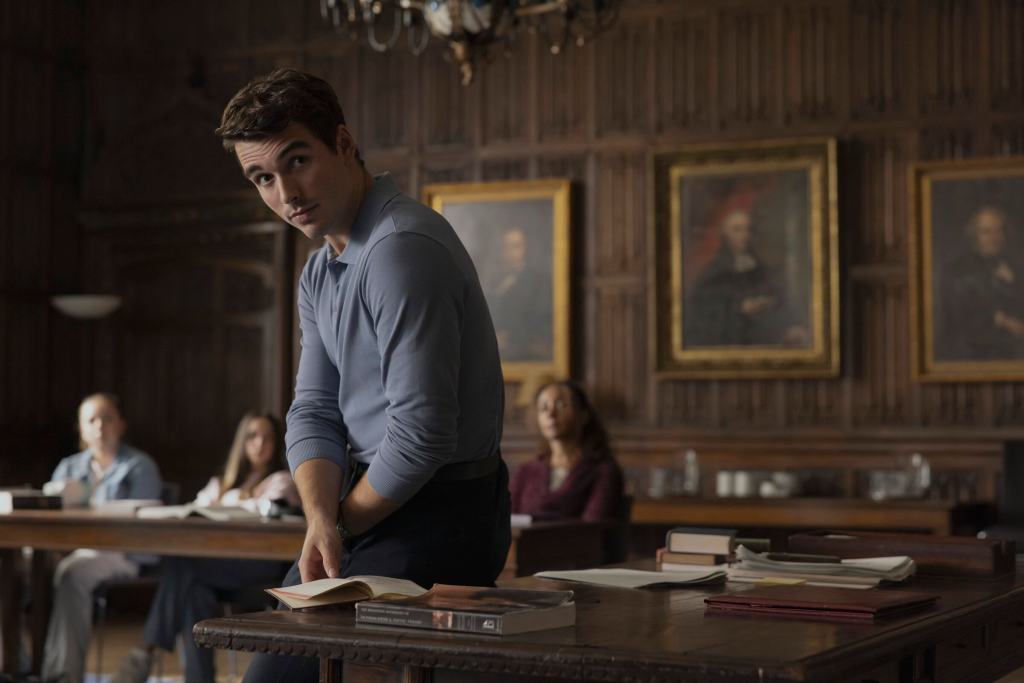
The movie sticks to the general setup of the romance: Jamie almost runs her over, they reconnect at a local food spot, and banter turns into attraction. But even these early scenes are stripped down. In the book, the fish and chip shop (run by Simon) is where Ella literally gets food spilled on her shirt. It’s chaotic and funny and alive. In the movie, it’s just… polite.
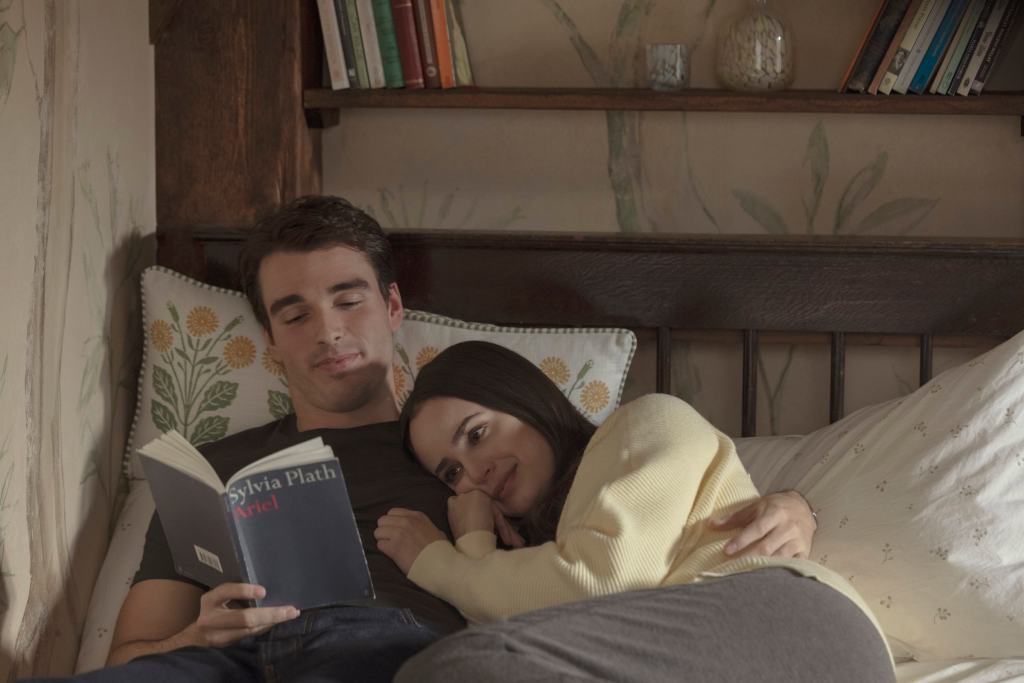
And that’s the pattern throughout. Their relationship builds more slowly in the film. In the book, they sleep together after their first night at the pub. There’s a Monday-night ritual, dorm visits, and meaningful conversations that gradually lead to vulnerability. The movie softens all of that, reducing their intimacy to a few quiet scenes and cutting short their emotional unraveling.
The now iconic Karaoke scene of the movie is not present in the book.
It’s worth noting that the book is a closed-door romance; there’s intimacy, but it’s handled with subtlety, so the film’s PG-13 rating isn’t out of step tonally. Still, by skipping over the progression of their emotional and physical closeness, the film misses the nuance of how their relationship evolves, and why it matters.
A Love Story Built on Poetry, Until It Isn’t
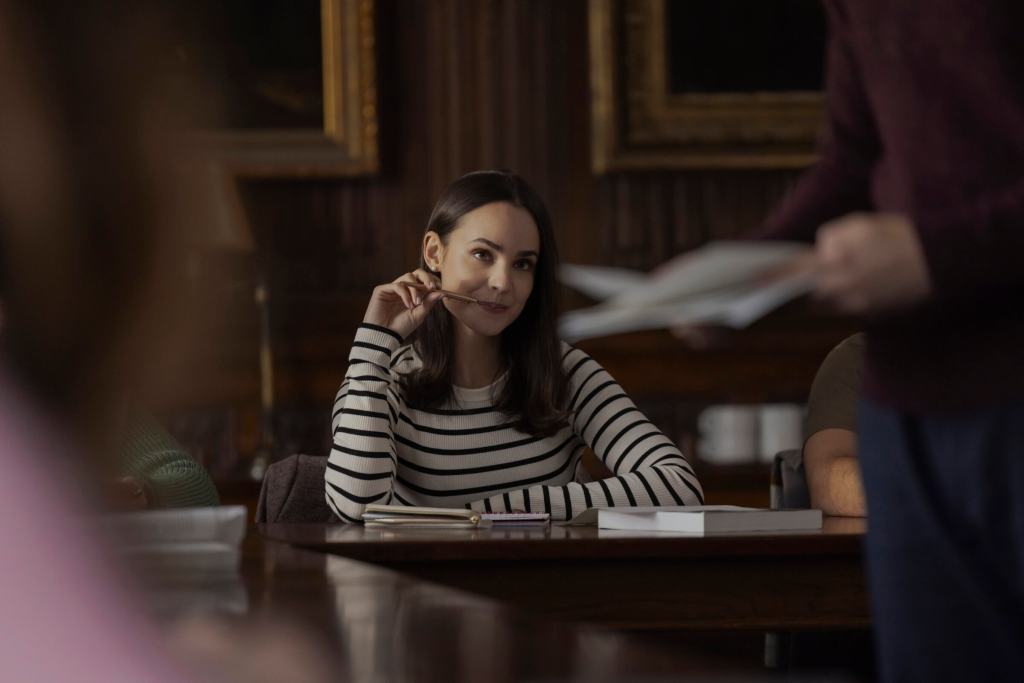
One of the strongest themes in the book is poetry. Each chapter opens with a poem, and it’s a language that both Ella and Jamie use to understand each other. Jamie even gives Ella a notebook of original poems for her birthday. In the movie? Poetry is brought up early, then quickly dropped. By the time the plot turns serious, it’s all but forgotten.
The Big Secret, and What It Meant
The biggest plot point, Jamie’s cancer diagnosis, is kept in both versions, but handled very differently. In the book, Jamie lies to Ella at first. He tells her it’s his brother, Oliver (renamed Eddie in the movie), who’s undergoing treatment, when in reality Oliver has already died, and Jamie is now facing the same rare illness. Ella discovers the truth at a party, and that moment reframes their entire relationship. It adds weight to Jamie’s guarded behavior and gives emotional shape to his grief, guilt, and eventual openness.
The movie simplifies all of this. Jamie’s illness is revealed when Anna finds him with an IV drip, but there’s no lie and no fallout. Eddie’s story is barely mentioned, and Jamie’s pain over losing his brother is left vague. What’s more, in the book, Jamie hasn’t given up, at least not right away. He’s trying chemotherapy, and he agrees to a clinical trial, and he goes into remission. Not because he believes it will save him, but because loving Ella makes him want more time. It’s a quiet, personal act of hope, an attempt to fight, even briefly, for a future he knows he might not get. In the film, that nuance is gone. Jamie has already made his decision. There’s no emotional tension, no turning point. And without that, there’s no space for hope.

The Father-Son Rift
One of the most emotionally layered and affecting relationships in the book is between Jamie and his father, William. After Oliver’s condition deteriorated beyond recovery, Jamie, who had been given power of attorney, made the painful decision to take his brother off life support. William never forgave him. That unspoken resentment sits heavily between them for most of the novel, shaping not just their dynamic but Jamie’s own sense of guilt and emotional isolation.
Eventually, the tension comes to a breaking point. During Ella’s birthday party at Jamie’s family estate, Jamie and William have a brutal argument. Jamie accuses his father of wishing it had been him who died instead of Oliver, a belief he’s carried silently for years. William’s response is heartbreaking: “I didn’t mean you. I meant me.” He never wished Jamie had gotten sick; he wished he had. It’s a moment of vulnerability and grief that finally allows them to reconnect. They begin to mend what was broken, and William supports Jamie’s decision to stop further treatment if the clinical trial doesn’t work.
In the movie, this entire emotional arc is reduced to a vague line about how “words were said” after Eddie’s death. We never learn what happened, why Jamie and William are distant, or what guilt either of them carries. At Anna’s birthday party, they do have a brief disagreement, but it’s more of a light clash than a real confrontation. The film skips the heavy emotional reckoning entirely. Instead, peace is made quietly, almost wordlessly, when Anna gives William a model car kit, something he used to build with Jamie and Eddie when they were young. As they sit down together to work on it, their rift is symbolically closed, but without the emotional context, it feels like a gesture, not a resolution. What was raw and deeply human in the book becomes a subtle nod in the movie, and much of the impact is lost.
The Trip That Was, or Wasn’t
In the book, Ella invites Jamie on a Christmas trip through Europe that she had already planned. He agrees but becomes too ill to go. In the film, the trip is Jamie’s idea, his romantic dare, and Anna ends up traveling alone after his death. It’s a more final ending, and perhaps a more cinematic one. But it also flattens the nuance.
In the book, their journey isn’t canceled; it’s just delayed. We don’t know when Jamie dies. We only know they had that extra time together.
Same Destination, Different Journey
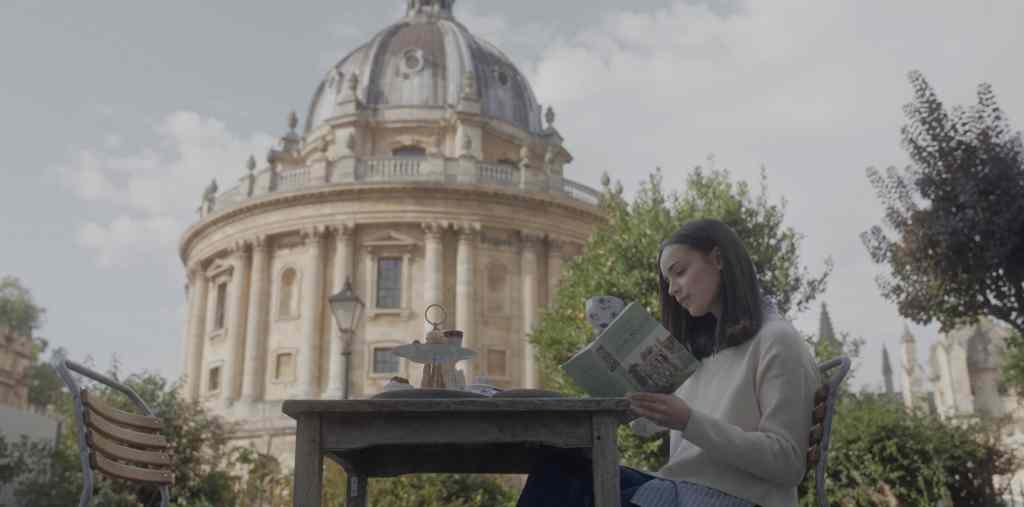
Both Ella and Anna eventually choose to stay in Oxford. Ella turns down a future in Washington despite her candidate becoming the presidential nominee. Anna gives up her finance job. In both cases, it’s a rejection of the life they thought they wanted. In both cases, Jamie worries she’s staying for him. It’s messy and real.
In the film, the choice feels easier, more like a clean resolution. Anna takes Jamie’s place as a teacher. Her first class begins just like his did: with cake and poetry. It’s poetic symmetry, but it also feels like a shortcut. We’re told she’s grown, but we don’t feel it as deeply as we did with Ella.
Final Thoughts
My Oxford Year could’ve been a thoughtful, romantic adaptation. And for some viewers, it might be. But for those who read the book, it’s hard not to feel like something essential got lost in translation. The depth, the tension, the slow build of intimacy and loss, it’s all there in the novel. The movie offers the broad strokes but not the layers.
Not every book needs a faithful adaptation. But when so many of the choices that made the story powerful are erased or simplified, you start to wonder why they adapted it at all.