

I wasn’t convinced Stuart Fails to Save the Universe could work. Three episodes in, I’m loving it. The series has found a way back into The Big Bang Theory world without simply trying to make The Big Bang Theory again, and that’s exactly why it’s working for me.
I’ve watched a lot of comedies over the years, but Chuck Lorre’s shows have always been among the ones I return to. Two and a Half Men, Dharma & Greg, The Big Bang Theory, Mom, The Kominsky Method and Leanne have all been watched, and in some cases rewatched, in my house. When I need something playing in the background, The Big Bang Theory is right there with Friends, Will & Grace, Gilmore Girls and Grace and Frankie, depending on which one Netflix happens to have at the time.
So I went into this with a lot of affection for the original series, but also quite a bit of skepticism. My Stuart Fails to Save the Universe review after the first three episodes is much more positive than I expected it to be. Once I understood what the show was trying to do, it clicked.

Stuart Fails to Save the Universe Works Because It Isn’t The Big Bang Theory
My biggest question going in was simple: how is this supposed to work?
We’ve already spent 12 seasons with these characters and this world. Stuart was part of it, as were Denise, Bert and Kripke, but none of them were the center of the story. How do you take those characters, build another series around them and make it feel connected without creating a weaker copy of what came before?
The answer, apparently, is to go completely crazy with it.
The Big Bang Theory was built around science and rationality, but its characters were constantly talking about worlds that had neither. They loved superheroes, comic books, Star Trek, fantasy, sci-fi, and Dungeons & Dragons. They spent endless hours in Stuart’s comic book store arguing about fictional universes and characters with powers.
Stuart Fails to Save the Universe basically asks: what happens if we put the science aside and throw these people into the kinds of worlds they spent years talking about?
Suddenly magic exists. Alternate universes exist. The impossible isn’t something Sheldon can dismiss with an explanation because the impossible is happening right in front of everyone.
And somehow, it makes sense.
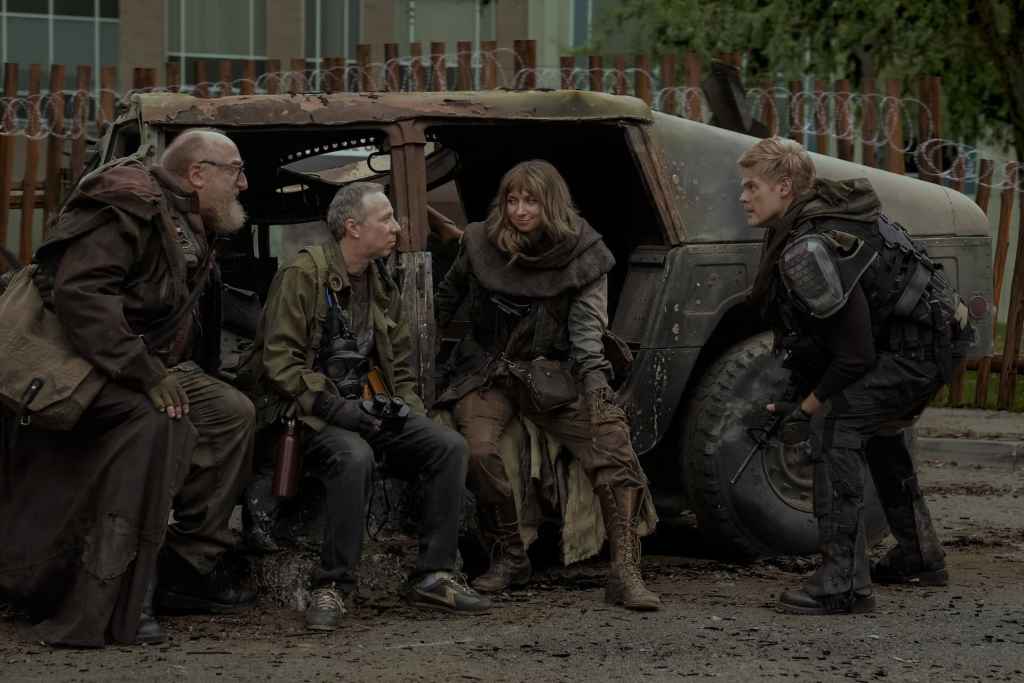
The Show Is Having Fun With 12 Seasons of Big Bang Theory Jokes
This is where the series has really won me over.
It’s not simply bringing back familiar faces and expecting recognition to do all the work. It’s taking jokes, character traits and tiny details from The Big Bang Theory and finding ridiculous new ways to use them.
In Episode 2, we get another joke about geology not being a real science, something Sheldon spent years telling everyone, except this time Ramona reveals geology isn’t even in the Caltech building anymore.
Penny, the farm girl from Nebraska, becomes a badass member of the resistance.
Then there’s Bernadette.
If someone from The Big Bang Theory had to secretly be a demon, Bernadette was a pretty perfect choice. She may be tiny and have that famously sweet voice, but the original series also spent years showing us the much scarier Bernadette hiding underneath. Making her an actual giant demon in Episode 3 takes both sides of that joke and pushes them as far as possible.
That’s the kind of reference I’m enjoying most. You recognize exactly where the joke comes from, but the show does something new with it.


The Easter Eggs Reward People Who Really Know the Original
There are big references, but some of my favorites are much smaller.
Episode 3 puts Wil Wheaton in the WAG, the Wizards Guild of America, in a magical universe. Bernadette was sanctioned by the guild for using magic during a strike, turning the whole thing into a joke about the Writers Guild of America.
Then Stuart asks where Sheldon Cooper is, only to learn that he’s currently starring on Broadway. It’s a very obvious wink at Jim Parsons’ real-life history of returning to the stage.
Even the way Bert and Wil use their powers has another joke hidden inside it. Bert uses the sign of the horns, fitting for someone who played in a rock band, while Wil uses the Vulcan salute from Star Trek.
It’s the big and small Easter eggs together that make this so much fun to watch.
The rotating guest stars help too. The show doesn’t need every Big Bang Theory character back as a regular. Instead, the multiverse allows actors and characters we’ve come to know over the years to pop up for an episode, sometimes as completely different versions of themselves. Christine Baranski, Teller, Penn, Wil Wheaton and Ramona Nowitzki are among the familiar faces we’ve already encountered.
It gives each episode another little question: who’s going to show up this time, and what has this universe done to them?

You Really Do Need to Know The Big Bang Theory
I’m not going to lie: I think you need to have watched The Big Bang Theory to really get this show.
And ideally, you need to have watched it more than once.
Could someone understand the basic multiverse story without knowing every reference? Probably. But so much of what makes Stuart Fails to Save the Universe funny comes from knowing these people already.
Bernadette becoming a giant demon is funnier if you remember all the jokes about her height. The geology joke lands because you remember Sheldon’s complete lack of respect for Bert’s field. Penny’s alternate-universe role works because you know the Penny we met all those years ago. Even little gestures and throwaway lines become Easter eggs.
For someone coming in completely cold, I’m not sure it would have the same effect.
For someone who has watched and rewatched The Big Bang Theory, though? It’s so worth it.

Kevin Sussman Makes Stuart Work as the Lead
There was another reason I wasn’t entirely convinced when the series was announced: Stuart was never meant to be the guy at the center of The Big Bang Theory.
That’s precisely why Kevin Sussman works here.
He doesn’t suddenly play Stuart like the hero of a giant sci-fi adventure. Stuart is still awkward, insecure and frequently overwhelmed by what is happening around him. The universe has changed. Stuart hasn’t magically become a different person because his name is now in the title.
Sussman takes the character who spent years on the edges of the original group and makes him an endearing, reluctant lead without losing what made Stuart funny in the first place.
There is something particularly entertaining about watching this man, of all people, being tasked with dealing with absolute cosmic chaos.
The scale of the story gets bigger and crazier with every universe, while Stuart remains Stuart.

Stuart, Denise, Bert and Kripke Make a Surprisingly Fun Group
The other surprise is how well the central group works together.
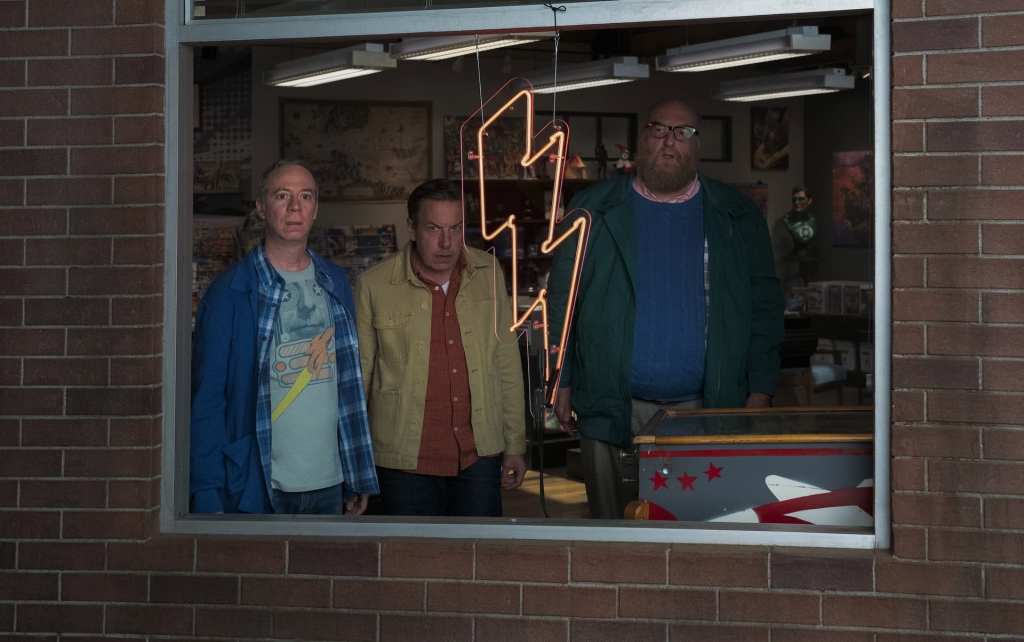
Stuart, Denise, Bert and Barry Kripke would not have been my first guess for the four characters we’d eventually follow into a Big Bang Theory spinoff. That’s part of what makes their chemistry interesting.
They don’t feel like replacements for Sheldon, Leonard, Penny, Howard, Raj, Amy and Bernadette. The show isn’t trying to assign someone the Sheldon role or find another Penny. Instead, these are four characters with their own established personalities being thrown together because everything has gone horribly wrong.
And they’re a weird group. That’s a compliment.
Kripke’s complete willingness to put himself first plays very differently against Stuart. Bert having actual magical powers is funny partly because he’s still Bert while everyone around him starts treating him like something much bigger. Denise gives Stuart’s story a more personal connection as he keeps encountering versions of the woman he loves who don’t necessarily share his memories.
Their universe-hopping also means those relationships can keep changing depending on where they land. It gives the actors room to play with characters we’ve known for years without throwing away what we already know about them.
Will We See the Original Big Bang Theory Cast?
Now comes the question I’m sure plenty of viewers have: are we eventually going to see the entire original cast?
I think we will.
That’s purely my expectation after these first episodes, not something the series has confirmed. But the show already seems to be gradually working its way through familiar faces, and the multiverse gives it an easy way to bring anyone back without having to explain what their original character has been doing.
Personally, I think we’re building toward at least Leonard or Sheldon appearing before the end of Season 1.
And yes, I know that’s exactly what the show wants me to sit around waiting for and it’s working.

Stuart Fails to Save the Universe Has Won Me Over
Three episodes were enough to change my mind about Stuart Fails to Save the Universe.
What could have been an unnecessary attempt to keep The Big Bang Theory alive has instead become something much stranger. It takes the things those characters spent years loving, arguing about, and imagining and turns them into the actual rules of the story.
Magic, superheroes, sci-fi, alternate realities, and ridiculous versions of people we already know.
Then underneath all of that, there are 12 seasons of jokes and character history for the writers to play with.
The cast is a big part of why it holds together. Kevin Sussman keeps Stuart recognizable even when everything around him becomes ridiculous, while Lauren Lapkus, Brian Posehn and John Ross Bowie give him a group that feels familiar without recreating the old one.
That’s what I’m enjoying. It’s familiar without asking me to watch the same sitcom again, and weird enough that I genuinely don’t know what version of this universe I’m going to get next.
I started the series wondering how this could possibly work.
By Episode 3, I don’t really care how. I’m having too much fun watching it.
More From Stuart Fails to Save the Universe
View all Stuart Fails to Save the Universe coverage

FAQ
Is Stuart Fails to Save the Universe connected to The Big Bang Theory?
Yes. The series follows characters from The Big Bang Theory, including Stuart, Denise, Bert and Barry Kripke, while also bringing back familiar faces in alternate forms.
Do you need to watch The Big Bang Theory before Stuart Fails to Save the Universe?
You can follow the basic multiverse story without it, but many of the jokes, character references, and Easter eggs rely heavily on knowing The Big Bang Theory.
Do Sheldon and Leonard appear in Stuart Fails to Save the Universe?
Based on the first three episodes discussed in this review, neither has appeared.