Some sports comedies try to be outrageous. The Dink takes a different approach. Apple TV+’s new film uses pickleball as the backdrop for a familiar underdog story, mixing easygoing humor with a surprisingly sincere look at failure, friendship, and learning to let go of the past.
This The Dink recap and review breaks down the entire movie, from Dusty Boyd’s failed tennis career to the final showdown that forces him to stop chasing the version of himself he’s been clinging to for more than two decades. Along the way, the film finds its strongest moments not in the sport itself, but in the relationships that slowly help Dusty move forward.
The Dink Recap: Dusty Boyd Is Still Living in the Past
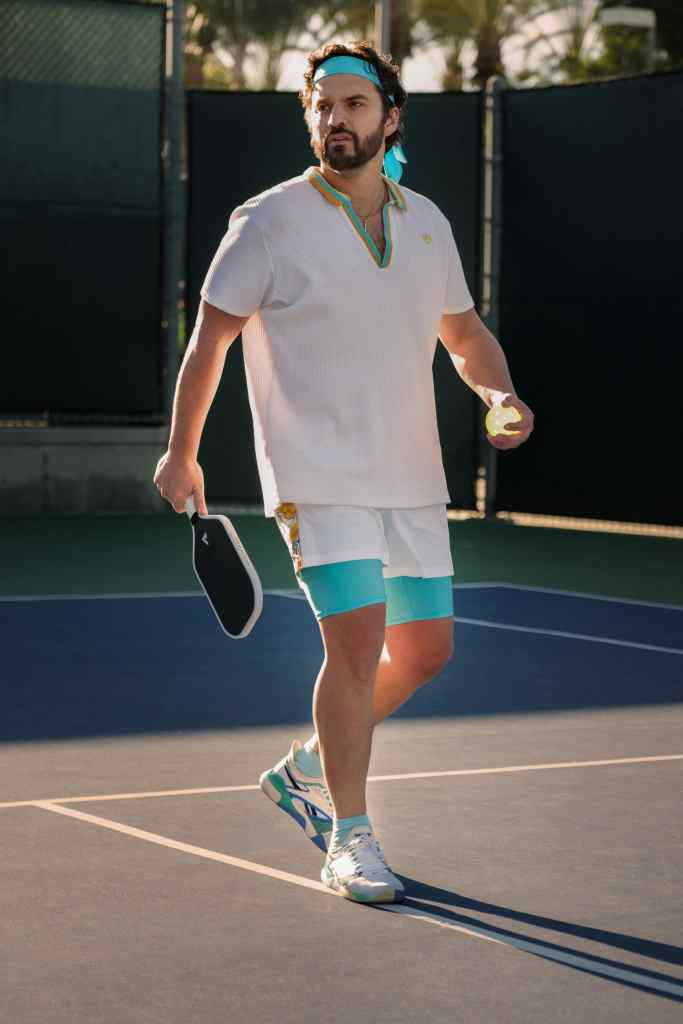
When we first meet Dusty Boyd, he’s still telling the same story he’s been telling for years. Once one of America’s brightest junior tennis prospects, Dusty insists his promising career ended because he slipped and shattered his wrist during a match against Andy Roddick in 2000. It’s become part of his identity, a story polished over the years until even he seems to believe it.
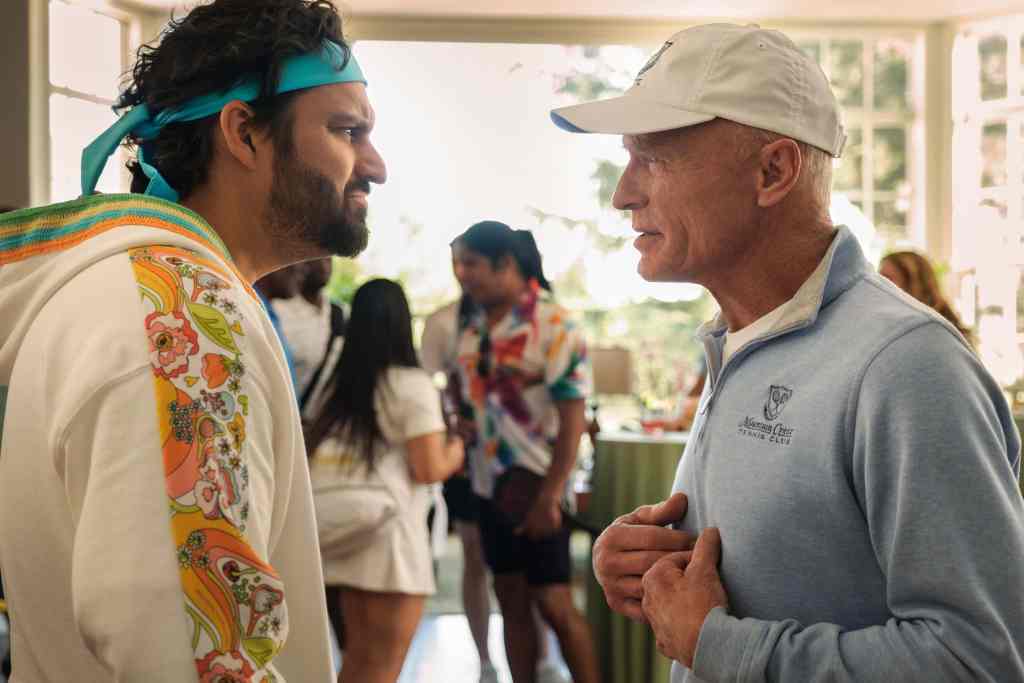
Now he teaches tennis lessons at Mountain Crest, the country club run by his demanding father, Chuck Boyd. Dusty is talented enough to impress beginners, but his life has stalled. He’s single after another failed relationship, still drives the same old Buick, and spends far more time talking about what might have been than building anything new.
Chuck doesn’t make things any easier. He treats Dusty less like a son than another employee who failed to live up to expectations. During a board dinner, Chuck announces that the club has a growing problem. Pickleball players want more courts, while longtime tennis members refuse to give up any space. Instead of holding a vote, Chuck reveals an unusual rule hidden in the club charter. Each side can choose a champion, and one match will decide which sport gets the courts.
Dusty immediately volunteers. His father refuses without hesitation.
Chuck tells everyone that his son simply can’t be trusted under pressure. If Dusty wants the opportunity, he’ll first have to win the club’s annual tennis tournament.
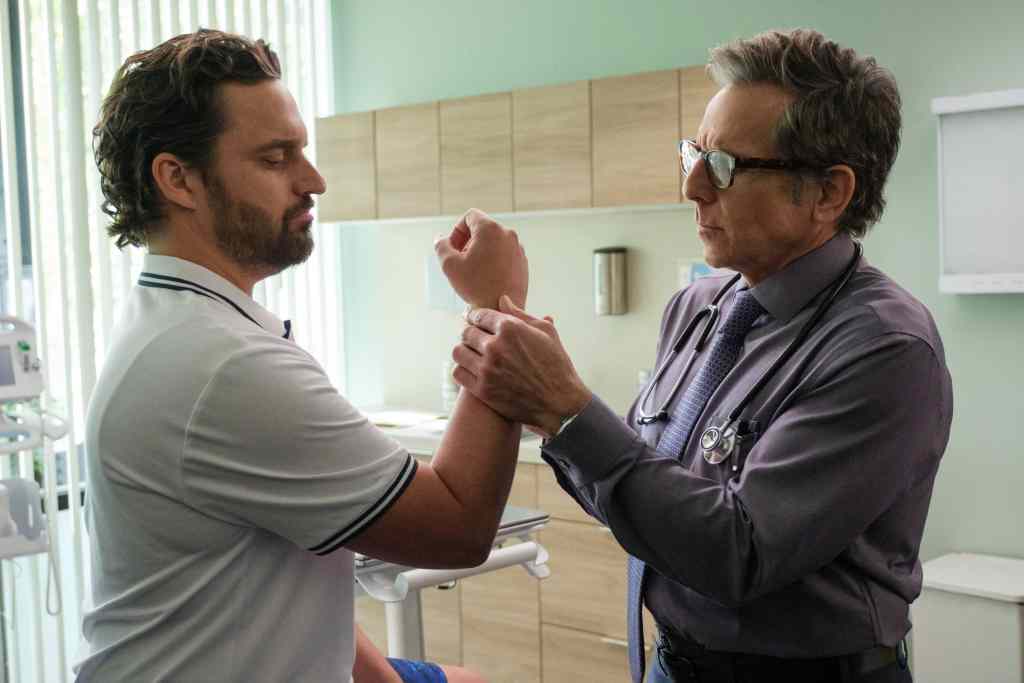
That challenge only feeds Dusty’s competitive side. He storms through the tournament, overwhelming opponents with pure power, only to celebrate too early in the final. Jumping the net, he lands awkwardly on the same wrist he has blamed for ruining his career. Although the injury turns out to be nothing more than inflammation, the doctor offers unexpected advice. Instead of more tennis, he suggests Dusty try pickleball while the wrist heals.
Dusty would rather take painkillers.
Dusty Learns Pickleball Is More Than the Joke He Thought It Was
A simple online mix-up changes everything.
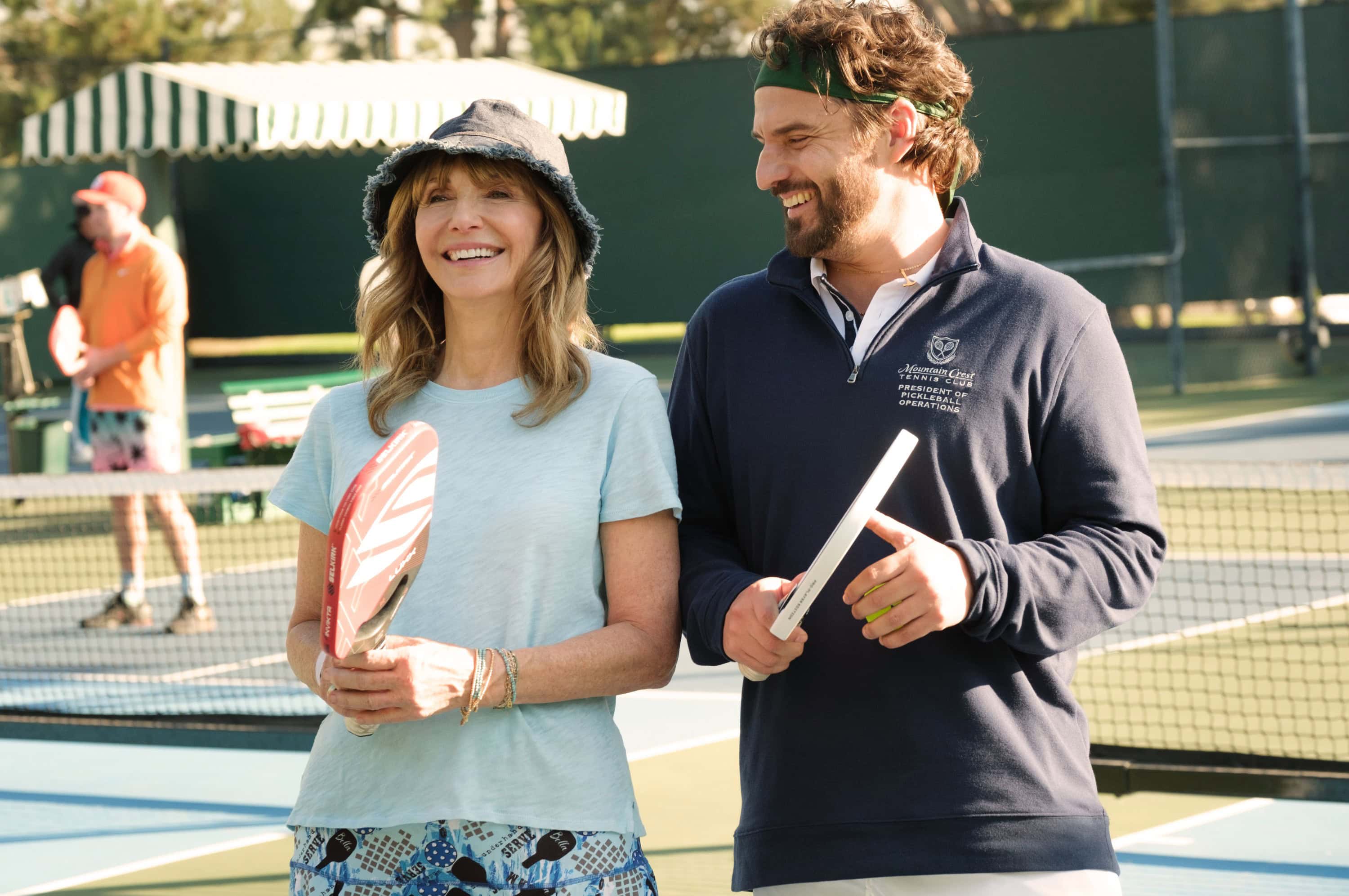
Trying to sign up for a dating website, Dusty accidentally registers for a pickleball mixer instead. Too embarrassed to leave, he agrees to play and is paired with Candace, the very woman he recently banned from the tennis courts after winning a ridiculous wager.
Their first match is a disaster. Dusty ignores every instruction, swings far too hard, repeatedly steps into the kitchen, argues over line calls, and treats every rally like the Wimbledon final. Candace and the other players never lose their patience with him. Instead, they laugh, explain the rules again, and invite him back after tacos.
Those scenes quietly establish what makes the pickleball community different from the world Dusty grew up in. Tennis, as his father taught it, was always about perfection, pressure, and proving yourself. Pickleball feels social. The people care about winning, but they also enjoy simply spending time together.
Dusty fights that idea at first. He insists the sport looks ridiculous and swears he’ll never become one of “those people.” Still, he keeps showing up.
Before long, he’s practicing with Candace, learning strategy instead of relying on power, and slowly discovering that the game rewards patience just as much as athletic ability. Even more importantly, he starts enjoying himself again.
The friendship grows naturally. Candace shares stories about her divorce and admits she’s struggling with the idea of seeing her ex-husband happily moving on. Dusty, meanwhile, slowly lets his guard down. Beneath the sarcasm is someone who’s spent years believing one bad day defined the rest of his life.
The movie also reveals cracks in Dusty’s version of the past. When he unexpectedly runs into Andy Roddick, the tennis legend barely remembers the junior match Dusty has built his entire identity around. Curious, Dusty watches the old broadcast himself and discovers something uncomfortable. The commentators weren’t talking about bad luck. They were simply watching the better player win.
For the first time, Dusty begins questioning the story he’s spent twenty years telling himself.
Candace Helps Dusty Face the Truth About Himself
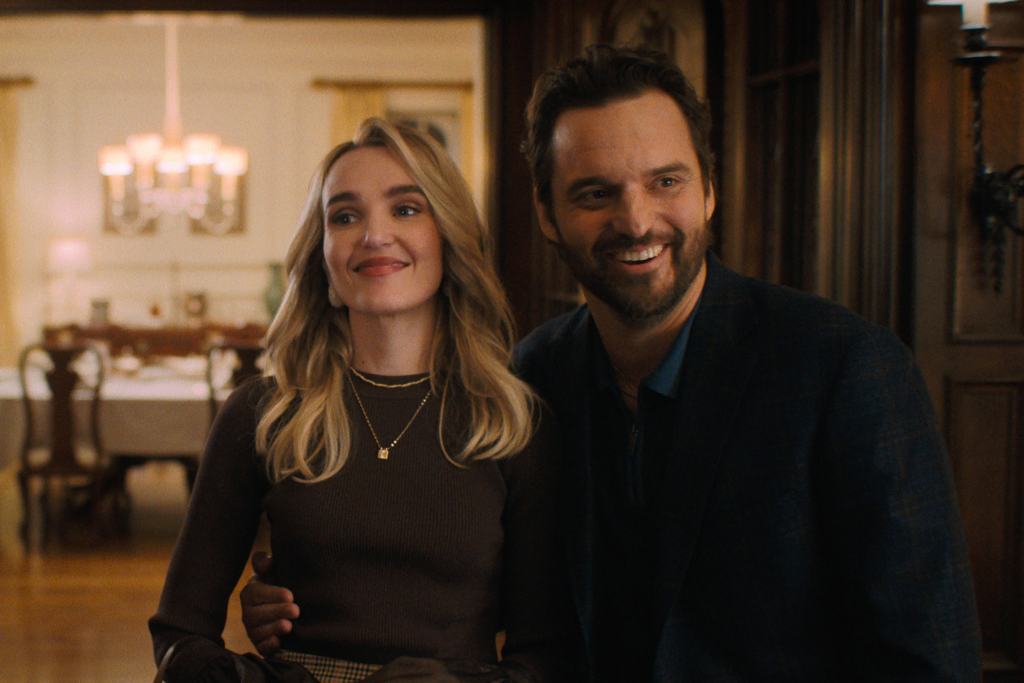
As Dusty and Candace spend more time together, it becomes obvious that their connection goes beyond pickleball.
Candace encourages him to attend a charity event hosted by her ex-husband, promising that simply showing up would mean more than pretending everything is fine. Dusty does exactly that, arriving in full cowboy attire and confidently introducing himself as Candace’s new boyfriend before pulling her onto the dance floor. The moment gives Candace exactly the support she needed.
Unfortunately, Dusty mistakes the evening for the beginning of a romance. He kisses Candace and confesses that he wants to be with her; Candace gently stops him.
She explains that while she genuinely cares about him, what she found wasn’t a new relationship. She found a true friend, something she values just as much. Hurt and embarrassed, Dusty pushes her away and walks out.
Back at home, another surprise awaits him. Neil, Chuck’s chosen tennis champion, dies in a bizarre accident involving an owl and a fall from his attic. With no better option left, Chuck finally asks Dusty to represent the tennis side in the upcoming duel. At first it feels like the recognition Dusty has always wanted; then he learns the truth.
Chuck never actually chose him. Other club members insisted Dusty should play after Neil’s death. Once again, his father simply accepted circumstances instead of believing in his son.
That revelation finally forces Dusty to admit what really happened all those years ago. His wrist never accidentally broke during the match against Andy Roddick. He broke it himself.
Faced with the certainty that he was about to lose, Dusty chose injury over defeat because failing honestly felt worse than quitting. It’s the first completely truthful version of the story he’s told anyone, and it completely changes the way we understand the character.
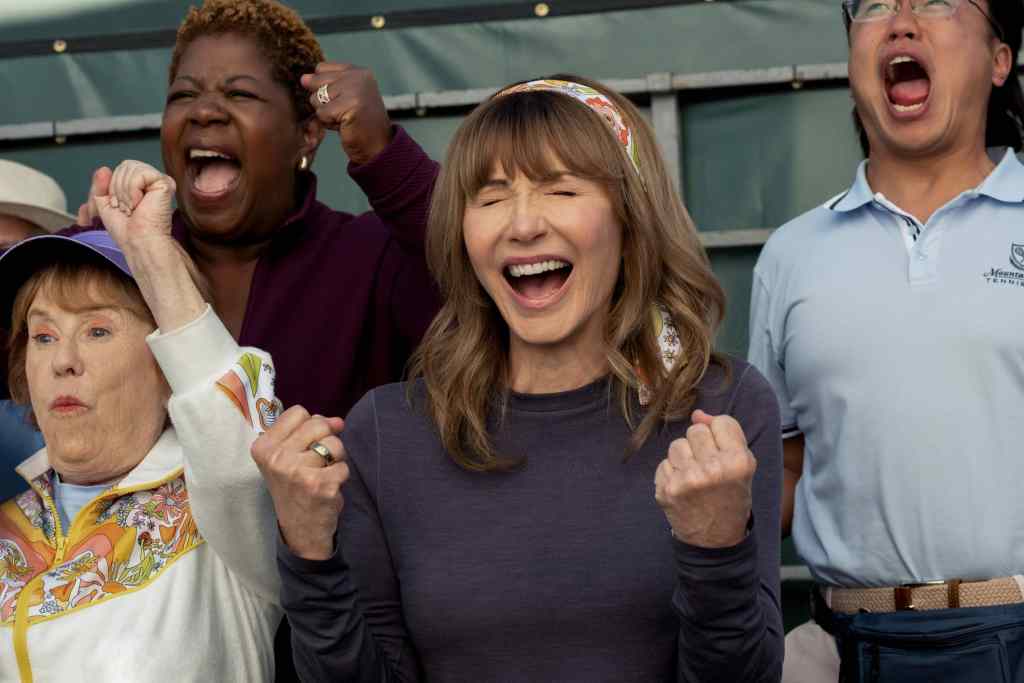
The Duel Against Andy Roddick Finally Changes Everything
Before the big match, Dusty apologizes to Candace for pushing her away and admits that he’s been isolating himself for years. She forgives him without hesitation and helps him prepare for one final surprise.
When everyone gathers for the club duel, Dusty shocks both sides by abandoning tennis altogether.
He tears Candace’s photo off the club’s ban board, publicly admits he’s spent years pretending to be someone he isn’t, and announces that he’ll represent the pickleball players instead.
Chuck has one last trick: rather than fielding a club member, he hires Andy Roddick himself.
At first, it looks hopeless. Then Dusty remembers something Skip pointed out during the debate over new courts. Court 16 is full of flaws. The baseline is cracked, the fence sits too close to the playing area, and a leaking fountain leaves part of the surface slippery. Since winning the coin toss allows him to choose the court, Dusty deliberately selects the neglected pickleball court.
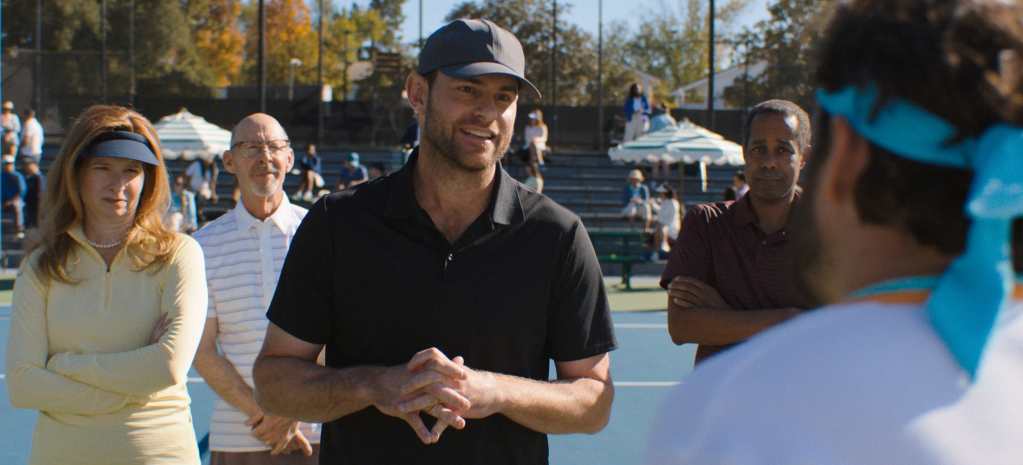
Instead of trying to overpower one of the greatest tennis players of his generation, Dusty uses everything pickleball has taught him.
He forces Roddick into awkward positions, makes him deal with the cramped court, and gradually slows the match into a patient battle of soft shots. Eventually the game turns into a long dink rally, exactly the type of exchange Dusty would have mocked at the beginning of the movie.
This time, though, he embraces it.
When Roddick finally lifts one ball too high, Dusty ends the match with a perfectly placed dink, securing victory for the pickleball players and saving their courts.
The win matters for more than the club. Chuck finally tells his son the words Dusty has wanted to hear his entire life: he’s proud of him.
For the first time, the sport itself doesn’t matter. What matters is that Dusty stopped trying to become the player he never was and accepted the person he had become. Months later, the new pickleball courts are finished, PJ has been promoted, Chuck has reluctantly embraced pickleball himself, and Candace gives Dusty a new nickname.
“The Hammer” is gone; from now on, everyone simply calls him “The Dink.”
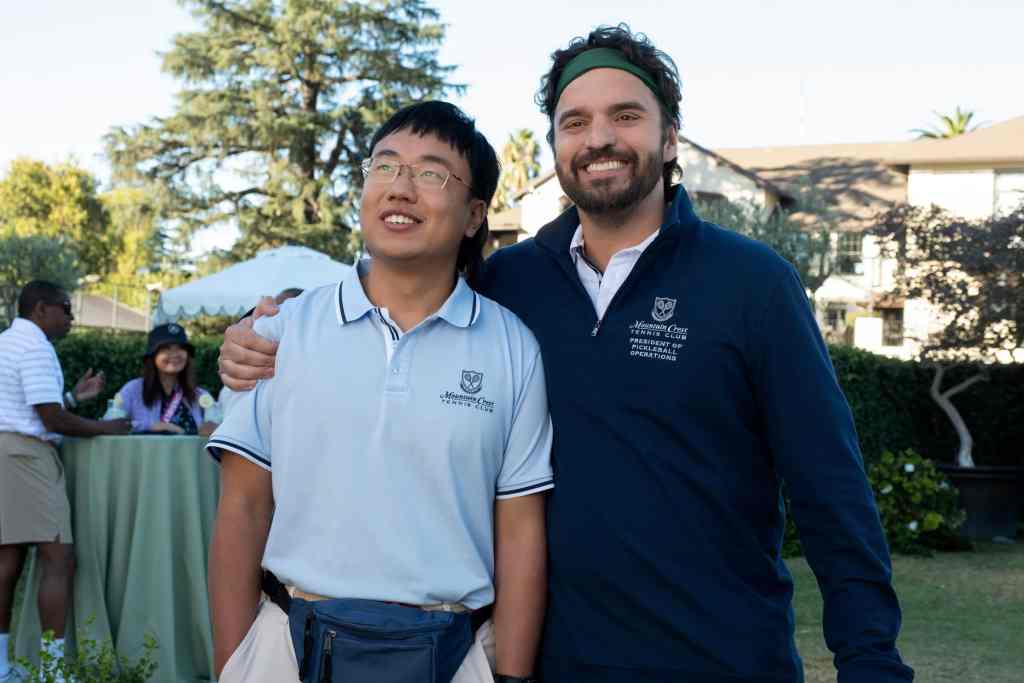
The Dink Review: Jake Johnson Makes the Formula Work
There’s nothing especially original about The Dink. If you’ve watched enough sports comedies, you’ll probably recognize where most of the story is headed long before it gets there. The tournament, the personal redemption, the difficult parent, and the final big match all follow a familiar blueprint.
The difference is Jake Johnson.
He carries the movie with the same laid-back charm that has made him so enjoyable in previous roles. Dusty could have easily become frustrating, especially during the first act when he’s arrogant, stubborn, and constantly making excuses. Johnson keeps him likable enough that you want to see him figure things out, even when he’s clearly getting in his own way.
Mary Steenburgen gives Candace a warmth that keeps the relationship grounded, never turning her into a simple love interest. Ed Harris also brings surprising emotion to Chuck. He’s harsh for most of the movie, but the final scenes work because Harris allows us to see the regret hiding beneath all that disappointment.
The supporting cast keeps the energy moving, while appearances from Ben Stiller, Patton Oswalt, Andy Roddick, and John McEnroe add a few fun surprises without taking over the story.
What I didn’t expect was how much the movie is really about failure rather than pickleball. The sport gets the title, but the real story belongs to a man who’s spent twenty years hiding behind an excuse because admitting the truth felt harder than losing. That gives the film more heart than the premise initially suggests.
Where The Dink falls a little short is in the comedy itself.
The setup promises something a little wilder than what the movie ultimately delivers. The rivalry between tennis and pickleball has become a real talking point in recent years, and there’s plenty of material for sharper satire. Instead, the film mostly uses the sport as a backdrop for a familiar redemption story.
The laughs also come a bit unevenly. There are funny moments throughout, but they’re often driven by the cast rather than particularly memorable jokes on the page. You can almost feel the actors lifting scenes that might not have landed quite as well with a different group.
Still, not every comedy needs to reinvent the wheel. Sometimes it’s enough to spend ninety minutes with characters you enjoy.
And that’s where The Dink succeeds.
It’s light, surprisingly heartfelt, and easy to throw on during a summer weekend. You may not remember every joke once it’s over, but you’ll probably remember Dusty’s journey from “The Hammer” to “The Dink,” and that’s a pretty satisfying place for the movie to end.