

72 Hours has a talented cast, a proven comedy director and a setup that should produce at least a few hours of easy entertainment. Instead, Netflix’s latest Kevin Hart comedy is loud, awkward and rarely as funny as it seems to think it is.
There are a few scattered laughs, mostly when the younger cast members are allowed to bounce off each other. They are not enough to save a movie built around an uncomfortable premise, tired jokes and emotional moments that never feel earned.
Watch the Trailer

A Bachelor Party That Feels Much Longer Than Three Days
Directed by Tim Story, 72 Hours follows Joe, a 40-year-old advertising executive whose career has stalled because he no longer understands the younger audience his company wants to reach.
When Joe is accidentally added to a group chat for a Miami bachelor party, he sees an opportunity. Rather than simply asking the men involved whether he can join them, he presents himself as a generous stranger willing to pay for a much better weekend. His real plan is to observe them and use what he learns to rescue a struggling vodka campaign.
The official premise is meant to launch a comedy about age, friendship and Joe’s fear that life is passing him by. In practice, it immediately creates a problem that the movie never solves. Joe lies his way into a private trip, secretly treats the group as market research and records them without their knowledge.
That is not harmless fun. It is strange and cringing.
The movie knows this and occasionally has the younger men question Joe’s motives, but pointing out how uncomfortable the situation is does not make it less uncomfortable. It only draws more attention to the fact that the entire story depends on everyone accepting behavior that should end the weekend almost immediately.
This 72 Hours review would be very different had the film found a smart way to use that discomfort. Instead, it keeps pushing forward and hopes the next party, fight, or drug joke will make us forget about it. It does not.

What Is 72 Hours About?
Joe appears to have built an enviable life. He has money, a successful career, an expensive home, and a serious relationship with Jennifer, a doctor played by Teyana Taylor. However, he is also avoiding the decisions that would require him to admit he is no longer the carefree young man he still imagines himself to be.
His professional problems become impossible to ignore when his latest advertising campaign is dismissed as out of touch. Shortly afterward, Nick mistakenly adds him to a group chat for Mason’s bachelor party in Miami.
Joe joins Mason, Nick, Hunter and Freshman for the trip, offering to cover the cost of a luxurious house and an expensive weekend. What begins as an attempt to study Gen Z soon turns into a series of encounters involving another party group, criminals, drugs, stolen vehicles and several increasingly ridiculous misunderstandings.
There is a workable movie somewhere in that setup. Joe could have learned something real from spending time with men who are younger but, in some ways, far more emotionally honest than he is. The bachelor party could also have exposed the gap between how Joe sees himself and how everyone else sees him.
The film touches both ideas. It just never stays with either one long enough to say anything interesting.
The Generation Jokes Are Already Old
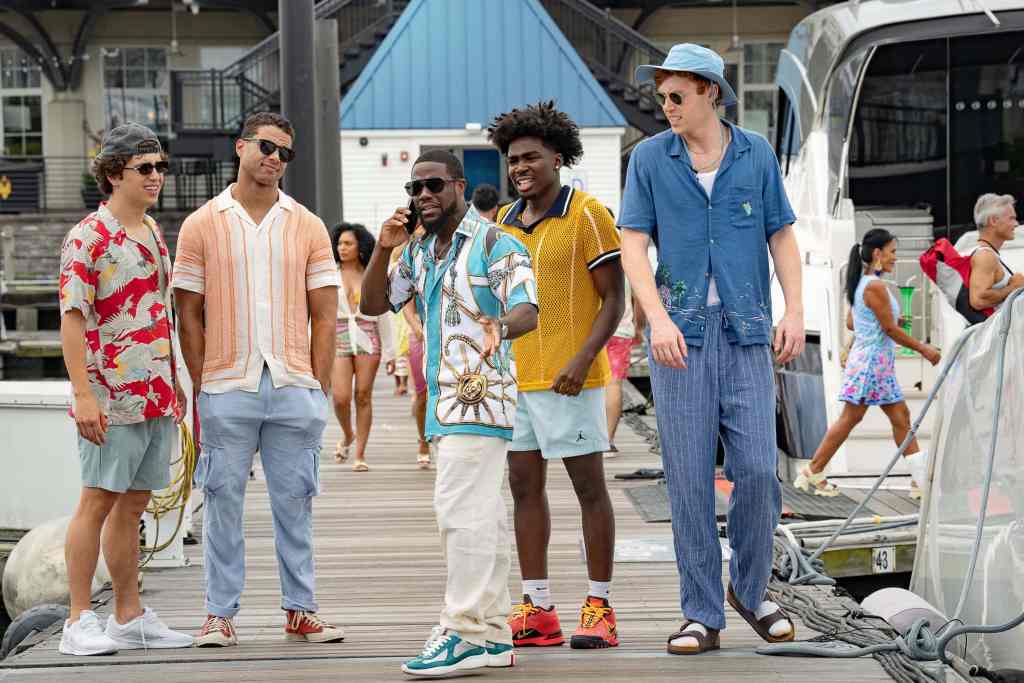
Most of the early comedy comes from the age difference between Joe and the bachelor-party group.
They call him old. He misunderstands their language. They mock his clothes, his habits and his attempts to act young. Joe responds with insults of his own while privately trying to understand what they like.
Some of this produces a smile, but the film does not have much to say about either generation. Its version of Gen Z is a collection of broad habits and stereotypes rather than a believable group of people. They are always online but distrust social media. They want a wild weekend but also stop to discuss their feelings. They mock Joe for being old while accepting his money and allowing him to follow them around.
Those contradictions could have been funny because people are contradictory. Instead, the movie presents them as observations and waits for us to laugh.
The jokes aimed at Joe are not much better. Calling Kevin Hart “unc” repeatedly is not enough to carry an entire generation-gap comedy. Once the film has established that Joe is older, shorter and less current than the other men, it simply keeps returning to the same point.
We got it the first time.
72 Hours Wastes a Cast That Could Have Been Funny
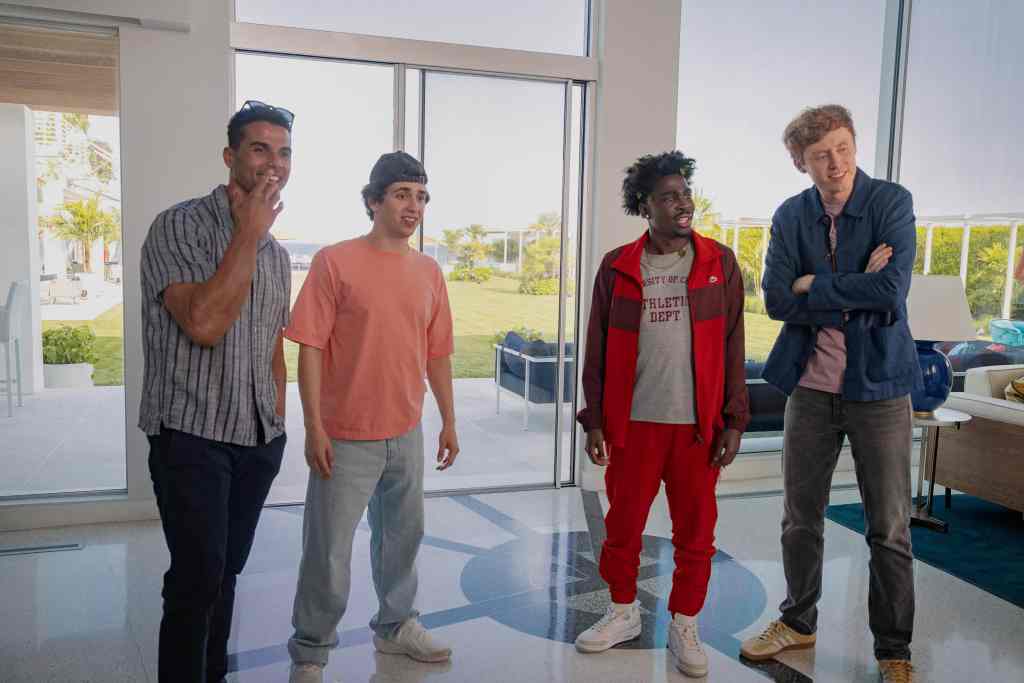
Kevin Hart stars alongside Marcello Hernández, Mason Gooding, Ben Marshall and Kam Patterson. Teyana Taylor, Andy Garcia, Zach Cherry, Kevin Dunn and Mike Epps also appear. Netflix describes the film as a clash-of-generations comedy directed by Story, with a script credited to Matt Mider, Kevin Burrows, Jon Hurwitz and Hayden Schlossberg.
On paper, that is a strong group for this kind of movie.
72 Hours is at its best when it relaxes and lets the group talk. Their insults and smaller reactions sometimes feel more natural than the major jokes written around them. Hernández has an easy screen presence, and Marshall manages to find humor in moments that do not give him much to work with.
Patterson also gets a few laughs from Freshman’s complete lack of awareness. The character is not exactly layered, but his delivery can make a weak line land better than it should.
The problem is that these moments are surrounded by so much noise. Every time the group begins to feel like a real collection of friends, the movie sends them into another overlong gag or criminal encounter; 72 Hours keeps adding more.
Kevin Hart’s Usual Energy Cannot Save the Script
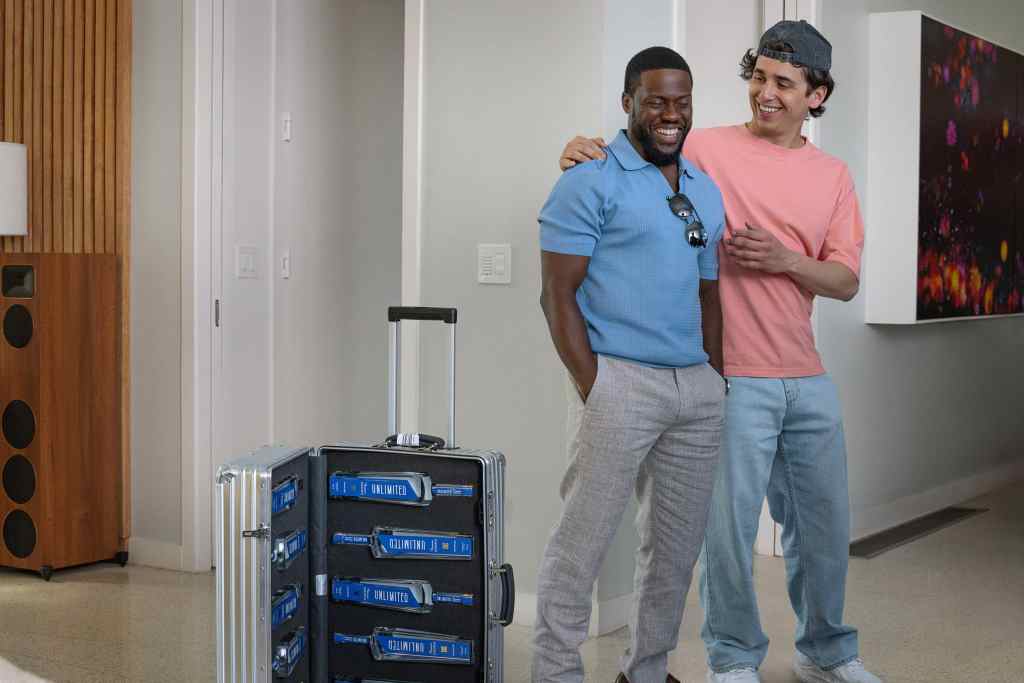
Hart gives Joe the same restless energy he brings to many of his studio comedies. He talks quickly, reacts loudly and throws himself into every humiliating situation.
That approach can work when the writing gives his panic somewhere to go. Here, it often feels like Hart is trying to create momentum that the story is lacking.
One of the film’s weakest running jokes involves Joe performing an exaggerated Tony Montana impression after taking cocaine. The scene goes on long after the joke has stopped working, and then the movie brings it back. Characters even discuss whether the impression is offensive, as though acknowledging the problem somehow improves it. It does not. It just makes the scene longer.
There is also a fight involving Hart and Katt Williams that seems designed around the surprise of seeing them together instead of anything happening between their characters.
Hart remains a gifted performer, but this movie doesn’t do him justice.
72 Hours Becomes Too Busy for Its Own Good
The bachelor-party story should have been simple. Joe joins the group under false pretenses, becomes attached to them and eventually has to admit why he is really there.
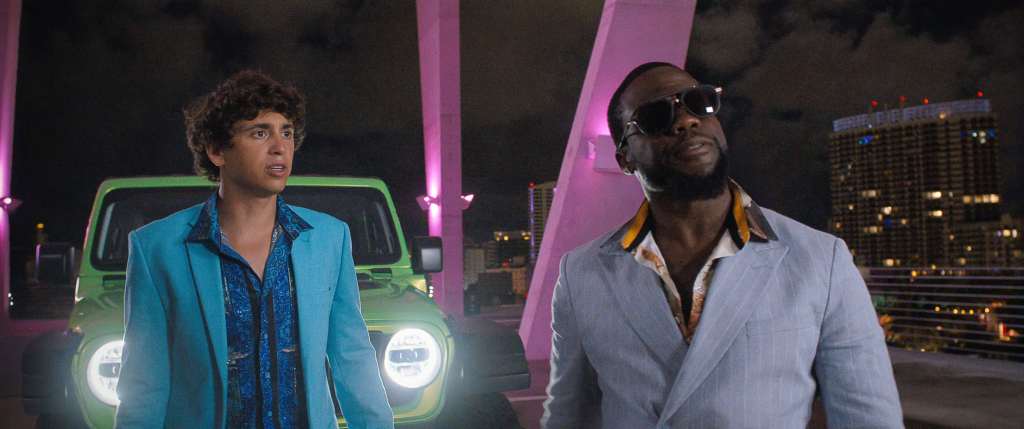
Instead, the film piles on drug runners, undercover activity, stolen Jet Skis, cocaine, relationship problems, surprise appearances and a group of women hosting a nearby bachelorette party.
Some of these scenes contain the movie’s better jokes. The encounters with the bachelorette group bring a sharper energy because the women are allowed to be stranger, more aggressive and less predictable than the central men.
Even then, most of the action has very little impact. One scene leads to the next because the movie needs to keep everyone running, not because the characters have made choices we care about.
The Jet Ski sequence is a good example. The setup suggests a large action-comedy escape, but the movie skips most of the actual payoff. The men steal the vehicles, and then the sequence is essentially over. It feels like the scene was heavily cut in post-production.

The Emotional Scenes Fall Flat
Between all the chaos we see, 72 Hours repeatedly attempts to become sincere.
Mason has doubts and worries connected to his upcoming marriage. Joe offers advice about commitment while avoiding the same issue in his relationship with Jennifer. The younger men also take their friendship seriously, sharing memories and speaking openly about their feelings.
These ideas are more interesting than the crime plot around them. Unfortunately, the movie treats sincerity like another box it needs to check before returning to the next joke.
Joe’s conversations with Mason are framed as meaningful breakthroughs, but their relationship has not developed enough to support them. The film wants Joe to become a mentor without showing why Mason would trust him so quickly.
Jennifer is also given very little to do beyond representing the adult life Joe refuses to accept. Taylor plays her very few scenes with so much emotional weight that her talent is wasted in this movie.

Is 72 Hours Worth Watching on Netflix?
There are worse ways to spend an evening, but there are also much better Kevin Hart movies.
72 Hours occasionally finds a laugh through its cast, particularly when Hernández, Marshall, Patterson and Gooding are simply allowed to interact. Those brief moments suggest a looser and funnier movie that could have focused on an older man trying to understand a younger group without turning the weekend into a criminal farce.
Instead, the film stretches a weak premise across one hour and 45 minutes and fills the gaps with jokes that are stereotypical and crude.
A bachelor-party comedy does not need to be clever. It does need to be funny. 72 Hours simply is not funny often enough.
FAQ
What is 72 Hours about?
72 Hours follows Joe, a 40-year-old advertising executive who joins a group of twentysomethings on a Miami bachelor-party trip after he is mistakenly added to their group chat. He secretly plans to use the weekend as research for an advertising campaign.
Who stars in 72 Hours?
The cast includes Kevin Hart, Marcello Hernández, Mason Gooding, Kam Patterson, Ben Marshall, Teyana Taylor, Andy Garcia, Zach Cherry, Mike Epps and Kevin Dunn.
Is 72 Hours worth watching?
Viewers who enjoy Kevin Hart’s louder comedies might find a few entertaining moments, but the movie is held back by repetitive jokes, an uncomfortable premise and a story that becomes far too busy.