
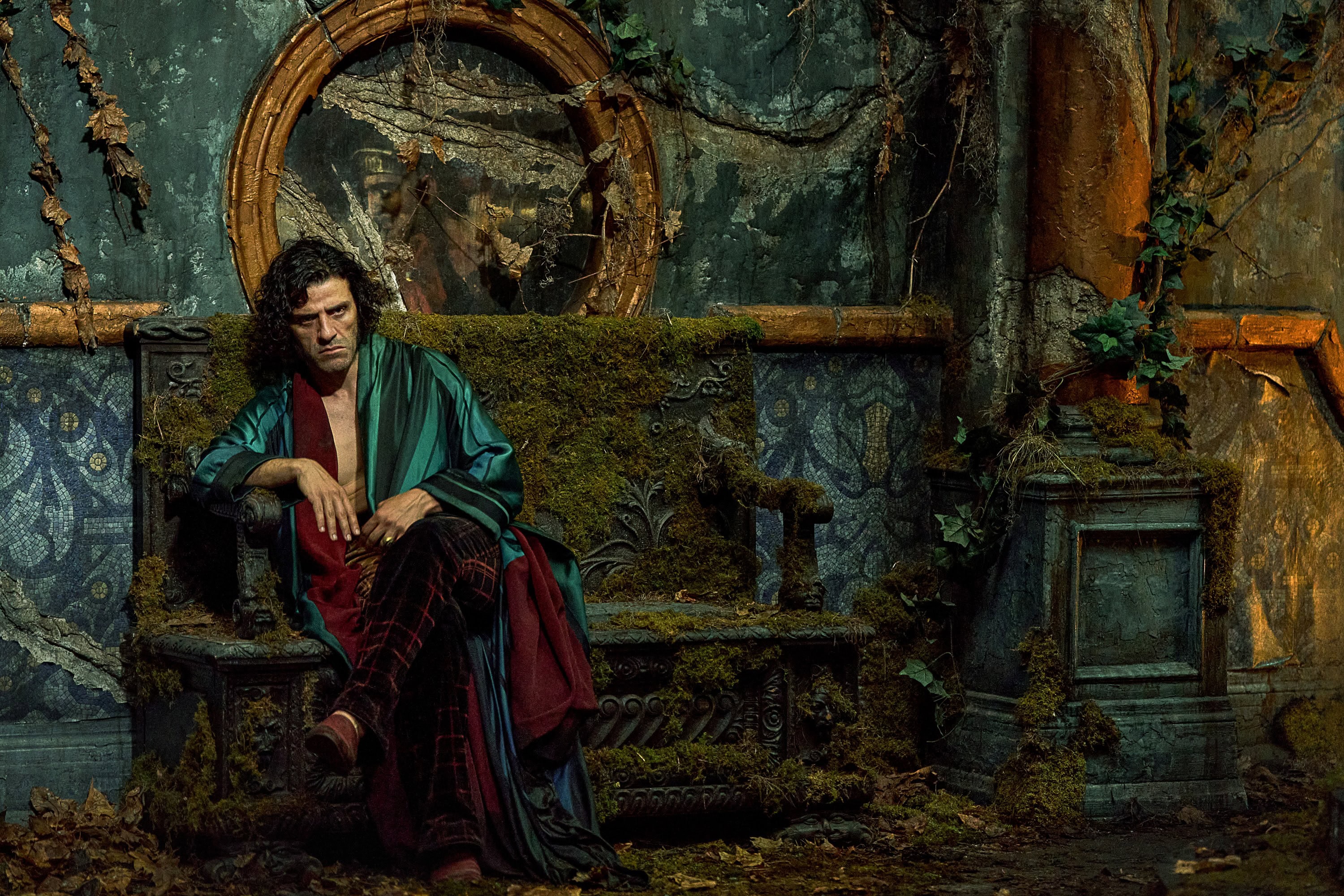
Guillermo del Toro’s Frankenstein tells its story as much through light and texture as through words. Working with cinematographer Dan Laustsen and production designer Tamara Deverell, he builds a palette that reflects Victor Frankenstein’s descent from brilliance to remorse, every hue carrying emotional weight.
Del Toro described his approach as “painting with memory.” Each color in the film represents a stage of Victor’s obsession: red for what he lost, gold for what he tries to reclaim, and shadow for everything he cannot control.
The Red of Memory and Blood
Red dominates the film’s emotional core. It follows Victor like a ghost, from the surgical gloves of his father to the velvet drapery of his laboratory. Production designer Tamara Deverell noted that red was used to symbolize “inheritance and guilt, the color of a family curse.”
In del Toro’s vision, red is not danger; it’s grief. Every time Victor steps closer to creation, the frame bleeds with the shade of his past. It reminds viewers that the monster’s birth is tied to a lineage of violence, his father’s cruelty, his mother’s death, his own pride.
When Victor finally faces his creation in the Arctic light, red disappears entirely. What’s left is ice and reflection, the absence of warmth.
Gold and the Illusion of Divinity
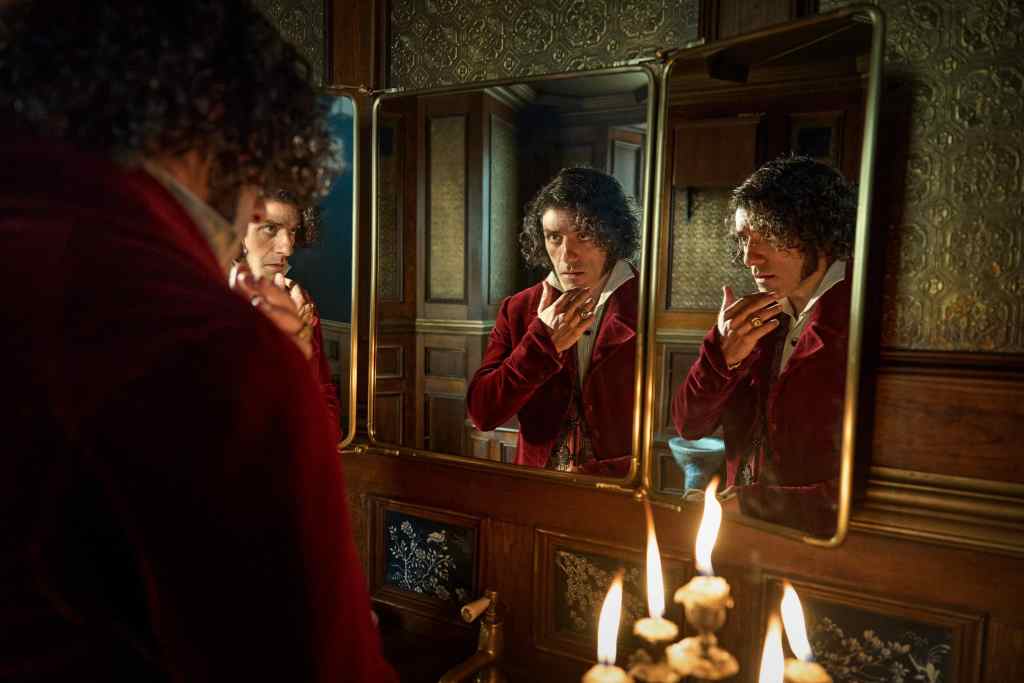
Where red marks loss, gold represents the illusion of mastery. Laustsen’s cinematography uses gold tones to mimic candlelight and early electricity, bathing the lab in false divinity. The glow that seems heavenly is mechanical, proof that Victor is trying to imitate the light of creation without understanding its cost.
Del Toro has used this motif since Crimson Peak and Pan’s Labyrinth, where gold signifies power built on decay. In Frankenstein, it becomes the color of hubris, the shimmer that blinds Victor to consequence.
Green and the Patina of the Lab
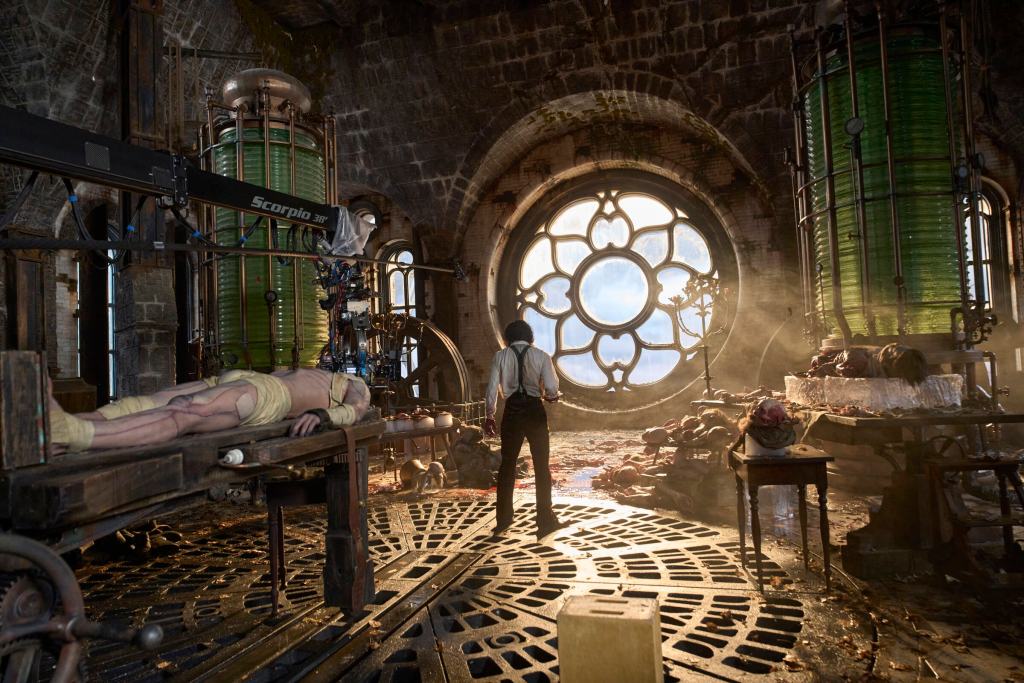
The laboratory’s green patina stands apart from the warmth of the manor and the cold of the Arctic. It’s not the lurid green of older Frankenstein films but a metallic oxidation, a reminder that science here is corrosion, not progress.
Deverell described the lab as “a breathing machine,” where pipes and glass pulse with dying energy. The shade bridges the natural and the artificial, echoing the creature’s body: alive, but made from ruin.
Shadow as Faith and Forgiveness
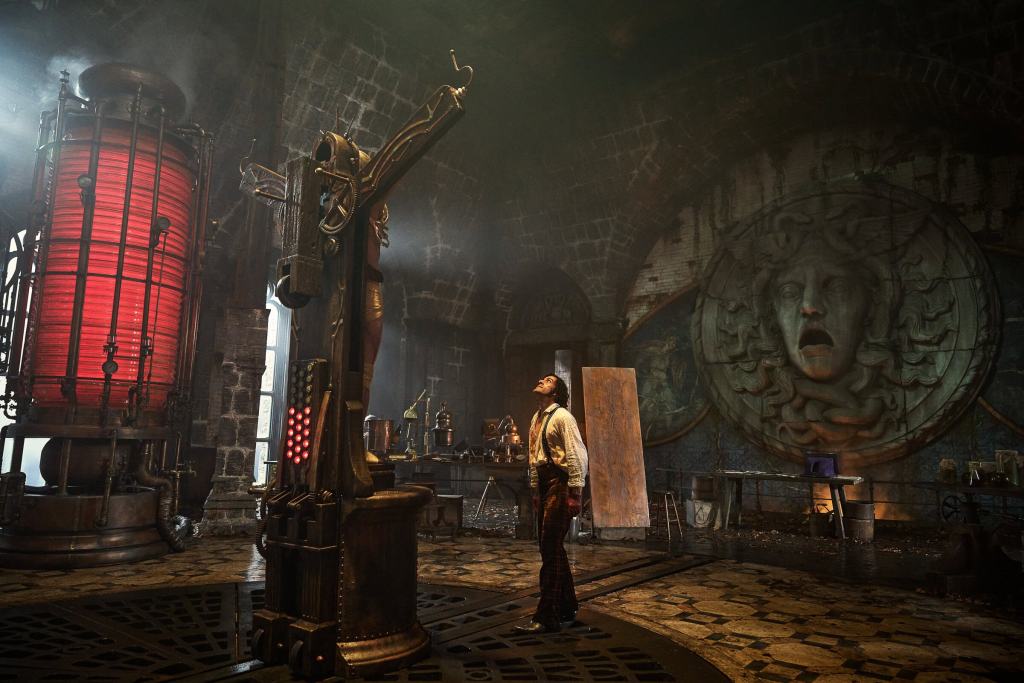
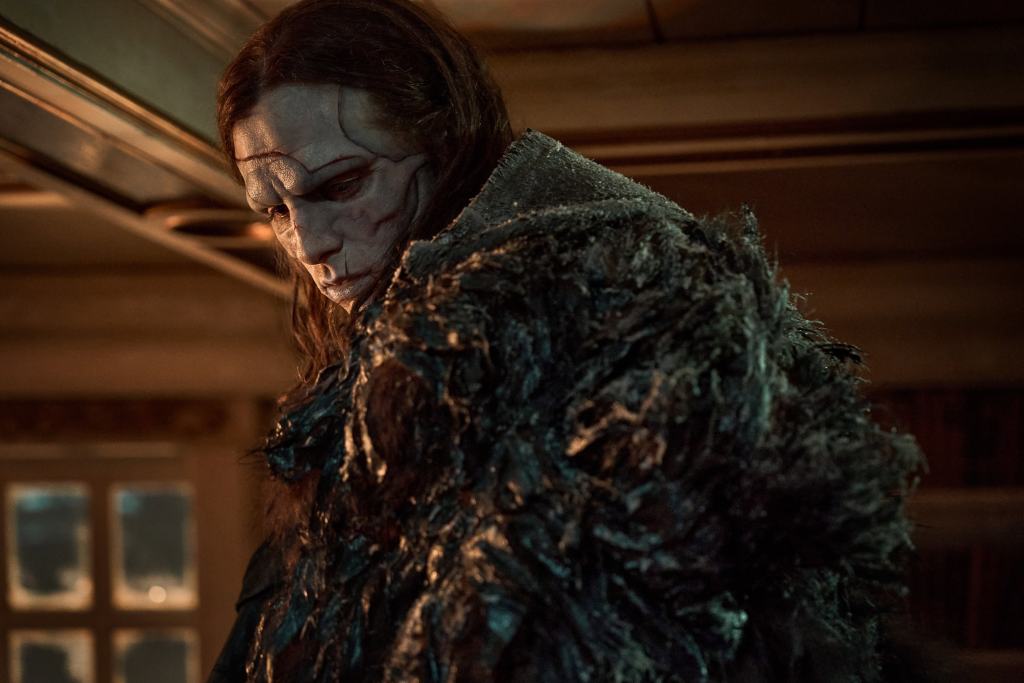
For del Toro and Laustsen, shadow isn’t absence; it’s reverence. The film’s low contrast and long fades create space for stillness. The creature often stands half in darkness, half in light — a recurring image that mirrors del Toro’s theme of “divine imperfection.”
The visual rhythm forms a circle, an ouroboros of life and death consuming each other. Each act of creation brings destruction; each act of destruction creates understanding. Del Toro described it as “a story without beginning or end, only return.”

The Visual Theology of Frankenstein
The result is a world that feels painted by hand. Color here is belief: red as suffering, gold as false divinity, green as fragile renewal. Together, they turn Shelley’s gothic parable into something almost liturgical, a meditation on how beauty and horror coexist.
In del Toro’s hands, light doesn’t reveal monsters; it forgives them.

Key Details: Frankenstein
- Release dates: In select theaters October 17, 2025; streaming on Netflix November 7, 2025
- Director & screenplay: Guillermo del Toro
- Based on: Frankenstein; or, The Modern Prometheus by Mary Shelley
- Producers: Guillermo del Toro, J. Miles Dale, Scott Stuber
- Main cast: Oscar Isaac (Victor Frankenstein), Jacob Elordi (the Creature), Mia Goth, Felix Kammerer, David Bradley, Lars Mikkelsen, Christian Convery, Charles Dance, Christoph Waltz
The Poster
