

Nobody Wants This Season 3 is officially on the way. Netflix has renewed the series for another chapter, with new episodes set to premiere in 2026.
Production will continue in Los Angeles, maintaining the grounded sense of location and setting that shaped the tone of the first two seasons.
Season 2, which debuted on October 23, 2025, has continued to find its audience. The series quickly climbed to number one in the Global English TV Top 10, holding that position for a second week. It has reached 18 million views within its first eleven days and has landed in the top ten in 82 countries. The success of the new episodes also brought renewed attention to the first season, which returned to the charts and reached number seven. Season 1 has now spent eight total weeks in the global top ten.

Watch the Announcement
Creator and Showrunners Reflect on the Renewal
Creator and Executive Producer Erin Foster shared her reaction to the renewal with a note of humor, emphasizing the personal investment she feels in the series while acknowledging the everyday shape of writing and life. Jenni Konner and Bruce Eric Kaplan, who serve as co-showrunners, highlighted the collaborative environment behind the scenes and the enjoyment of shaping the show’s voice alongside its ensemble cast and crew.

Where Season 2 Leaves the Characters
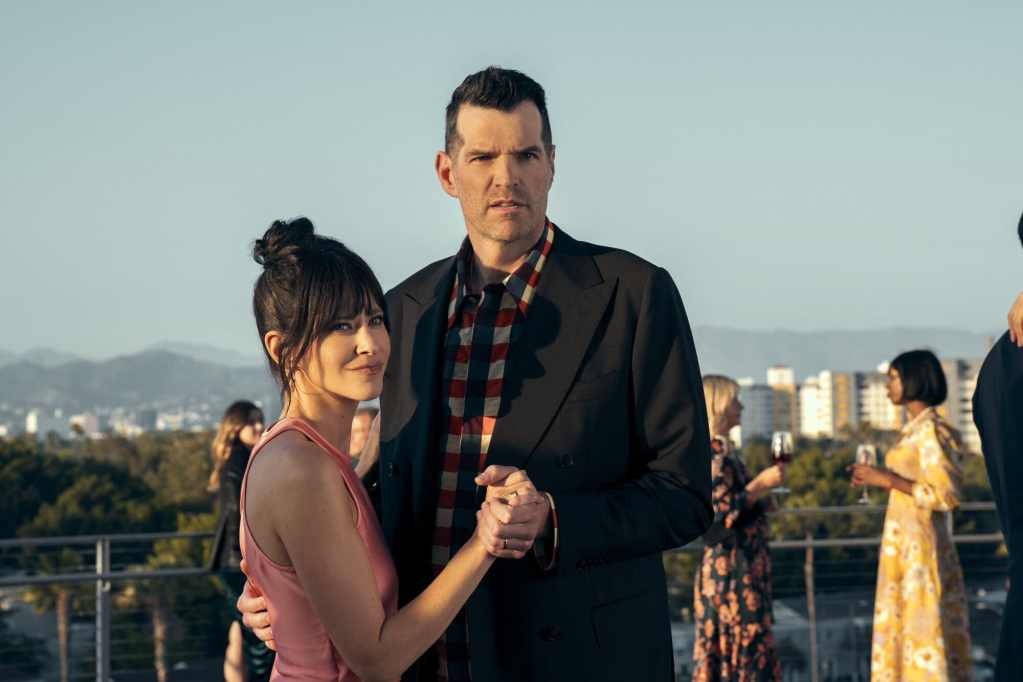
Season 2 ends with the characters in a place that feels both resolved and unfinished. Joanne and Noah have already made the choice to stay together, but they are still figuring out what it means to build a shared life when belief, identity, and family history aren’t aligned. Joanne isn’t questioning whether she belongs anymore. Her conflict now is how to make that belonging feel real. Noah, meanwhile, has to confront the possibility that the institution he thought defined his purpose may no longer be the place where he can do meaningful work.
Their relationship is not fragile, but it is in motion. The season’s final moments suggest that the next steps will be quieter and more deliberate, centered not on the question of whether they will stay together but on what staying together actually looks like day to day.
Morgan, Sasha, and Esther each end the season facing their own forms of unfinished business. Morgan’s engagement collapses under the weight of her uncertainty, leaving her with the realization that she needs to understand herself before committing to someone else.
Sasha and Esther separate not in anger, but in exhaustion, acknowledging that the roles they’ve been performing no longer fit who they’ve become. Esther’s storyline, in particular, opens meaningful space for her to exist outside the identity of mother and partner, something the show had previously only implied.

What Nobody Wants This Season 3 Needs to Shift
With Nobody Wants This Season 3 now confirmed, the question becomes how the series will move forward. Season 2 strengthened the show’s tone and themes, but it also revealed certain patterns. Some of the emotional rhythms repeated from Season 1: a disagreement escalates, leads to brief separation, and resolves through a heartfelt reunion. Those beats still worked because the character motivations were richer, but the show risks feeling familiar if it reuses the same structure again.
Season 3 has an opportunity to let its characters move into new territory.
Joanne has already reached the emotional clarity that Season 1 and early Season 2 were building toward. The question is no longer whether she belongs in Noah’s world, but how she will shape her place within it. Her potential conversion story could be portrayed not as a dramatic pivot but as a daily practice, one that includes study, community, and the slow process of taking ownership of belief. There is room for humor, discomfort, and small personal victories in that arc.

Noah also has space for change. Temple Ahava does not serve him, and the series acknowledges that. Season 3 can explore how he rebuilds a sense of purpose without forcing conflict for conflict’s sake. His progression could mirror Joanne’s, both adjusting and reevaluating what is meaningful to them.
Supporting characters benefit from subtle movement too. Esther’s storyline in Season 2 was grounded and compelling, giving Jackie Tohn space to show how layered the character can be when not confined to comedic timing. That momentum should continue. Morgan, similarly, doesn’t need another romance to anchor her. The most interesting version of her story is the one where she stops searching for the next defining attachment and steadies herself instead.
The heart of the series is in the slow effort of choosing one another, again and again. Season 3 can lean into that steady progression rather than returning to familiar breakup-and-reunion patterns.