
Boots Netflix book vs series is more than an accuracy check.
It’s a look at how the series translates Greg Cope White’s memoir The Pink Marine: One Boy’s Journey Through Boot Camp to Manhood into television rhythm, compressing time, inventing incident, and keeping the memoir’s stubborn core: finish the thing and don’t lose yourself doing it.
Boots Netflix book vs series: the premise and the clock
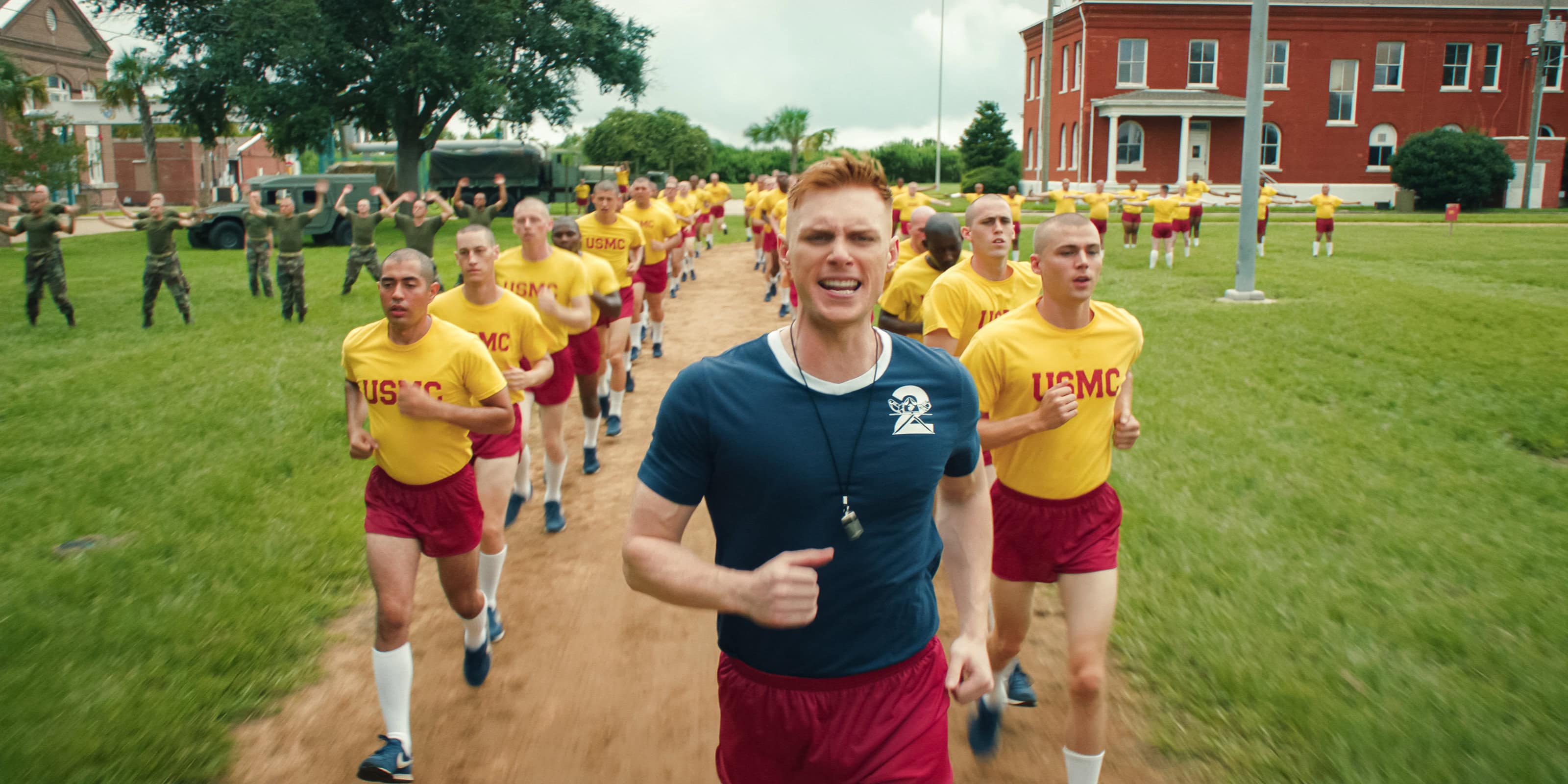
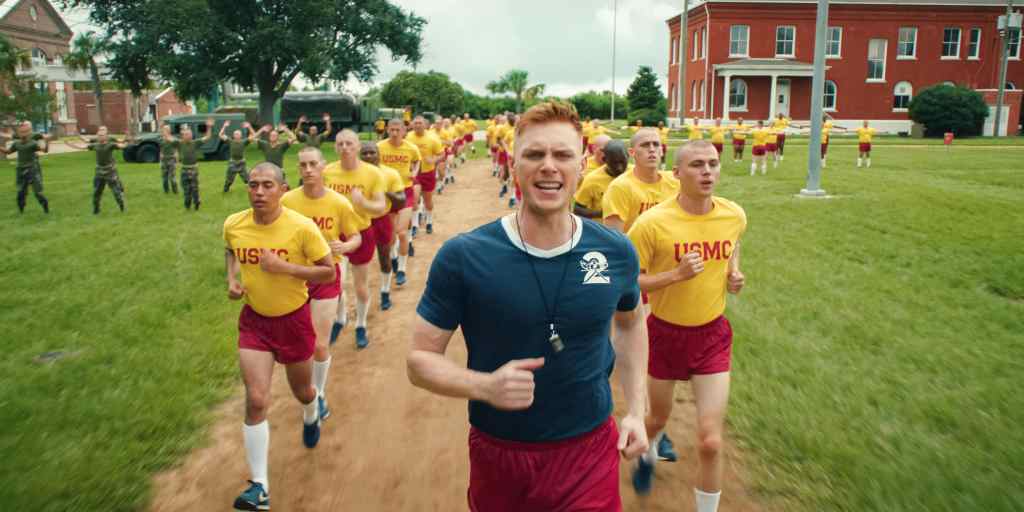
On screen, Cameron Cope reaches Parris Island in the early 1990s, hiding his sexuality while the unit grinds through inspections, rifle week, and the 54-hour Crucible. The show threads in NCIS pressure and a unit tragedy to raise the stakes across eight episodes.
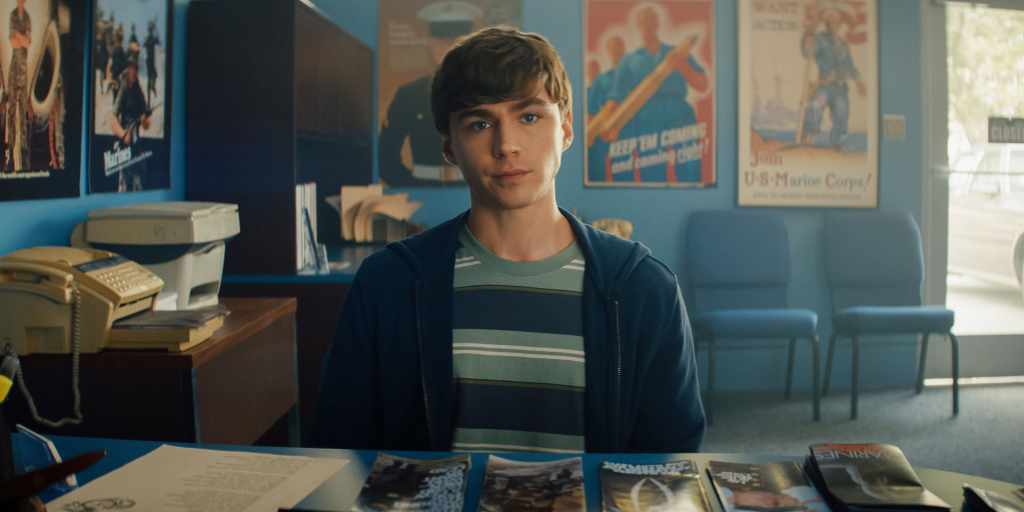
In the book, Greg Cope White enlisted in 1979. He joins the Buddy System with his best friend Dale, lies on the intake form about being gay to avoid disqualification, and learns, one punishing station at a time, that fear can be managed if you keep moving.
Boots Netflix book vs series keeps the closet, the endurance, and the need to belong; it moves the timeline forward and builds a serialized spine around events the memoir treats as background weather.
The series keeps the memoir’s core relationships intact, often renaming or expanding real figures from the book to fit an eight-episode structure.
Boots Netflix book vs series: narrator vs. protagonist
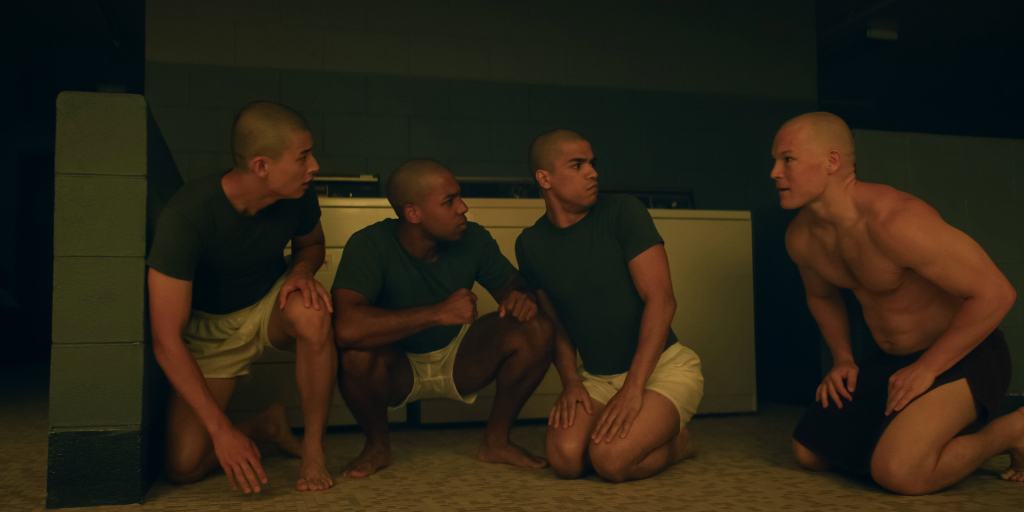
The series gives Cameron an “inner angel” voice that surfaces at crisis points, especially when he chooses to stay.
The memoir is first-person and unsparing. White’s voice is wry, present, and pointed about compromise: he admits he lied at enlistment because the system left him no other path.
TV externalizes interior monologue; the book lets narration carry it. Both insist the mask is the point, and the tax.

Boots Netflix book vs series: The Buddy System
In the series, Cameron enlists to hold on to Ray, whose perfectionism cracks under pressure.
In the Book White follows Dale, a decorated friend switching into the Marines from the Air Force; he joins because he’s drifting and wants to finish something in his life.
Same engine, different names, with Ray reflecting a real relationship from the memoir rather than a wholly invented character. Loyalty drags both boys onto the yellow footprints.
Boots Netflix book vs series: first night at Parris Island
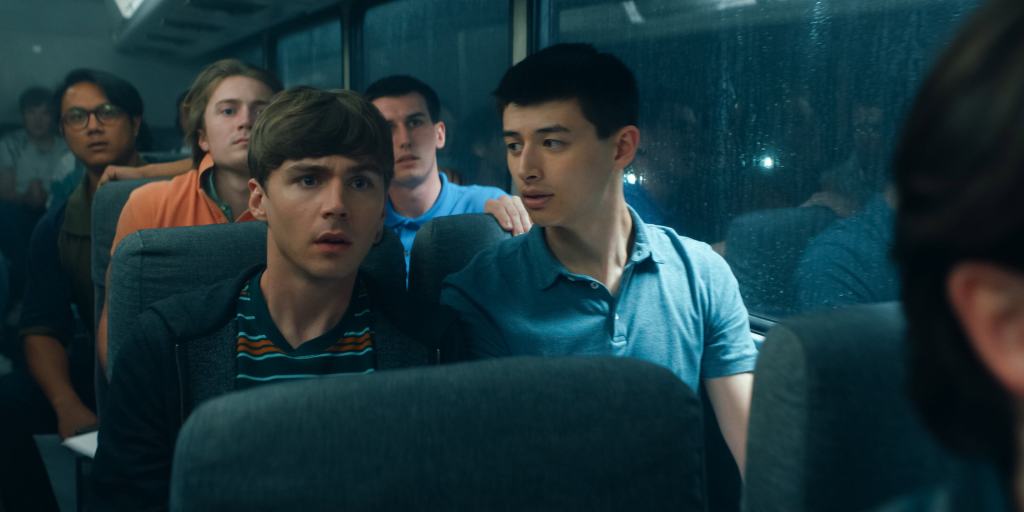
The series stages the midnight bus, the screaming, and the yellow footprints as initiation.
It even folds in a story from Sergeant Sullivan: when he enlisted, he was so thin that his recruiter taped a flattened lead pipe above his groin to push him over the minimum weight at the scale, a grotesque, funny survival trick he shares with Cameron as proof that skinny kids can make it.
The memoir tells the same ritual beat-for-beat but as Greg Cope White’s own memory. He’s the one being patched together with the hidden weight to pass entry requirements, a moment that sets the book’s blend of terror and dark comedy.
The show reassigns White’s real-life anecdote to Sullivan, a real figure from the memoir whose role is expanded on screen, using it as a bonding moment and to show Cameron that even the toughest Marines started out scared and underbuilt.
Boots Netflix book vs series: instructors and structure
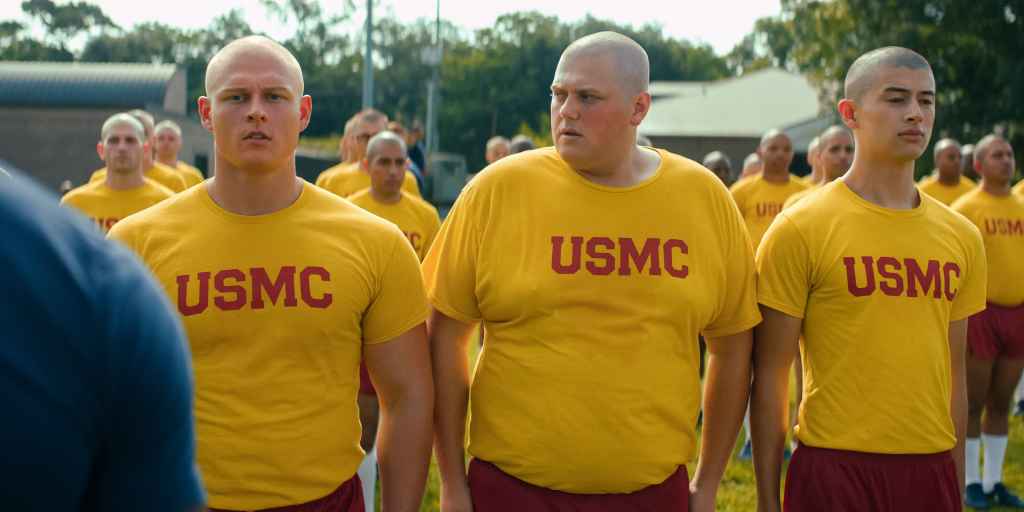
On TV, McKinnon, Sullivan, Howitt, and Capt. Fajardo split the drill-instructor ethos into types: punitive, empathetic, compromised, and reform-minded. Sullivan, a real figure from the memoir, is given a fuller counter-arc to Cameron on screen, while other instructors are fictionalized to represent different facets of the system.
The memoir treats DIs as a weather system: a study in method. White catalogs cadence, inspections, the gas chamber, the rifle range, and the way Marine training engineers fear before normalizing it.
The show personalizes the power structure; the book documents how it works.
Boots Netflix book vs series: drama vs. accumulation
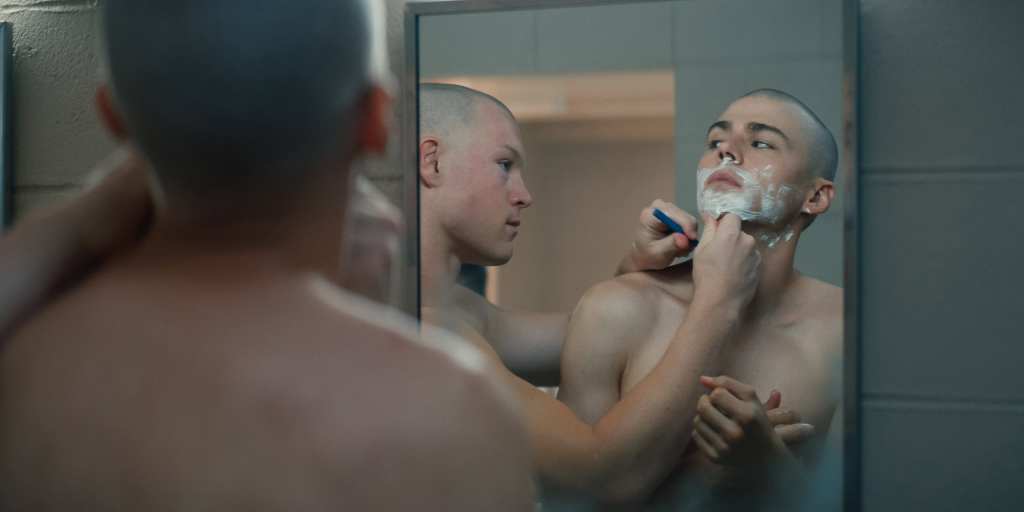
The series has a prank war, promotions and demotions, a recruit’s sudden death during rifle week, and NCIS scrutiny. It also threads in a visible gay network inside the platoon (Jones) and gives the season a courtroom-adjacent hum.
The memoir is self vs. system. The drama unfolds through ritual and fatigue, rather than plot fireworks. When White zooms out, it’s to notice the other outsiders around him, by class, race, or circumstance, rather than to script them into an ensemble cliff-hanger.
Boots Netflix book vs series: masculinity and the closet
On TV, the finale argues that strength is keeping your voice while carrying others. Cameron refuses an administrative exit and finishes the Crucible on his terms.
On the page, White’s thesis is steady and practical: being gay is not a limit; finishing is the answer. The lesson arrives through a thousand small choices, not a single climactic one.

Boots Netflix book vs series: endings that say the same thing differently
The show needs a last act,stay or go, and finds it.
The book’s pivot is less cinematic: he discovers the machine didn’t crush him; it clarified him.

Boots Netflix book vs series: the verdict
Boots on Netflix holds true to the spirit of The Pink Marine, fear, black humor,and the raw need to belong, while building its own drama.
The show compresses time, expands and renames real figures such as Ray and Sullivan, invents characters like Fajardo, Jones, and Santos, and drives everything toward a single, decisive finale.
The memoir is leaner and rougher: fewer dramatic spikes, more day-to-day grit. Both argue that manhood isn’t a costume. The series makes that point with one climactic choice; the book earns it through a thousand small ones.
Greg’s memoir ends at graduation, a hard-won rite of passage with no epilogue about service or war. Netflix pushes past that finish line, dropping its Marines into the early-1990s backdrop of Iraq and Kuwait and hinting at the lives they might lead beyond Parris Island.
Key Details: Boots Netflix
- Based on: The Pink Marine by Greg Cope White
- Release date: October 9, 2025 (Netflix)
- Episodes: 8 (one hour each)
- Main cast: Miles Heizer, Liam Oh, Max Parker, Vera Farmiga, Cedrick Cooper, Ana Ayora, Angus O’Brien, Dominic Goodman, Kieron Moore, Nicholas Logan, Rico Paris, Blake Burt
- Character note: Several on-screen characters are based on real people from Greg Cope White’s memoir, with names and narrative emphasis adjusted for television.
- Additional cast: Brandon Tyler Moore, Zach Roerig, Anthony Marble, Joy Osmanski, Ivan Hoey Jr., Logan Gould, Jack Kay, Troy Leigh-Anne Johnson, Jonathan Nieves, Brett Dalton
- Creator / Showrunner: Andy Parker & Jennifer Cecil
- Executive producers: Andy Parker, Jennifer Cecil, Norman Lear, Brent Miller, Rachel Davidson, Scott Hornbacher, Peter Hoar
- Studio: Sony Pictures Television