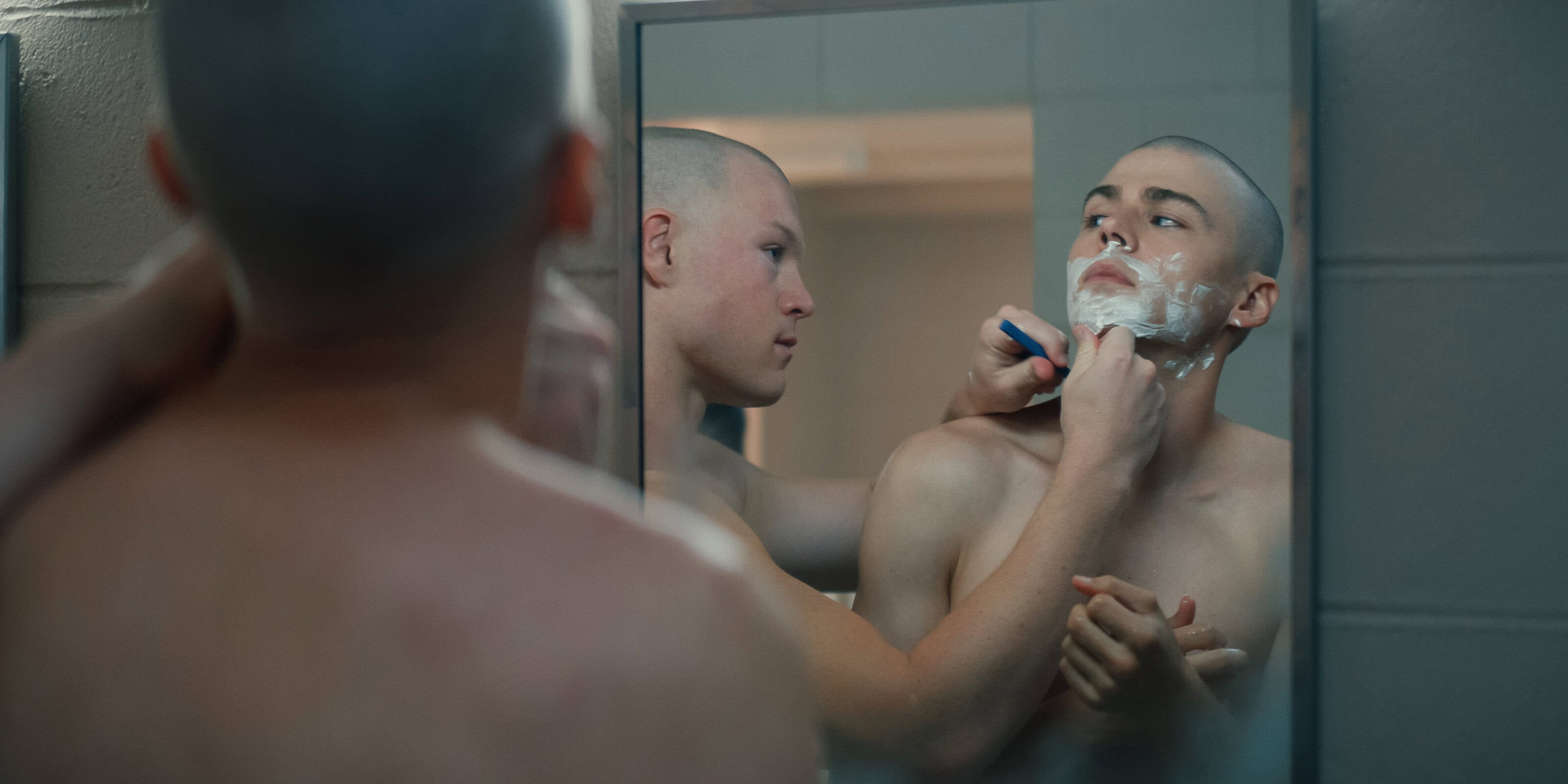
Boots arrives with a clear point of view: Marine boot camp in 1990, seen through a closeted teen who refuses to fold.
Adapted from Greg Cope White’s memoir The Pink Marine: One Boy’s Journey Through Boot Camp to Manhood, the eight-episode limited series follows Cameron Cope as he learns to carry weight that isn’t just physical. The show balances gallows humor with bruising honesty, and it keeps its eye on how institutions shape identity.
Across eight hours, Boots builds a hard, specific world. The training is relentless. The stakes are personal. The series keeps asking the same question from new angles: what do you have to give up to become the person you think you need to be?

Quick recap of the story
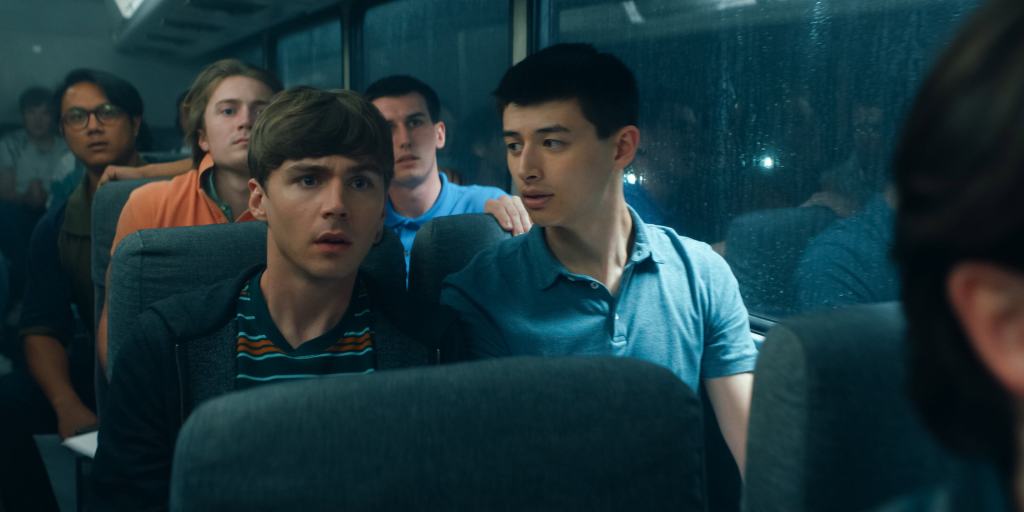
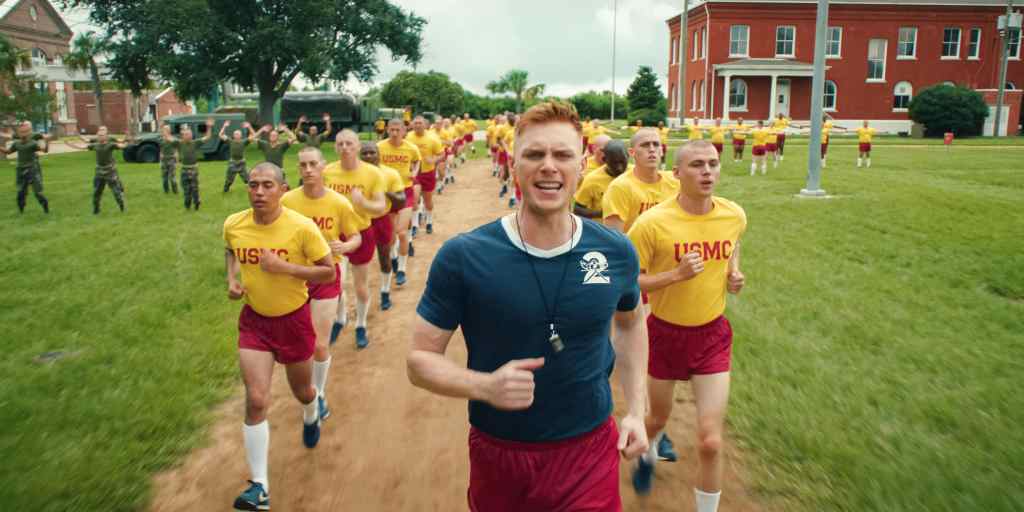
Cameron enlists alongside his best friend Ray and lands at Parris Island, South Carolina. The rules are simple and brutal. Drill instructors strip away ego, comfort, and individuality, then stack discipline and conformity in their place. Cameron hides his sexuality and invents a private mantra, “lock it up”, to keep going in an environment where being gay can end a career before it begins.
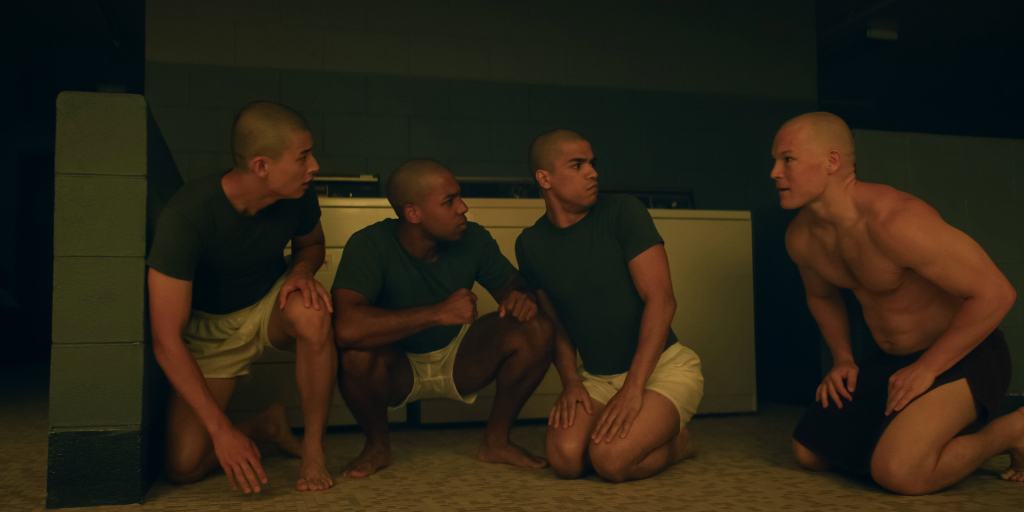
The series tracks key turning points without wasting time. A prank war breaks tension and lifts morale. Rifle qualification week ends in tragedy, shaking the platoon’s fragile brotherhood. Cameron is promoted to squad leader, then publicly demoted. He slowly earns wary respect from Sergeant Sullivan, a decorated Marine haunted by a closeted past that could destroy him if exposed. Around them, Nash, Santos, the Bowman twins, and other recruits fill out a platoon that feels like a cross-section of American pressure, ambition, fear, family legacies, and the cost of fitting in.
By the end, everything funnels into the Crucible, a grueling 54-hour test meant to break and bond recruits before they earn the title Marine. Cameron, Ray, and the others haul one another over the finish line, sharing gear, pain, and stubborn resolve. Just as victory seems secure, Cameron learns his enlistment is legally invalid because of a paperwork lie from childhood. Offered an easy exit, he wrestles with the inner voice we met in Episode 1, the private self he’s fought to protect, and decides to stay. It’s not a clean triumph but a choice with teeth: to claim strength without surrendering who he is.
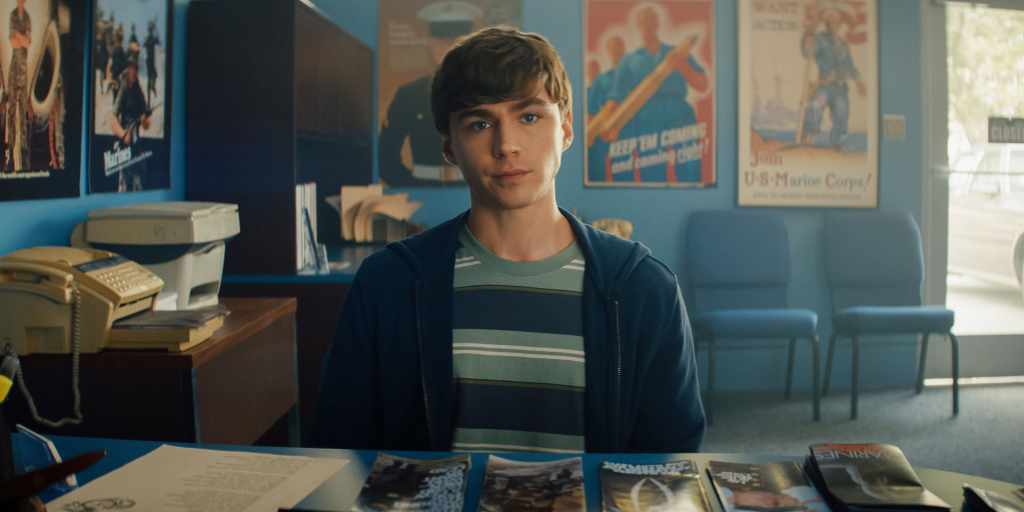
Boots Netflix recap and ending explained: the themes
The series treats masculinity as a moving target.
Cameron isn’t weak. He’s observant. The work is learning which voice to trust when the room fills with noise.
Ray chases perfection to impress a father who preaches control over fear.
Nash wants ambition without losing his conscience.
Sullivan is the cautionary tale: a Marine who excelled, then learned that the institution counted his love as a crime.
Brotherhood matters here, but not as a slogan. You feel it when the platoon lightens a pack for a recruit with a bad knee. You feel it when grief spills across the mess hall and no one knows where to put their hands. Boots is interested in the line between collective strength and personal erasure.
The period details matter. In 1990, Article 125 criminalized same-sex relationships in the military. “Don’t Ask, Don’t Tell” was still in the future. That context turns every quiet glance and every order into a risk calculation.

Boots Netflix recap and ending explained: the finale choice
Cameron’s mother arrives with paperwork that makes his enlistment invalid. He can walk. He knows what staying might cost. The inner voice that kept him alive during the worst days could go quiet if he keeps swallowing himself to fit the mold. He also knows who he is now. He stood up to bullies. He carried others. He finished the march.
He chooses to remain, not to endorse every rule, but to claim space on his terms. Sullivan’s arc sits beside that choice like a warning and a benediction. The mentor is punished for love. The student sees the risk and stays anyway, resolved to hold his ground without losing the part of himself that speaks up.
The TV in the bar announces Iraq’s invasion of Kuwait. History presses in. The title Marine carries weight beyond the parade deck.
True story, television craft, and the Norman Lear nod
The series adapts The Pink Marine, and it uses that memoir’s specificity to avoid sentimental shortcuts. The tone is sharp and lived-in. Performances sell the quiet beats: a hand on a shoulder, a look across a squad bay, a moment of mercy during inspection.
The closing tribute to Norman Lear is more than a courtesy credit. Lear served in World War II and built a career on stories that asked what America is and who gets to belong. The nod fits the show’s argument: culture changes when people keep telling the hard stories.
Where the show lands
Boots is a military drama, but it plays like a character study. It understands how training breaks and builds at the same time. It also understands that identity does not vanish under a buzz cut. The result is humane and unsentimental. It earns its emotion.
The Last Word on Courage in Netflix’s Boots
The real payoff of Netflix’s Boots isn’t just following the twists of boot camp. It’s watching Cameron decide who he’s going to be when every system around him demands something else. His choice to stay is hopeful but complicated, a refusal to trade his inner voice for the safety of walking away. In the end, the series argues that adulthood isn’t blind toughness; it’s learning to carry others without losing yourself.
Key Details: Boots Netflix
- Studio: Sony Pictures Television
- Based on: The Pink Marine by Greg Cope White
- Release date: October 9, 2025 (Netflix)
- Episodes: 8 (one hour each)
- Main cast: Miles Heizer, Liam Oh, Max Parker, Vera Farmiga, Cedrick Cooper, Ana Ayora, Angus O’Brien, Dominic Goodman, Kieron Moore, Nicholas Logan, Rico Paris, Blake Burt
- Additional cast: Brandon Tyler Moore, Zach Roerig, Anthony Marble, Joy Osmanski, Ivan Hoey Jr., Logan Gould, Jack Kay, Troy Leigh-Anne Johnson, Jonathan Nieves, Brett Dalton
- Creator / Showrunner: Andy Parker & Jennifer Cecil
- Executive producers: Andy Parker, Jennifer Cecil, Norman Lear, Brent Miller, Rachel Davidson, Scott Hornbacher, Peter Hoar