
The ending of His & Hers has left many viewers unsettled rather than surprised. After six episodes spent circling suspects, false leads, and buried connections, the final reveal shifts the focus away from procedural logic and toward something quieter and more disturbing.
The killer is Alice, Anna’s mother. The revelation reframes everything that came before it, not by overturning facts, but by revealing how consistently she was overlooked.
Why Alice Is the Killer
Alice’s motive is rooted in loss. After the death of her granddaughter, Charlotte, and Anna’s subsequent disappearance, Alice is left alone with grief that never resolves. The series shows her revisiting old tapes, lingering at Charlotte’s grave, and drifting through days marked by absence rather than purpose.
What finally pushes her to act is not a single event, but a delayed realization. When Alice watches the full tape of Anna’s sixteenth birthday, she understands that Anna was sexually assaulted that night, alongside Catherine. That knowledge arrives years too late to protect her daughter, but it ignites a need for retribution that replaces grief with action.
Rachel, Helen, and Zoe are not chosen randomly. Each of them played a role in what happened that night, either through direct participation, silence, or complicity. Alice’s murders are not framed as justice, but as an attempt to impose meaning on something that was never addressed.
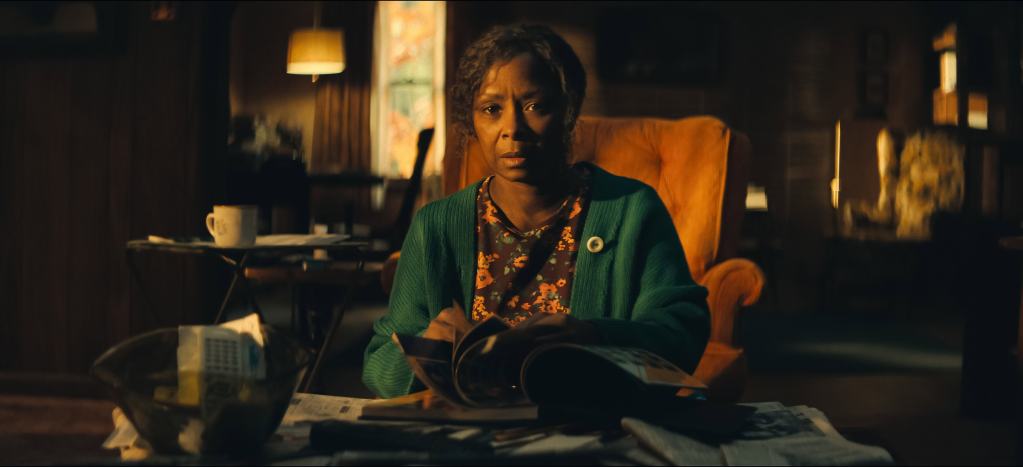
How the Series Hides Her in Plain Sight
Alice is visible throughout the series, yet never treated as a serious presence. Her wandering, confusion, and erratic behavior are repeatedly attributed to cognitive decline. The police assume illness. Jack assumes fragility. Anna assumes avoidance.
This misreading becomes Alice’s shield. Her public vulnerability makes her invisible as a suspect. Even when she is found wandering naked through the streets, the behavior is written off as deterioration rather than intention. The finale confirms that these moments were calculated, designed to build a pattern that discouraged scrutiny.
The show never contradicts this explanation earlier. It simply allows the characters and the audience to accept it too easily.

What the Friendship Bracelets Symbolize
The friendship bracelets function as more than a shared memory. They represent a closed circle of responsibility. Each bracelet placed in a victim’s mouth is not a signature meant to taunt investigators, but a reminder of a bond that once existed and was later weaponized.
For Alice, the bracelets are proof that the people she targets were connected to Anna at a moment when she was vulnerable. They are symbols of belonging turned into evidence of betrayal.

Why Lexy Was Meant to Be Framed, Not Killed
Catherine, living as Lexy, is positioned as the obvious suspect by design. Her history, her secrecy, and her proximity to the victims make her a believable culprit. Alice reinforces this narrative by planting evidence and allowing suspicion to settle naturally.
The series is explicit that Alice did not intend for Lexy to die. Lexy’s death is the result of intervention, not a plan. Framing Lexy would have closed the story without exposing Alice herself.
This distinction matters because it clarifies Alice’s intent. She is not indiscriminate. Her actions follow a narrow logic shaped by grief, not chaos.

Why Anna Never Suspected Her Mother
Anna’s blindness is emotional. She sees her mother as someone in need of care, not someone capable of violence. More importantly, Anna does not want to reopen the past. Acknowledging Alice as a threat would require confronting what happened at sixteen and what was never said afterward.
The series suggests that Anna’s silence protected her survival at the time, but it also delayed accountability. Alice steps into that silence and acts where Anna could not.
Why the Ending Chooses Understanding Over Justice
His & Hers does not end with arrest or resolution in the traditional sense. Alice is not confronted publicly. Her confession exists only in a letter, and her final exchange with Anna is quiet, almost gentle.
The show does not provide moral absolution. Alice’s actions are not justified, but they are placed in context. The ending leaves viewers with a sense of discomfort rather than closure, highlighting that understanding someone’s actions does not erase the harm done, and that truth does not always come in time to prevent it.
What remains unresolved is not the case, but the cost of silence. The series ends by acknowledging that some stories do not conclude with punishment but with recognition.